การพัฒนาเทคโนโลยีอินเทอร์เน็ตประสานสรรพสิ่งผนวกกับแนวคิดแบบลีนเพื่อเพิ่มประสิทธิภาพการบริหารจัดการฟาร์มผัก
Article Sidebar
Main Article Content
บทคัดย่อ
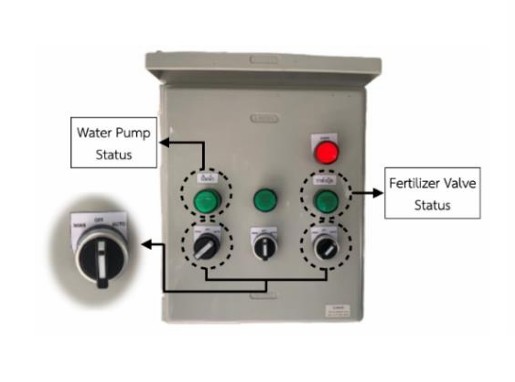
งานวิจัยนี้มีวัตถุประสงค์เพื่อ 1) ศึกษากระบวนการเพาะปลูกผักสวนครัวและลดความสูญเปล่าจากกระบวนการปลูกผักสวนครัวโดยประยุกต์ใช้แนวคิดแบบลีน 2) พัฒนาระบบการควบคุมการรดน้ำและให้ปุ๋ยอัตโนมัติเพื่อเพิ่มประสิทธิภาพในการบริหารจัดการฟาร์มผักด้วยเทคโนโลยีอินเทอร์เน็ตประสานสรรพสิ่ง และ 3) เพื่อถ่ายทอดองค์ความรู้ของระบบควบคุมการรดน้ำและให้ปุ๋ยอัตโนมัติให้กับผู้ประกอบการและผู้สนใจในชุมชน เครื่องมือที่ใช้ในการวิจัย ประกอบด้วย เทคโนโลยีอินเทอร์เน็ตประสานสรรพสิ่ง แผนผังสายธารคุณค่า และแผนภูมิก้างปลา เครื่องมือที่ใช้ในเก็บรวมรวบข้อมูล ได้แก่ แบบสังเกต และแบบสัมภาษณ์กึ่งโครงสร้าง กลุ่มตัวอย่างที่ใช้ในการวิจัยจำนวน 3 คน คัดเลือกโดยวิธีเฉพาะเจาะจง ผลการศึกษาพบว่าในขั้นตอนการปลูกผักสามารถลดช่วงเวลารอคอยในการรดน้ำได้ 140 ชั่วโมง รวมถึงการเคลื่อนไหวที่ไม่จำเป็น และจากการพัฒนาเทคโนโลยีอินเทอร์เน็ตประสานสรรพสิ่งสามารถควบคุมการรดน้ำและให้ปุ๋ยผ่านสมาร์ทโฟน ควบคุมการเปิด - ปิด ของปั๊มน้ำและวาล์วไฟฟ้า กำหนดวันที่และเวลาในการรดน้ำและให้ปุ๋ยผ่านแอ็ปพลิเคชันบลิ้ง ได้ทำให้เพิ่มประสิทธิภาพในการบริหารจัดการฟาร์มผักและลดปริมาณการใช้น้ำในแต่ละเดือนได้ 25 เปอร์เซ็นต์ ลดต้นทุนค่าแรงงานเดือนละ 1,500 บาท และเพิ่มผลผลิตได้มากขึ้น 70 กิโลกรัม รวมถึงผักมีรสชาติที่ดีขึ้น จากการถ่ายทอดองค์ความรู้ระบบควบคุมการรดน้ำและให้ปุ๋ยอัตโนมัติทำให้ผู้ประกอบการและผู้ที่สนใจสามารถประยุกต์ใช้ระบบในการควบคุมการรดน้ำและใส่ปุ๋ยได้จริง งานวิจัยนี้สามารถนำไปประยุกต์ใช้เป็นต้นแบบในการจัดการแปลงเกษตรสำหรับพืชชนิดอื่น ๆ ได้
Article Details

อนุญาตภายใต้เงื่อนไข Creative Commons Attribution-NonCommercial-NoDerivatives 4.0 International License.
บทความที่ได้รับการตีพิมพ์ในวารสารฯ ท้ังในรูปแบบของรูปเล่มและอิเล็กทรอนิกส์เป็นลิขสิทธิ์ของวารสารฯ
เอกสารอ้างอิง
S. Satapawit, S. Rakkan, A. Klunguarmdee and P. Sriwichian, “Increasing efficiency of bamboo agriculture with digital technology: a study of bamboo (kim-sung),” Journal of science and technology RMUTSB, vol. 5, no. 1, pp. 123-131, 2021.
S. Nakprat and K. Jamarik, “Disclosing government data in the form of Business Intelligence (BI) in the Big Data era,” NBTC Journal, vol. 1, no. 1, pp. 550-583, 2016.
S. Balaji, K. Nathani and R. Santhakumar, “IoT technology, applications and challenges: A contemporary survey,” Wireless Personal Communications, vol. 108, pp. 363-388, 2019.
A. Hayeeuma, N. Sanongkhun, J. Sanongkhun and D. Naenkieng, “Internet of things application for smart farm management: a case study of Nongnumsomwithayakon school, Phra Nakhon Si Ayutthaya province,” Industrial Technology Lampang Rajabhat University Journal, vol. 15, no. 2, pp. 67-78, 2022.
P. Seenorakul, T. Sudjit, T. Nitayapapha and T. Auxsorn, “Development of a prototype of a home-grown vegetable watering machine through a smartphone,” Kalasin University Journal of Science Technology and Innovation, vol. 2, no. 2, pp. 9-21, 2023.
T. Sodkomkham, C. Ratanatamskul, and A. Chandrachai, “An integrated Lean management, IoT and MFCA systems for water management of industrial manufacturing in Thailand,” in E3S Web of Conferences, vol. 241, 2021, pp. 1-6.
R. Hassan, F. Qamar, M. K. Hasan, A. H. M. Aman and A. S. Ahmed, “Internet of things and its applications: A comprehensive survey,” Symmetry, vol. 12, no. 10, pp.1-28, 2020.
J. Collis and R. Hussey, Business research : A practical guide for undergraduate and postgraduate students, 4th Ed. Basingstoke, UK: Palgrave Macmillan, 2014.
S. Dumnil, “Development of smart agricultural watering system using the Internet of Things,” Agriculture and Technology Journal, vol. 4, no. 1, pp. 112-126, 2023.
C. Torasa, “The automatic plant watering system using Internet of Things for oil palm plantations,” The Journal of Industrial Technology: Suan Sunandha Rajabhat University, vol. 11, no. 1, pp. 1-11, 2023.
S. Punpitak, K. Dongsongkram, S. OnLoa, K. Yuttaart and U. Pimpasi. “Development of automatic irrigation controller system using wireless sensor to increase sugarcane production,” Journal of Applied Information Technology, vol. 7, no. 2, pp. 17-30.
P. Suanpang and P. Jamjuntr, “A smart farm prototype with an Internet of Things (IoT) case study: Thailand,” Journal of Advanced Agricultural Technologies, vol. 6, No. 4, pp. 241-245, 2019.
