
เครื่องจักรเสมือนแทนอุปกรณ์ควบคุมอัตโนมัติแบบโปรแกรมได้ด้วยชุดคำสั่งจำกัด
Article Sidebar
Main Article Content
บทคัดย่อ
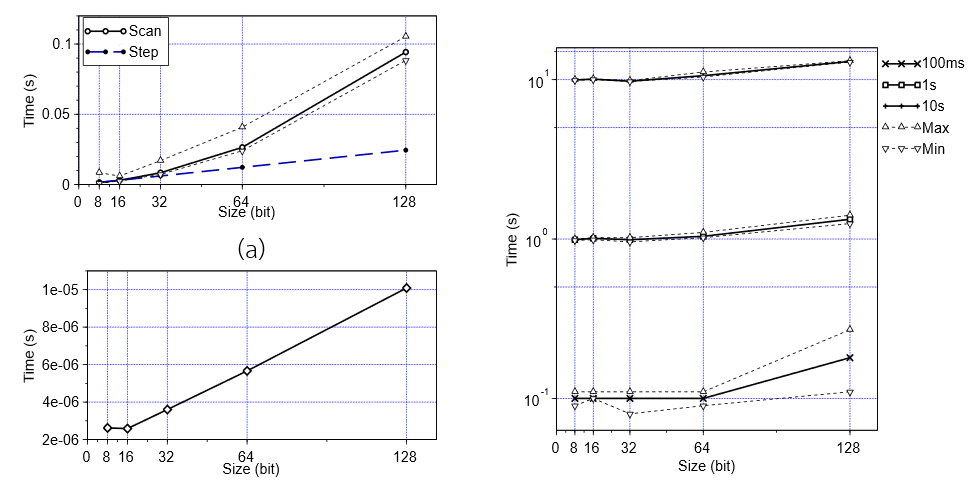
งานวิจัยนี้เสนอการพัฒนาเครื่องจักรเสมือนต้นแบบ สำหรับอุปกรณ์ควบคุมอัตโนมัติโปรแกรมได้แบบมีชุดคำสั่งจำกัด โดยมีจุดประสงค์สำคัญในการพัฒนาเพื่อให้สามารถใช้ได้กับหลายอุปกรณ์ สำหรับกระบวนการพัฒนา ทำได้ด้วยเครื่องมือทางซอฟต์แวร์แบบเปิดเผยรหัสต้นฉบับและไม่เสียค่าใช้จ่าย ทำให้มีความเป็นไปได้ในการลดต้นทุนการพัฒนาอุปกรณ์อัตโนมัติเพื่อทดแทนการใช้ซอฟต์แวร์ที่นำเข้าจากต่างประเทศ ในงานวิจัยนี้สามารถแบ่งส่วนงานหลักได้ดังนี้ 1) การออกแบบสถาปัตยกรรมเครื่องจักรเสมือน 2) การพัฒนาซอฟต์แวร์จำลองการทำงาน และ 3) การออกแบบทดสอบส่วนเชื่อมต่อระหว่างฮาร์ดแวร์-ซอฟต์แวร์ ในงานวิจัยนี้ใช้ภาษาไพทอน ในการพัฒนาเป็นหลัก ทำให้สามารถใช้งานได้ทั้งใน วินโดวส์ ลีนุกซ์ และแอนดรอยด์ จากคำนวณผลการทดสอบทางเวลา พบว่าเครื่องจักรเสมือนขนาดขาเข้า - ขาออก ไม่เกิน 64 บิต ที่พัฒนาขึ้นเมื่อใช้ภายใต้แพลตฟอร์มลีนุกซ์ ทำงานบนซอฟต์แวร์เวอร์ชวลไลเซชัน สามารถใช้คำสั่งไทม์เมอร์ ได้เที่ยงตรงระดับ 100 มิลลิวินาที ในขณะที่การเพิ่มขนาด จำนวนขาเข้าออก ไปที่ 2,048 บิต ยังคงใช้เวลาการสแกนแต่ละรอบได้ต่ำกว่า 100 มิลลิวินาที นอกจากนี้เครื่องจักรเสมือนสามารถส่งสัญญาณเชื่อมต่อกับฮาร์ดแวร์ของบอร์ดอาดุยโน่นาโนผ่านพอร์ตสื่อสารอนุกรมได้ ทำให้มีความเป็นไปได้หากจะนำไปต่อใช้งานเพิ่มเติมกับอุปกรณ์ภายนอก
Article Details

อนุญาตภายใต้เงื่อนไข Creative Commons Attribution-NonCommercial-NoDerivatives 4.0 International License.
บทความที่ได้รับการตีพิมพ์ในวารสารฯ ท้ังในรูปแบบของรูปเล่มและอิเล็กทรอนิกส์เป็นลิขสิทธิ์ของวารสารฯ
เอกสารอ้างอิง
G. J. Popek and R. P. Goldberg, “Formal requirements for virtualizable third generation architectures,” Communications of the ACM, vol. 17, no. 7, pp. 412–421, 1974.
T. Lindholm, F. Yellin, G. Bracha, and A. Buckley, The Java Virtual Machine Specification Java SE, 7th ed. Oracle America, 2013.
W. Bolton, Programmable Logic Controllers, 4th ed. Elsevier, 2006.
T. Alves and T. Morris, “OpenPLC: An IEC 61131-3 compliant open source industrial controller for cyber security,” Computers & Security, vol. 78, pp. 364–379, 2018.
C. Andrei, G. Tudor, M. Arhip-Calin, G. Fierascu, and C. Urcan, “Raspberry Pi, and alternative low-cost PLC,” in Proc. IEEE Int. Symp. Fundamentals of Electrical Engineering, 2020.
G. Viera, J. Barbosa, P. Leitao, and L. Sakurada, “Low-cost industrial controller based on the raspberry pi platform,” in Proc. IEEE Int. Conf. Industrial Technology, 2020.
M. Virbel et al., Kivy. Accessed: Jun. 24, 2022. [Online]. Available: https://kivy.org
PyInstaller. Accessed: Jun. 24, 2022. [Online]. Available: https://pyinstaller.org/en/stable/
Buildozer. Accessed: Jun. 24, 2022. [Online]. Available: https://buildozer.readthedocs.io/en/latest/
C. Liechti, PySerial. Accessed: Jun. 24, 2022. [Online]. Available: https://github.com/pyserial/pyserial/
Oracle, VirtualBox. Accessed: Jun. 24, 2022. [Online]. Available: https://www.virtualbox.org.
C. Zhou and H. Chen, “Development of a PLC Virtual Machine orienting IEC 61131-3 Standard,” in Proc. Int. Conf. Measuring Technology and Mechatronics Automation, 2009.
C. M. Park et al., “Development of Virtual Simulator for Visual Validation of PLC Program,” in Proc. Int. Conf. Computational Intelligence for Modelling Control and Automation and Int. Conf. Intelligent Agents Web Technologies and Int. Commerce, 2006.
V. Mariano et al., “The adaptable Pareto set problem for facility location: A video game approach,” Expert Systems With Applications, vol. 186, Art. no. 115758, 2021.
Y. Ryo et al., “A revisited visual-based geolocalization framework for forensic investigation support tools,” Forensic Science International: Digital Investigation, vol. 35, Art. no. 203004, 2020.
