The innovative distance measurement equipment for athletics competition (long jump)
Article Sidebar
Main Article Content
Abstract
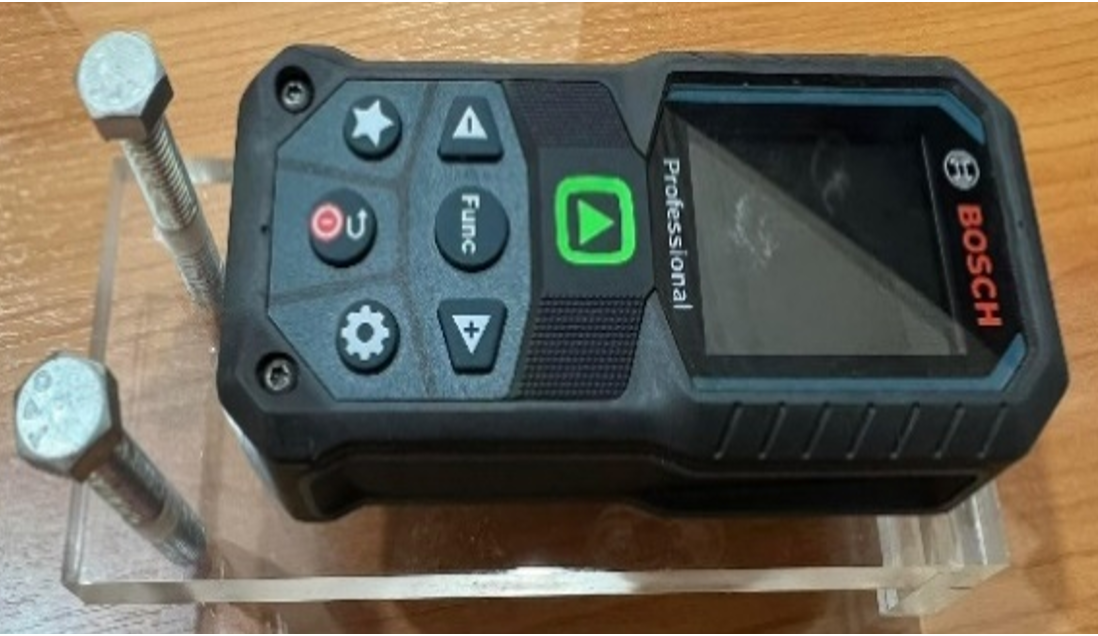
This study's primary objectives were 1) to develop novel distance measurement equipment designed specifically for use in long jump competitions, and 2) to investigate the effectiveness and efficiency of the developed equipment in accurately measuring distances in long jump competitions. The researcher used acrylic material, which is lightweight and strong, to develop and reach the concept. The researchers use theoretical frameworks and fundamental concepts to develop instruments that comply with predetermined objectives and to predefine testing procedures, and the resulting outcomes are evaluated for the purpose of enhancing their effectiveness. Rovinelli's and Hambleton techniques were used to evaluate the equipment's quality. Five experts evaluated and determined the index of consistency with the innovation, the index of item objective equivalence with expert ratings, and the index of item reliability. The findings indicated that the compliance index with respect to the distance measured by the distance meter was consistently 1.00 for all items and it was found that each item had a specific precision greater than 0.5, and when applying distance measurement in long jump competitions using innovative distance measuring equipment and distance meter to assess the actual competition field. It appears that the testing of the two varieties of tools is statistically identical, which is accurate and allows them to be used in international competitions.
Article Details

This work is licensed under a Creative Commons Attribution-NonCommercial-NoDerivatives 4.0 International License.
Articles published in Journal of Industrial Technology Ubon Ratchathani Rajabhat University both hard copy and electronically are belonged to the Journal.
References
K. Promthep, Athletics Skills and Techniques, 1st ed. Udon Thani: Sri Aksorn Printing House, 2016.
Sports Authority of Thailand, Athletics Rules, Bangkok: Sports Academic Division Sports Authority of Thailand, 2015.
K. Promthep and P. Mekkamol, “Development of a Computer Program for Judging Field Athletics. A kind of distance judgment,” Journal of Buddhist Social Sciences and Anthropology, vol. 7, no. 4, pp. 412–424, Apr. 2022.
R. Vanessa, Innovation and Entrepreneurship in Sport Management, Glos, UK: Edward Elgar Publishing Limited, 2021.
R. J. Rovinelli & R. K. Hambleton, “On the use of content specialists in the assessment of criterion referenced test item validity,” Tijdschrift voor Onderwijsresearch, vol. 2, no. 2, pp. 49-60, 1997.
P. Wongyutkrai, O. Sukwan and P. Kakonsan, “Energy preservation using air condition together with fans,” Journal of Industrial Studies, vol. 3, no. 2, pp 65-71, 2009.
K. Kayan, C. Chobthammasakul and C. Hongsuwan, “Physical Education and Recreation,” Journal of Health Education, vol. 48, no. 1, 2022.
Z. J. Zachman, A. D. Traina, J. C. Keating, S. T. Bolles, and L. Braun-Porter, “Interexaminer reliability and concurrent validity of two instrument for the measurement of cervical ranges of motion,” Journal Manipulative Physiology, vol. 12, no. 3, pp 205-210, Jun. 1989.
A. Deemainoy, “A Construction of the Device (TG1.1) for Training Accuracy in Throwing the Sepaktakraw Ball Skills,” Journal of Roi-Et Rajabhat University, vol. 12, July. 2018, ISSN 1905-6036.
N. Hyamwilai, L, Panyakaewand and K. R. Rangubhet “Innovation model of Volleyball Shooting Machine.” Journal of Science and Technology, vol. 2, no 2, pp 9-21, July – December. 2021.
