Monitoring and evaluation of socioeconomic impacts under the project “Enhancing value addition to sugarcane products through BCG principles to create a prototype of self-sustainable, integrated sugarcane farmer community enterprises”
DOI:
https://doi.org/10.55674/cs.v17i3.261575Keywords:
BCG principles, ESG, Integrated Sugarcane Farmer Community Enterprises , SDGs, socioeconomic impactsAbstract
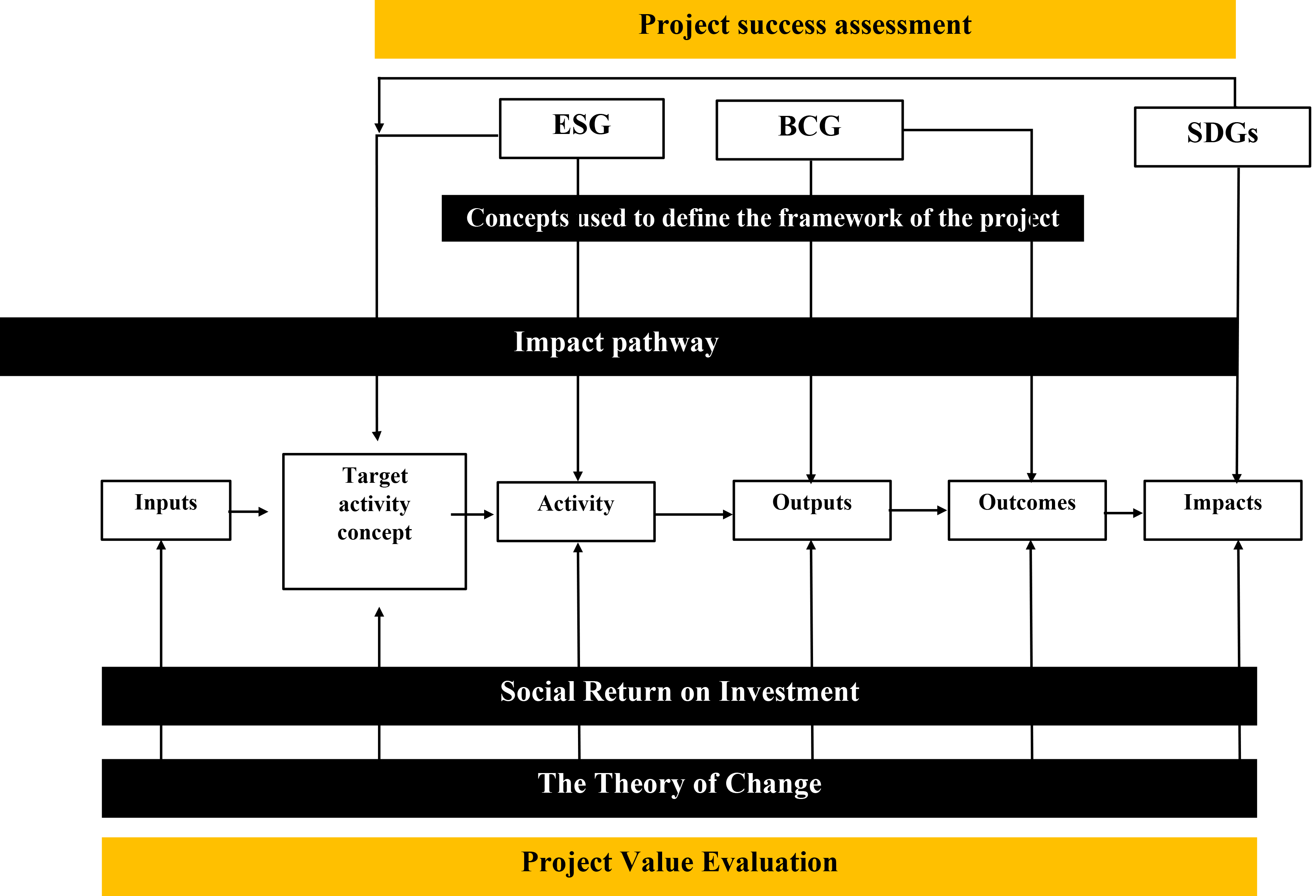
This research aims to evaluating the success of a project within the framework of sustainable development, specifically through alignment with the Sustainable Development Goals (SDGs), Environmental, Social, and Governance (ESG) principles, and the Bio-Circular-Green Economy (BCG) model. The case study focuses on the project entitled "Enhancing the Value of Sugarcane Products through BCG Principles to Establish a Prototype of a Self-Sustaining, Integrated Sugarcane Farmers' Community Enterprise." The findings results that the project successfully addressed existing challenges and enhanced effectiveness in alignment with sustainability objectives. However, in the long term, the evaluation of the project's impact revealed a lack of efficiency, as evidenced by the Social Return on Investment (SROI) analysis, which yielded a ratio of only 0.64. This case study underscores the importance of selecting appropriate conceptual approaches for problem-solving and project development, as well as the need for comprehensive strategies for long-term impact monitoring and valuation.
GRAPHICAL ABSTRACT
HIGHLIGHTS
- The project achieved short-term goals aligned with SDGs, ESG, and BCG, but some activities were not sustained post-implementation.
- Social Return on Investment (SROI) was low at 0.64, indicating limited long-term efficiency relative to sustainability investments.
- Emphasizes the need for contextualized development strategies and long-term impact evaluation to realize future value.
References
United Nations General Assembly. (2015). Transforming our world: The 2030 Agenda for Sustainable Development. United Nations, New York, USA.
Li, T. T., Wang, K., Sueyoshi, T., & Wang, D. D. (2021). ESG: Research progress and future prospects. Sustainability, 13(21), 11663.
BCG. (2022, July 02). BCG action plan (2021–2027). https://bcg.in.th/bcg-action-plan/
Kaewhao, S. (2023). Bio-circular-green model knowledge and environmental knowledge causing sustainable development perspective. African Educational Research Journal, 11, 182–190.
Asefa, S. (2005). The economics of sustainable development. WE Upjohn Institute.
Nicholls, J., Lawlor, E., Neitzert, E., & Goodspeed, T. (2009). A guide to social return on investment. Office of the Third Sector, Cabinet Office.
Clare, G., Diprose, G., Lee, L., Bremer, P., Skeaff, S., & Mirosa, M. (2023). Measuring the impact of food rescue: A social return on investment analysis. Food Policy, 117, 102454.
Moroń, D., & Klimowicz, M. (2021). Using the social return on investment (SROI) as a measure of the effectiveness of social innovation projects implemented under public policies. Social Enterprise Journal, 17(2), 302–327.
Rauscher, O., Schober, C., & Millner, R. (2012). Social impact measurement und social return on investment (SROI)-analysis. New methods of economic evaluation, NPO Competence Center, Vienna.
Lombardo, G., Mazzocchetti, A., Rapallo, I., Tayser, N., & Cincotti, S. (2019). Assessment of the economic and social impact using SROI: An application to sport companies. Sustainability, 11(13), 3612.
Buncle, A., Daigneault, A. J., Holland, P., Fink, A., Hook, S., & Manley, M. (2016). Cost-benefit analysis for natural resource management in the Pacific: A guide. Secretariat of the Pacific Regional Environment Programme.
Downloads
Published
How to Cite
Issue
Section
Categories
License
Copyright (c) 2025 : Preeyanuch Prompasit, Chayada Klinchan

This work is licensed under a Creative Commons Attribution-NonCommercial-NoDerivatives 4.0 International License.