
Repurposing medical hardware in Thailand for a caregiver alert system with no-code application
Article Sidebar
Main Article Content
Abstract
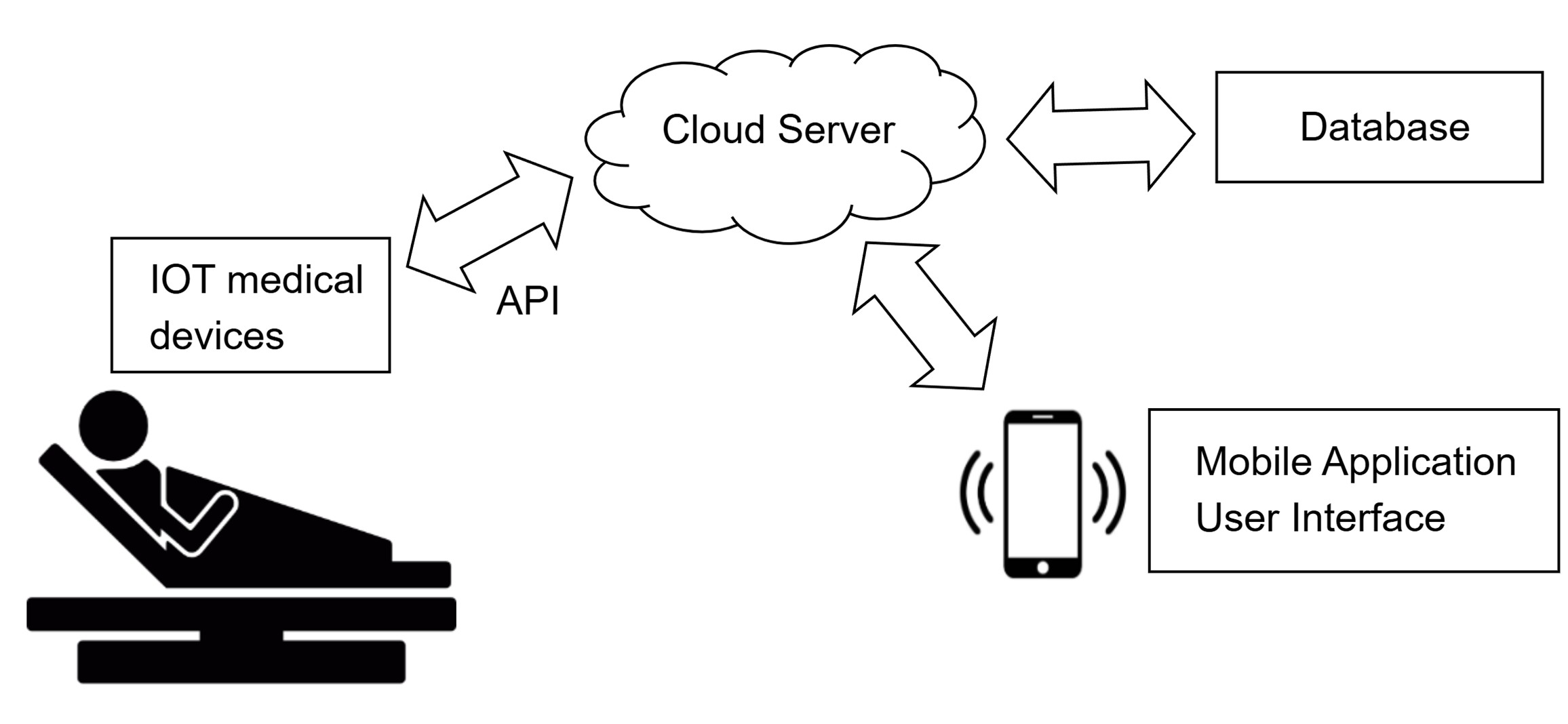
As Thailand's aging population places an escalating burden on its healthcare system, innovative approaches to community-based care are essential. With the number of bedridden elderly projected to nearly triple by 2030, our work addresses this challenge by repurposing existing medical hardware with accessible IoT technology. We developed a remote monitoring system centered on a mobile application built with a no-code platform, using a cloud-based backend. This enables rapid, low-cost development, placing powerful tool-creation capabilities directly into the hands of healthcare professionals. The application provides caregivers with a real-time dashboard and instant alerts to remotely track patient conditions, featuring distinct access levels to ensure data privacy. To demonstrate the capabilities, we retrofitted a standard nursing bed to monitor patient activity and elevation and digitized a blood pressure monitor for interval-based tracking. Preliminary system validation under a controlled environment confirmed high reliability, achieving 100% classification accuracy for bed occupancy and a maximum error of 2° for head-of-bed elevation. A key finding from our analysis is the significant power consumption overhead associated with IoT enablement, resulting in an increase in idle power from 0.86 W to 1.09 W, with the FMCW sensor being the primary consumer (63.6%). Furthermore, a cost-benefit analysis indicates a 67–85% reduction in implementation costs compared to commercial alternatives ($100–175 vs. >$275). This study contributes a validated engineering framework for the sustainable digitalization of legacy medical assets. By quantifying the trade-offs between power and performance and demonstrating that commodity sensors integrated with no-code platforms can achieve high reliability, the work establishes a scalable, low-barrier model for transforming healthcare infrastructure in resource-constrained environments.
Article Details

This work is licensed under a Creative Commons Attribution-NonCommercial-NoDerivatives 4.0 International License.
References
Wongboonsin P, Aungsuroch Y, Hatsukano N. The ageing society and human resources to care for older people in Thailand. Human resources for the health and long-term care of older persons in Asia. 2020;104.
Somrongthong R, Hongthong D, Wongchalee S, Wongtongkam N. The influence of chronic illness and lifestyle behaviors on quality of life among older Thais. Biomed Res Int. 2016;(1):2525941.
Tantirat P, Suphanchaimat R, Rattanathumsakul T, Noree T. Projection of the number of elderly in different health states in Thailand in the next ten years, 2020–2030. International Journal of Environmental Research and Public Health. 2020;17(22):8703.
Chew R, Zaman SI, Joly MA, Uddin D, Nurullah M, Callery JJ, et al. Understanding the primary healthcare context in rural South and Southeast Asia: a village profiling study. International Health. 2025:ihaf025.
Malasinghe LP, Ramzan N, Dahal K. Remote patient monitoring: a comprehensive study. J Ambient Intell Humaniz Comput. 2019;10(1):57-76.
Chakravarty S. Resource constrained innovation in a technology intensive sector: Frugal medical devices from manufacturing firms in South Africa. Technovation. 2022;112:102397.
Liu Z, Cascioli V, McCarthy PW. Healthcare monitoring using low-cost sensors to supplement and replace human sensation: does it have potential to increase independent living and prevent disease?. Sensors. 2023;23(4):2139.
Robru K, Setthasuravich P, Pukdeewut A, Wetchakama S. Internet use for health-related purposes among older People in Thailand: An analysis of nationwide cross-sectional data. Informatics. 2024;11(3):55.
Azmy IH, Azmi A, Kama N, Mohd Rusli H, Chuprat S, Anuar AW. Methods for Application Development by Non-Programmers: A Systematic Literature Review. In: Proceedings of the 2023 5th World Symposium on Software Engineering. 2023. p. 1-8.
Tsuji K, Gurjar S, Miyai T. Democratizing Application Development with AppSheet: A citizen developer's guide to building rapid low-code apps with the powerful features of AppSheet. Packt Publishing Ltd; 2023.
Ferreira J. Google apps script: Web application development essentials. "O'Reilly Media, Inc."; 2014.
Hassan MK, Mohd Rusli MH, Mohd Salleh NA. Development of an order processing system using Google Sheets and Appsheet for a Malaysian automotive SME factory warehouse. Journal of Mechanical Engineering (JMechE). 2023;20(3):63-81.
Kurniawan A, Wardani K, Hamidi EA. Cloud Based Daily Periodic Inspection Dozer Komatsu D31P Using Google Appsheet Development Platform. In: 2023 9th International Conference on Wireless and Telematics (ICWT); IEEE; 2023. p. 1-5.
Pietrangeli I, Mazzuto G, Ciarapica FE, Bevilacqua M. Smart retrofit: an innovative and sustainable solution. Machines. 2023;11(5):523.
Iannella G, Cammaroto G, Meccariello G, Cannavicci A, Gobbi R, Lechien JR, et al. Head-Of-Bed elevation (HOBE) for improving positional obstructive sleep apnea (POSA): an experimental study. Journal of clinical medicine. 2022;11(19):5620.
Lv W, He W, Lin X, Miao J. Non-contact monitoring of human vital signs using FMCW millimeter wave radar in the 120 GHz band. Sensors. 2021;21(8):2732.
Liu G, Li X, Xu C, MA L, LI H. FMCW Radar-Based Human Sitting Posture Detection. IEEE Access. 2023;11:102746–56.
Ibeh CV, Elufioye OA, Olorunsogo T, Asuzu OF, Nduubuisi NL, Daraojimba AI. Data analytics in healthcare: A review of patient-centric approaches and healthcare delivery. World Journal of Advanced Research and Reviews. 2024;21(02):1750-60.
Cheung JC, Tam EW, Mak AH, Chan TT, Lai WP, Zheng YP. Night-time monitoring system (eNightLog) for elderly wandering behavior. Sensors. 2021;21(3):704.
Chen Z, Wang Y. Remote recognition of in-bed postures using a thermopile array sensor with machine learning. IEEE Sens J. 2021;21(9):10428–36.
Salice F, de Vellis M, Barbieri AG, Masciadri A, Comai S. Nonintrusive monitoring and detection of sitting and lying persons: a technological review. IEEE Access. 2024;12:178875–97.
Sravanthi M, Gunturi SK, Chinnaiah MC, Lam SK, Divya Vani G, Basha M, et al. A field-programmable gate array-based adaptive sleep posture analysis accelerator for real-time monitoring. Sensors. 2024;24(22):7104.
Peretz D, Arnaert A, Ponzoni NN. Determining the cost of implementing and operating a remote patient monitoring programme for the elderly with chronic conditions: A systematic review of economic evaluations. J Telemed Telecare. 2018;24:13–21.
Tran VT, Ravaud P. Frugal innovation in medicine for low resource settings. BMC Med. 2016;14:10.
