
Evidence-Based, Collaborative, and Innovation-Driven Approaches to the Development of Nursing Education Institutions’ roles for Sustainable Breastfeeding Promotion
Article Sidebar
Main Article Content
Abstract
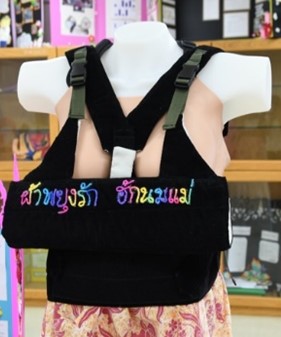
This article is a scholarly narrative synthesizing evidence-based literature and practical experiences derived from the development of a specialized nursing training curriculum on breastfeeding at the Faculty of Nursing, Nakhon Pathom Rajabhat University. The objective was to synthesize approaches for strengthening nursing education institutions’ roles through evidence-based practice, collaboration, and innovation to promote sustainable breastfeeding and to support the implementation of the “Miracle of the First 1,000 Days Plus to 2,500 Days” initiative within the Thai health system. The synthesis identified four key components: structured and experiential learning, development of counseling and psychosocial support competencies, system-level support, and integration with real-life contexts of mothers and families. In addition, five breastfeeding-related innovations were developed and implemented, demonstrating tangible outcomes, including improved continuity and maternal confidence in breastfeeding, with breastfeeding continuation rates ranging from 70% to 90%. The findings highlight the critical role of nursing education institutions in translating evidence, innovation, and policy into sustainable practice, thereby strengthening breastfeeding promotion across educational and healthcare systems.
Article Details

This work is licensed under a Creative Commons Attribution-NonCommercial-NoDerivatives 4.0 International License.
ความคิดเห็นและข้อเสนอแนะใดๆ ที่นำเสนอในบทความเป็นของผู้เขียนแต่เพียงผู้เดียว โดยบรรณาธิการ กองบรรณาธิการ และคณะกรรมการวารสารวิทยาศาสตร์และเทคโนโลยี มหาวิทยาลัยปทุมธานี ไม่ได้มีส่วนเกี่ยวข้องแต่อย่างใด มหาวิทยาลัย บรรณาธิการ และกองบรรณาธิการจะไม่รับผิดชอบต่อข้อผิดพลาดหรือผลที่เกิดจากการใช้ข้อมูลที่ปรากฏในวารสารฉบับนี้
References
Azores, B. (2024). The impact of the breastfeeding education and training program on perinatal nurses’ knowledge and practices and the hospital’s exclusive breastfeeding rate (Doctoral dissertation, William Paterson University). William Paterson University Repository. https://repository.wpunj.edu/bitstream/20.500.12164/3468/1/ Azores_Breastfeeding.pdf.
Beake, S., Pellowe, C., Dykes, F., Schmied, V., & Bick, D. (2012). A systematic review of structured compared with non-structured breastfeeding programmes to support the initiation and duration of exclusive and any breastfeeding in acute and primary health care settings. Maternal & Child Nutrition, 8(2), 141–274. https://doi.org/10.1111/j.1740-8709.2011.00381.x
Bowdler, S., Nielsen, W., Meedya, S., & Salamonson, Y. (2023). Applying legitimation code theory to teach breastfeeding in nurse education: A case study. Nurse Education in Practice, 72, 103780. https://doi.org/10.1016/j.nepr.2023.103780
Brown, T. (2008). Design thinking. Harvard Business Review, 86(6), 84–92.
Department of Health, Ministry of Public Health. (2023). Advancing the national strategy on breastfeeding promotion: Targeting at least 50% exclusive breastfeeding by 2025. Bureau of Nutrition. Retrieved. (2025, 1 June) Retrieved from https://hp.anamai.moph.go.th/th/news-anamai/225611
D’Hollander, C. J., McCredie, V. A., Uleryk, E. M., Keown-Stoneman, C. D. G., Birken, C. S., O’Connor, D. L., & Maguire, J. L. (2023). Breastfeeding support provided by lactation consultants in high-income countries for improved breastfeeding rates, self-efficacy, and infant growth: A systematic review and meta-analysis protocol. Systematic Reviews, 12, Article 75. https://doi.org/10.1186/s13643-023-02239-9
Li, X., Li, Y., Qian, L., Han, P., Feng, H., & Jiang, H. (2024). Mothers’ experiences of breast milk expression during separation from their hospitalized infants: A systematic review of qualitative evidence. BMC Pregnancy and Childbirth, 24(1), 124. https://doi.org/10.1186/s12884-024-06323-3
Pangerl, S., Ross-Adije, G., & Geraghty, S. (2024). Sources of breastfeeding knowledge and support skills among midwives and students: A scoping review. British Journal of Midwifery. Advance online publication. Retrieved. (2025, 1 June) Retrieved from https://www.britishjournalofmidwifery.com/content/literature-review/sources-of-breastfeeding-knowledge-and-support-skills-among-midwives-and-students-a-scoping-review
Roberts, D., Jackson, L., Davie, P., Zhao, C., Harrold, J. A., Fallon, V., & Silverio, S. A. (2023). Exploring the reasons why mothers do not breastfeed, to inform and enable better support. Frontiers in Global Women’s Health, 4, Article 1148719. https://doi.org/10.3389/fgwh.2023.1148719
Sandhi, A., Nguyen, C. T. T., Lin-Lewry, M., Lee, G. T., & Kua, S. Y. (2023). Effectiveness of breastfeeding educational interventions to improve breastfeeding knowledge, attitudes, and skills among nursing, midwifery, and medical students: A systematic review and meta-analysis. Nurse Education Today, 126, 105813. https://doi.org/10.1016/j.nedt.2023.105813
Thai Nursing and Midwifery Council. (2020a). Development of instructional guidelines on breastfeeding education in the Bachelor of Nursing Science curriculum. Retrieved. (2025, 15 June) Retrieved from https://www.tnmc.or.th/images/userfiles/files/NM%20Strategic%20Plan.pdf
Thai Nursing and Midwifery Council. (2020b). Training and development of nurse educators to support breastfeeding. Retrieved. (2025, 10 June) Retrieved from https://www.tnmc.or.th/news/475/
Thai Nursing and Midwifery Council. (2022). Strategic plan for nursing and midwifery 2022–2026. Retrieved. (2025, 20 June) Retrieved from https://www.tnmc.or.th/news/191/
UNICEF Thailand. (2023). Breastfeeding promotion and support in Thailand: Progress, challenges, and targets toward 2025. United Nations Children’s Fund. Retrieved. (2025, 4 June) Retrieved from https://www.unicef.org/thailand
World Health Organization. (2019). Guiding principles for complementary feeding of the breastfed child. World Health Organization. Retrieved. (2025, 4 June) Retrieved from https://www.who.int/publications/i/item/WHO-NMH-NHD-02.1
World Health Organization. (2023). Infant and young child feeding: Evidence-based practices and strategies. World Health Organization. Retrieved. (2025, 8 June) Retrieved from https://www.who.int/publications/i/item/9789240073709
Yeşil, Y., Ekşioğlu, A., & Ceber Turfan, E. (2023). The effect of hospital-based breastfeeding group education given early period on breastfeeding self-efficacy and breastfeeding status. Journal of Neonatal Nursing, 29, 81–90. https://doi.org/10.1016/j.jnn.2022.02.013
Youssef, J. (2023). Improving breastfeeding rates through education (Doctoral dissertation, San José State University). San José State University ScholarWorks. Retrieved. (2025, 8 June) Retrieved from https://scholarworks.sjsu.edu/etd_doctoral/170/
