
แนวทางการพัฒนาบทบาทสถาบันการศึกษาพยาบาลบนฐานหลักฐานเชิงประจักษ์ ความร่วมมือ และนวัตกรรมเพื่อการส่งเสริมการเลี้ยงลูกด้วยนมแม่อย่างยั่งยืน
Article Sidebar
Main Article Content
บทคัดย่อ
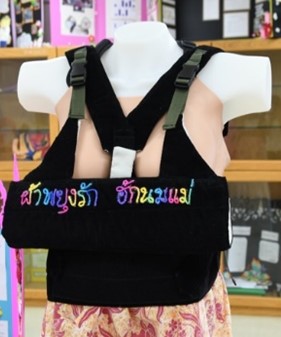
บทความวิชาการนี้เป็นการบรรยายเชิงวิชาการ (Scholarly Narrative) ที่สังเคราะห์จากการทบทวนเอกสารหลักฐานเชิงประจักษ์ร่วมกับประสบการณ์จริงจากการพัฒนาหลักสูตรการฝึกอบรมการพยาบาลเฉพาะทางการเลี้ยงลูกด้วยนมแม่ ของคณะพยาบาลศาสตร์ มหาวิทยาลัยราชภัฏนครปฐม วัตถุประสงค์เพื่อสังเคราะห์แนวทางการพัฒนาบทบาทสถาบันการศึกษาพยาบาลบนฐานหลักฐานเชิงประจักษ์ ความร่วมมือ และนวัตกรรม เพื่อสนับสนุนการส่งเสริมการเลี้ยงลูกด้วยนมแม่อย่างยั่งยืนให้เป็นกลไกในการขับเคลื่อนโครงการมหัศจรรย์ 1,000 วัน Plus สู่ 2,500 วันในบริบทระบบสุขภาพไทย ผลการสังเคราะห์ชี้ให้เห็นองค์ประกอบสำคัญ 4 ประการ ได้แก่ การจัดการเรียนรู้ที่มีโครงสร้างและเน้นประสบการณ์จริง การพัฒนาสมรรถนะด้านการให้คำปรึกษาและการสนับสนุนเชิงจิตสังคม การสนับสนุนเชิงระบบ และการบูรณาการกับบริบทชีวิตจริงของมารดาและครอบครัว นอกจากนี้ ผลการพัฒนานวัตกรรมการเลี้ยงลูกด้วยนมแม่จำนวน 5 ชิ้น ซึ่งแสดงผลลัพธ์เชิงประจักษ์ ได้แก่ การเพิ่มความต่อเนื่องและความมั่นใจของมารดาในการเลี้ยงลูกด้วยนมแม่ โดยมีอัตราการคงอยู่ของการให้นมแม่อยู่ระหว่างร้อยละ 70–90 บทความนี้สะท้อนบทบาทของสถาบันการศึกษาพยาบาลในการเชื่อมโยงองค์ความรู้ งานนวัตกรรม และนโยบายสู่การปฏิบัติจริงอย่างยั่งยืน
Article Details

อนุญาตภายใต้เงื่อนไข Creative Commons Attribution-NonCommercial-NoDerivatives 4.0 International License.
ความคิดเห็นและข้อเสนอแนะใดๆ ที่นำเสนอในบทความเป็นของผู้เขียนแต่เพียงผู้เดียว โดยบรรณาธิการ กองบรรณาธิการ และคณะกรรมการวารสารวิทยาศาสตร์และเทคโนโลยี มหาวิทยาลัยปทุมธานี ไม่ได้มีส่วนเกี่ยวข้องแต่อย่างใด มหาวิทยาลัย บรรณาธิการ และกองบรรณาธิการจะไม่รับผิดชอบต่อข้อผิดพลาดหรือผลที่เกิดจากการใช้ข้อมูลที่ปรากฏในวารสารฉบับนี้
เอกสารอ้างอิง
Azores, B. (2024). The impact of the breastfeeding education and training program on perinatal nurses’ knowledge and practices and the hospital’s exclusive breastfeeding rate (Doctoral dissertation, William Paterson University). William Paterson University Repository. https://repository.wpunj.edu/bitstream/20.500.12164/3468/1/ Azores_Breastfeeding.pdf.
Beake, S., Pellowe, C., Dykes, F., Schmied, V., & Bick, D. (2012). A systematic review of structured compared with non-structured breastfeeding programmes to support the initiation and duration of exclusive and any breastfeeding in acute and primary health care settings. Maternal & Child Nutrition, 8(2), 141–274. https://doi.org/10.1111/j.1740-8709.2011.00381.x
Bowdler, S., Nielsen, W., Meedya, S., & Salamonson, Y. (2023). Applying legitimation code theory to teach breastfeeding in nurse education: A case study. Nurse Education in Practice, 72, 103780. https://doi.org/10.1016/j.nepr.2023.103780
Brown, T. (2008). Design thinking. Harvard Business Review, 86(6), 84–92.
Department of Health, Ministry of Public Health. (2023). Advancing the national strategy on breastfeeding promotion: Targeting at least 50% exclusive breastfeeding by 2025. Bureau of Nutrition. Retrieved. (2025, 1 June) Retrieved from https://hp.anamai.moph.go.th/th/news-anamai/225611
D’Hollander, C. J., McCredie, V. A., Uleryk, E. M., Keown-Stoneman, C. D. G., Birken, C. S., O’Connor, D. L., & Maguire, J. L. (2023). Breastfeeding support provided by lactation consultants in high-income countries for improved breastfeeding rates, self-efficacy, and infant growth: A systematic review and meta-analysis protocol. Systematic Reviews, 12, Article 75. https://doi.org/10.1186/s13643-023-02239-9
Li, X., Li, Y., Qian, L., Han, P., Feng, H., & Jiang, H. (2024). Mothers’ experiences of breast milk expression during separation from their hospitalized infants: A systematic review of qualitative evidence. BMC Pregnancy and Childbirth, 24(1), 124. https://doi.org/10.1186/s12884-024-06323-3
Pangerl, S., Ross-Adije, G., & Geraghty, S. (2024). Sources of breastfeeding knowledge and support skills among midwives and students: A scoping review. British Journal of Midwifery. Advance online publication. Retrieved. (2025, 1 June) Retrieved from https://www.britishjournalofmidwifery.com/content/literature-review/sources-of-breastfeeding-knowledge-and-support-skills-among-midwives-and-students-a-scoping-review
Roberts, D., Jackson, L., Davie, P., Zhao, C., Harrold, J. A., Fallon, V., & Silverio, S. A. (2023). Exploring the reasons why mothers do not breastfeed, to inform and enable better support. Frontiers in Global Women’s Health, 4, Article 1148719. https://doi.org/10.3389/fgwh.2023.1148719
Sandhi, A., Nguyen, C. T. T., Lin-Lewry, M., Lee, G. T., & Kua, S. Y. (2023). Effectiveness of breastfeeding educational interventions to improve breastfeeding knowledge, attitudes, and skills among nursing, midwifery, and medical students: A systematic review and meta-analysis. Nurse Education Today, 126, 105813. https://doi.org/10.1016/j.nedt.2023.105813
Thai Nursing and Midwifery Council. (2020a). Development of instructional guidelines on breastfeeding education in the Bachelor of Nursing Science curriculum. Retrieved. (2025, 15 June) Retrieved from https://www.tnmc.or.th/images/userfiles/files/NM%20Strategic%20Plan.pdf
Thai Nursing and Midwifery Council. (2020b). Training and development of nurse educators to support breastfeeding. Retrieved. (2025, 10 June) Retrieved from https://www.tnmc.or.th/news/475/
Thai Nursing and Midwifery Council. (2022). Strategic plan for nursing and midwifery 2022–2026. Retrieved. (2025, 20 June) Retrieved from https://www.tnmc.or.th/news/191/
UNICEF Thailand. (2023). Breastfeeding promotion and support in Thailand: Progress, challenges, and targets toward 2025. United Nations Children’s Fund. Retrieved. (2025, 4 June) Retrieved from https://www.unicef.org/thailand
World Health Organization. (2019). Guiding principles for complementary feeding of the breastfed child. World Health Organization. Retrieved. (2025, 4 June) Retrieved from https://www.who.int/publications/i/item/WHO-NMH-NHD-02.1
World Health Organization. (2023). Infant and young child feeding: Evidence-based practices and strategies. World Health Organization. Retrieved. (2025, 8 June) Retrieved from https://www.who.int/publications/i/item/9789240073709
Yeşil, Y., Ekşioğlu, A., & Ceber Turfan, E. (2023). The effect of hospital-based breastfeeding group education given early period on breastfeeding self-efficacy and breastfeeding status. Journal of Neonatal Nursing, 29, 81–90. https://doi.org/10.1016/j.jnn.2022.02.013
Youssef, J. (2023). Improving breastfeeding rates through education (Doctoral dissertation, San José State University). San José State University ScholarWorks. Retrieved. (2025, 8 June) Retrieved from https://scholarworks.sjsu.edu/etd_doctoral/170/
