การพัฒนาซอฟต์แวร์ตรวจจับวัตถุเคลื่อนที่และบันทึกภาพอัจฉริยะด้วยกล้อง webcam เพื่อการประยุกต์ใช้ในความปลอดภัยขององค์กรธุรกิจ
คำสำคัญ:
การตรวจจับภาพเคลื่อนไหว, การประมวลผลภาพ, การเพิ่มประสิทธิภาพการจัดเก็บข้อมูล, ภาพดิจิทัลบทคัดย่อ
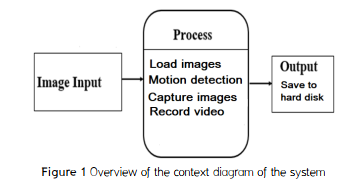
วัตถุประสงค์ในการวิจัยนี้ 1)พัฒนาซอฟต์แวร์ที่ประยุกต์ใช้ในการเฝ้าระวังองค์กรธุรกิจ 2)สร้างระบบที่สามารถจับภาพนิ่งอัตโนมัติทุก 10 วินาที เพื่อใช้ในการจัดเก็บข้อมูลและตรวจสอบย้อนหลังได้อย่างสะดวก 3)พัฒนากลไกการตรวจจับการเคลื่อนไหวอัตโนมัติและบันทึกวิดีโอเฉพาะเมื่อมีการเคลื่อนไหวโดยบันทึกต่อเนื่องนาน 30 วินาที ก่อนหยุดการทำงานจนกว่าจะตรวจพบการเคลื่อนไหวครั้งใหม่ 4)เพื่อทดสอบและเปรียบเทียบประสิทธิภาพการประหยัดพื้นที่จัดเก็บข้อมูลของซอฟต์แวร์ที่พัฒนาขึ้น
งานวิจัยนี้ใช้เทคนิคการประมวลผลภาพดิจิทัล (Image Processing) ร่วมกับการตรวจจับการเคลื่อนไหวด้วยวิธี Frame Differencing และ Background Subtraction โดยพัฒนาระบบด้วยภาษา C# เชื่อมต่อกับ Webcam เพื่อบันทึกภาพนิ่งตามช่วงเวลาและวิดีโอเมื่อมีการเคลื่อนไหว พร้อมทั้งจัดเก็บข้อมูลในรูปแบบไฟล์ดิจิทัลเพื่อการเรียกดูย้อนหลัง
ผลการประเมินประสิทธิภาพของซอฟต์แวร์ที่ได้พัฒนาจากการทดสอบบันทึกภาพจาก Webcam ของซอฟต์แวร์ที่พัฒนาซึ่ง ฟังก์ชั่นที่1)ถ่ายภาพนิ่ง ประหยัดพื้นที่ได้ 88.15% ฟังก์ชั่นที่อ 2)ถ่ายวิดีโอขณะมีวัตถุเคลื่อนไหว ประหยัดพื้นที่ได้ 98.75 % ถือว่ามีประสิทธิภาพอยู่ในระดับดีมาก แสดงว่าประสิทธิภาพในการประหยัดพื้นที่ในการบันทึกข้อมูล อยู่ในระดับที่ค่อนข้างดีมาก และมีความเหมาะสมต่อการนำไปประยุกต์ใช้ในงานการตรวจตราและเฝ้าระวังองค์กรธุรกิจ
เอกสารอ้างอิง
Barney, J. (1991). Firm resources and sustained competitive advantage. Journal of Management, 17(1), 99–120.
Canny, J. (1986). A computational approach to edge detection. IEEE Transactions on Pattern Analysis and Machine Intelligence, (6), 679–698.
Digital Samba. (2023). Unravelling video bitrate: How to boost video quality and streaming performance. Digital Samba. Logitech. (n.d.). Logitech C270 HD Webcam. Logitech.
Gonzalez, R. C., & Woods, R. E. (2018). Digital Image Processing (4th ed.). Pearson.
Gill, M., & Spriggs, A. (2005). Assessing the impact of CCTV. Home Office Research Study 292.
Laudon, K. C., & Laudon, J. P. (2020). Management information systems: Managing the digital firm (16th ed.). Pearson.
Norris, C., McCahill, M., & Wood, D. (2004). The growth of CCTV: A global perspective on the international diffusion of video surveillance in publicly accessible space. Surveillance &Society, 2(2/3), 110–135.
Piccardi, M. (2004). Background subtraction techniques: a review. IEEE International Conference on Systems, Man and Cybernetics, 4, 3099–3104.
Redmon, J., Divvala, S., Girshick, R., & Farhadi, A. (2016). You Only Look Once: Unified, Real-Time Object Detection. In Proceedings of the IEEE Conference on Computer Vision and Pattern Recognition (pp. 779–788).
Robbins, S. P., & Coulter, M. (2018). Management (14th ed.). Pearson.
Rad, A. A. (2017). Motion detection for real-time surveillance applications. International Journal of Computer Applications, 168(4), 23–28.
Ratcliffe, J. (2011). Video surveillance and crime reduction: The effect of CCTV on crime prevention. Policing, 5(3), 233–239.
Szeliski, R. (2010). Computer Vision: Algorithms and Applications. Springer.
Toyama, K., Krumm, J., Brumitt, B., & Meyers, B. (1999). Wallflower: Principles and practice of background maintenance. In Proceedings of the Seventh IEEE International Conference on Computer Vision, (1), 255–261.
Unterkalmsteiner, M.,Gorschek,T., Islam, A. K. M. M., Cheng, C.K., Permadi, R. B., & Feldt, R. (2023). Evaluation and measurement of software process improvement A systematic literature review.
Wikipedia. (2023). Advanced Video Coding. In Wikipedia.
Wikipedia. (2023). Bit rate. In Wikipedia. Form https://en.wikipedia.org/wiki/Bit_rate
Wikipedia. (2023). Data-rate units. In Wikipedia. Form https://en.wikipedia.org/wiki/Data-rate_units
Wowza. (2023).What is video bitrate and what bitrate should you use. Wowza Media Systems. Form https://www.wowza.com/blog/what-is-video-bitrate-and-what-bitrate-
Wikipedia. (2023). Bit rate. In Wikipedia. Form https://en.wikipedia.org/wiki/Bit_rate
Wiegand, T., Sullivan, G. J., Bjøntegaard, G., & Luthra, A. (2003). Overview of the H.264/AVC video coding standard. IEEE Transactions on Circuits and Systems for Video Technology, 13(7), 560–576.
Zivkovic, Z. (2004). Improved adaptive Gaussian mixture model for background subtraction. In Proceedings of the 17th International Conference on Pattern Recognition, ICPR 2004 (2), pp. 28–31.