An Analysis of User Needs Factors for Postal Services at Division of General Affairs, University of Phayao
Keywords:
The Postal Service of General Affairs, University of Phayao, User Needs, Factors Related to Service UsageAbstract
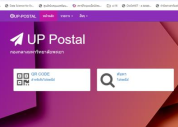
Postal Services at Division of General Affairs, University of Phayao responsible for the delivery and receipt of documents and parcels across various departments. The service is supported by personnel and the "UP Postal" system. Previously, user needs had never been systematically surveyed or analyzed resulting in a lack of targeted improvements to meet their expectations. This research aimed to investigate the factors influencing user needs and to compare the importance placed on various service aspects by different user groups. In this study, the data was collected from 73 service users via questionnaires and evaluated using descriptive and non-parametric statistics. The findings revealed that users considered all factors to be of high importance, especially the use of the UP Postal system and service outcomes. The most critical factor in the system aspect was its user-friendliness and efficiency, while in the service outcome aspect, it was the overall positive impression of the service. Age-based comparisons revealed that users aged 35 and above placed significantly greater importance on the UP Postal system and service facilities than those aged 18–24 (p<0.05). Support staff considered the search function and facilities significantly more important than students (p<0.05). Therefore, users who both sent and received mail rated all service aspects significantly higher than those who only received mail (p<0.05). These findings can be applied to improve and develop the postal services in alignment with the specific needs of different user groups.
References
Best, J. W. (1978). Research in education (3rd ed.). Englewood Cliffs, NJ: Prentice Hall.
Bitner, M. J., Ostrom, A. L., & Morgan, F. N. (2008). Service blueprinting: A practical technique for service innovation. California Management Review, 50(3), 66–94.
Chansangthong, K. (2016). Factors affecting user satisfaction with the commercial loan approval system: A case study of a commercial bank (Master of Science thesis), Information Technology Policy and Management Program, College of Innovation, Thammasat University, Bangkok, Thailand. (in Thai)
Chanthraphakdi, P., Saengarun, C., & Sutthijit, S. (2021). Evaluation of service quality of administrative departments in universities. Chiang Mai University Journal of Research and Development, 23(2), 45–57. (in Thai)
Chatthai, W. (2021). User satisfaction with the electronic postal system in higher education institutions. JOPA CRRU, 10(2), 112–125. (in Thai)
Cheng, J. H., Chiu, S. I., Hu, H. Y., & Chang, Y. Y. (2015). "A Study on the Service Quality and Customer Satisfaction in Public Sector." Journal of Public Administration Research and Theory, 25(2), 421–439.
Davis, F. D. (1989). Perceived usefulness, perceived ease of use, and user acceptance of information technology. MIS Quarterly, 13(3), 319–340.
Denhardt, R. B., & Denhardt, J. V. (2003). The new public service: Serving, not steering. M.E. Sharpe.
Grönroos, C. (1984). A service quality model and its marketing implications. European Journal of Marketing, 18(4), 36–44.
Grönroos, C. (1990). Service Management and Marketing: Managing the Moments of Truth in Service Competition. Lexington Books.
Kotler, P., & Keller, K. L. (2016). Marketing management (15th ed.). Pearson Education.
Krejcie, R. V., & Morgan, D. W. (1970). Determining sample size for research activities. Educational and Psychological Measurement, 30(3), 607–610.
Moolabut, P. (2019). Development of postal and parcel delivery services at Mahasarakham Rajabhat University [R2R research report]. Mahasarakham: Mahasarakham Rajabhat University. (in Thai)
Office of the Higher Education Commission. (2020). Guidelines for internal management in government organizations: Communication and document delivery. Bangkok: Ministry of Higher Education, Science, Research and Innovation. (in Thai)
Oliver, R. L. (1997). Satisfaction: A behavioral perspective on the consumer. McGraw-Hill.
Nguyen, T., Le, D., & Pham, H. (2020). "Age Differences in E-Government Service Usage: Usability and Design Implications." Government Information Quarterly, 37(4), 101-131.
Parasuraman, A., Zeithaml, V. A., & Berry, L. L. (1988). SERVQUAL: A multiple-item scale for measuring consumer perceptions of service quality. Journal of Retailing, 64(1), 12–40.
Thanaporn, T., & Surapol, C. (2022). Service quality factors affecting satisfaction of public university postal service users in Thailand. Journal of Public Administration and Management, 11(2), 55–70.
Venkatesh, V., Morris, M. G., Davis, G. B., & Davis, F. D. (2003). User acceptance of information technology: Toward a unified view. MIS Quarterly, 27(3), 425–478.
Venkatesh, V., & Bala, H. (2008). Technology Acceptance Model 3 and a Research Agenda on Interventions. Decision Sciences, 39(2), 273–315.