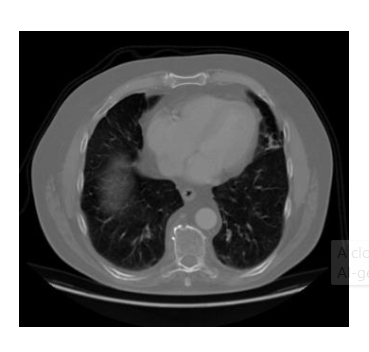
Lung Cancer Prediction from CT Scan Images Using Convolutional Neural Network
Keywords:
Lung Cancer, CT Scan, Machine Learning, Convolutional Neural Network, Ensemble MethodAbstract
Lung cancer is a serious disease and a leading cause of death both in Thailand and worldwide. Early detection is crucial, as it significantly increases the chances of successful treatment and reduces mortality rates. This research aims to study and develop a deep neural network model for lung cancer prediction using computed tomography scan images. The dataset consists of 1,000 images classified into four categories: adenocarcinoma, squamous cell carcinoma, large cell carcinoma, and normal lung.
The study compared the performance of four deep learning models ResNet50, VGG16, InceptionV3, and DenseNet121. The results from each model were then combined using the Stacking Ensemble method with 5 machine learning techniques as meta models: Random Forest, Logistic Regression, Support Vector Machine, K-Nearest Neighbors, and Naive Bayes. Experimental results showed that the ensemble model using Random Forest achieved the highest accuracy of 98.73 percent, outperforming all individual models.
References
Alowais, S. A., Alghamdi, S. S., Alsuhebany, N., Alqahtani, T., Alshaya, A. I., Almohareb, S. N., ... & Albekairy, A. M. (2023). Revolutionizing healthcare: The role of artificial intelligence in clinical image analysis. BMC Medical Education. from https://doi.org/10.1186/s12909-023-04698-z.
American Cancer Society. (2024, 12 September). What is lung cancer?. From https://www.cancer.org/cancer/lung-cancer/about/what-is.html.
Aziz Taha, Abdel. (2015). Metrics for evaluating 3D medical image segmentation: Analysis, selection, and tool. BMC Medical Imaging, 15(29), 1–28. from https://doi.org/10.1186/s12880-015-0068-x.
BNH Hospital. (2024, 10 September). How are X-ray and CT scan for lung cancer screening different? Which is better & is it true that frequent scans pose a cancer risk?. From https://www.bnhhospital.com/th/. (in Thai)
Department of Medical Services. (2024, 10 September). Headline: National Cancer Institute recommends avoiding lung cancer risk factors. From https://www.dms.go.th/Content/Select_Landding_page?contentId=47994. (in Thai)
Friedman, J., Hastie, T., & Tibshirani, R. (2020). The elements of statistical learning: Data mining, inference, and prediction (2nd ed.). Springer.
Ferdous, M. J., & Shahriyar, R. (2024). An ensemble convolutional neural network model for brain stroke prediction using brain computed tomography images. Healthcare Analytics, 6, Article 100368. From https://doi.org/10.1016/j.health.2024.100368.
Google Developers. (2025, 5 May). Classification: Accuracy, recall, precision, and related metrics. from https://developers.google.com/machine-learning/crash-course/classification/accuracy-precision-recall?hl=th.
Hany, M. (2024, 10 September). Chest CT-scan images dataset [Dataset]. Kaggle. From https://www.kaggle.com/datasets/mohamedhanyyy/chest-ctscan-images.
He, K., Zhang, X., Ren, S., & Sun, J. (2016). Deep residual learning for image recognition. In Proceedings of the IEEE Conference on Computer Vision and Pattern Recognition (CVPR) (pp. 770–778). From https://doi.org/10.1109/CVPR.2016.90.
Huang, G., Liu, Z., Van Der Maaten, L., & Weinberger, K. Q. (2017). Densely connected convolutional networks. In Proceedings of the IEEE Conference on Computer Vision and Pattern Recognition (CVPR) (pp. 4700–4708). from https://doi.org/10.1109/CVPR.2017.243.
IBM. (2025, 5 May). Support vector machine, random forest, naive Bayes, and k-nearest neighbors. From https://www.ibm.com/think/topics/.
Islam, M. R., & Nahiduzzaman, M. (2022). Complex features extraction with deep learning model for the detection of COVID-19 from CT scan images using ensemble based machine learning approach. Expert Systems with Applications, 195, 116554. from https://doi.org/10.1016/j.eswa.2022.116554.
Khan, I. I., & Fattah, H. M. A. (2022). An ensemble technique of CNN for lung cancer identification. International Journal of Engineering Research and Management, 9(11), 7–11. From https://www.ijerm.com/download_data/IJERM0911003.pdf.
Li, X., Zhang, Y., Chen, Z., & Wang, H. (2025). FPA-based weighted average ensemble of deep learning models for classification of lung cancer using CT scan images (Scientific Reports). Advance online publication. from https://doi.org/10.1038/s41598-025-02015-w.
Lanjewar, M. G., Panchbhai, K. G., & Charanarur, P. (2023). Lung cancer detection from CT scans using modified DenseNet with feature selection methods and ML classifiers. Expert Systems with Applications, 224, 119961. from https://doi.org/10.1016/j.eswa.2023.119961.
Mamun, M., Mahmud, M. I., Meherin, M., & Abdelgawad, A. (2023). LCDctCNN: Lung cancer diagnosis of CT scan images using CNN based model. arXiv. from https://doi.org/10.48550/arXiv.2304.04814.
Mamun, S., Patil, A., & Gite, S. (2023). Lung cancer detection from CT scans using modified DenseNet with feature selection methods and machine learning classifiers. Expert Systems with Applications. From https://doi.org/10.1016/j.eswa.2023.119961.
National Cancer Institute. (2021, 24 May). Lung cancer screening (PDQ®) – Patient version. U.S. Department of Health and Human Services, National Institutes of Health. From https://www.cancer.gov/types/lung/patient/lung-screening-pdq.
Opitz, J., & Burst, S. (2019). Macro F1 and macro F1. arXiv preprint arXiv:1911.03347. From https://doi.org/10.48550/arXiv.1911.03347.
Perez, L., & Wang, J. (2017). The effectiveness of data augmentation in image classification using deep learning. arXiv preprint arXiv:1712.04621.
Powers, D. M. W. (2011). Evaluation: From precision, recall and F-measure to ROC, informedness, markedness & correlation. Journal of Machine Learning Technologies, 2(1), 37–63.
Rana, D. J., & Rana, K. (2025). SEMLCC: A stacked ensemble model with transfer learning for high-accuracy lung cancer classification from CT images. Procedia Computer Science, 258(C), 2584–2596. From https://doi.org/10.1016/j.procs.2025.04.520.
Raza, R., Zulfiqar, F., Khan, M. O., Arif, M., Alvi, A., Iftikhar, M. A., & Alam, T. (2024). Lung-EffNet: Lung cancer classification using EfficientNet from CT-scan images. Engineering Applications of Artificial Intelligence, 130, 105086. from https://doi.org/10.1016/j.engappai.2023.106902.
Reddy, S. R. B. R., Sen, S., Bhatt, R., Dhanetwal, M. L., Sharma, M., & Naaz, R. (2024). Stacked neural nets for increased accuracy on classification on lung cancer. Biomedical Signal Processing and Control, 90, 105491. from https://doi.org/10.1016/j.measen.2024.101052.
Shorten, C., & Khoshgoftaar, T. M. (2019). A survey on image data augmentation for deep learning. Journal of Big Data, 6(1), 60.
Simonyan, K., & Zisserman, A. (2015). Very deep convolutional networks for large-scale image recognition. International Conference on Learning Representations (ICLR). from https://arxiv.org/abs/1409.1556.
Swain, A. K., Swetapadma, A., Rout, J. K., & Balabantaray, B. K. (2024). Classification of non-small cell lung cancer types using sparse deep neural network features. Biomedical Signal Processing and Control, 87, Article 105485. from https://doi.org/10.1016/j.bspc.2023.105485.
Shaikh, A., Amin, S., Zeb, M. A., Sulaiman, A., & Al Reshan, M. S. (2025). Computers in Biology and Medicine. Advance online publication. From https://doi.org/10.1016/j.compbiomed.2025.109703.
Szegedy, C., Vanhoucke, V., Ioffe, S., Shlens, J., & Wojna, Z. (2016). Rethinking the inception architecture for computer vision. In Proceedings of the IEEE Conference on Computer Vision and Pattern Recognition (CVPR) (pp. 2818–2826). from https://doi.org/10.1109/CVPR.2016.308.
Tawfik, N., et al. (2024). Enhancing early detection of lung cancer through advanced image processing techniques and deep learning architectures for CT scans. Computational Materials and Continua, 81(1), 271–307.
Thai Health Promotion Foundation. (2024, 10 September). Lung cancer: A risk that is close to you. From https://www.thaihealth.or.th/. (in Thai)
World Health Organization. (2024, 10 September). Cancer. From https://www.who.int/news-room/fact-sheets/detail/cancer.
Wolpert, D. H. (1992). Stacked generalization. Neural Networks, 5(2), 241-259. From https://doi.org/10.1016/S0893-6080(05)80023-1.