Development of In-House Simple Plasma Extractor for Supportive the Classroom Learning of Medical Technology Students
Keywords:
Plasma Extractor, Blood Component, Medical Technology, Learning, Classroom, InnovationAbstract
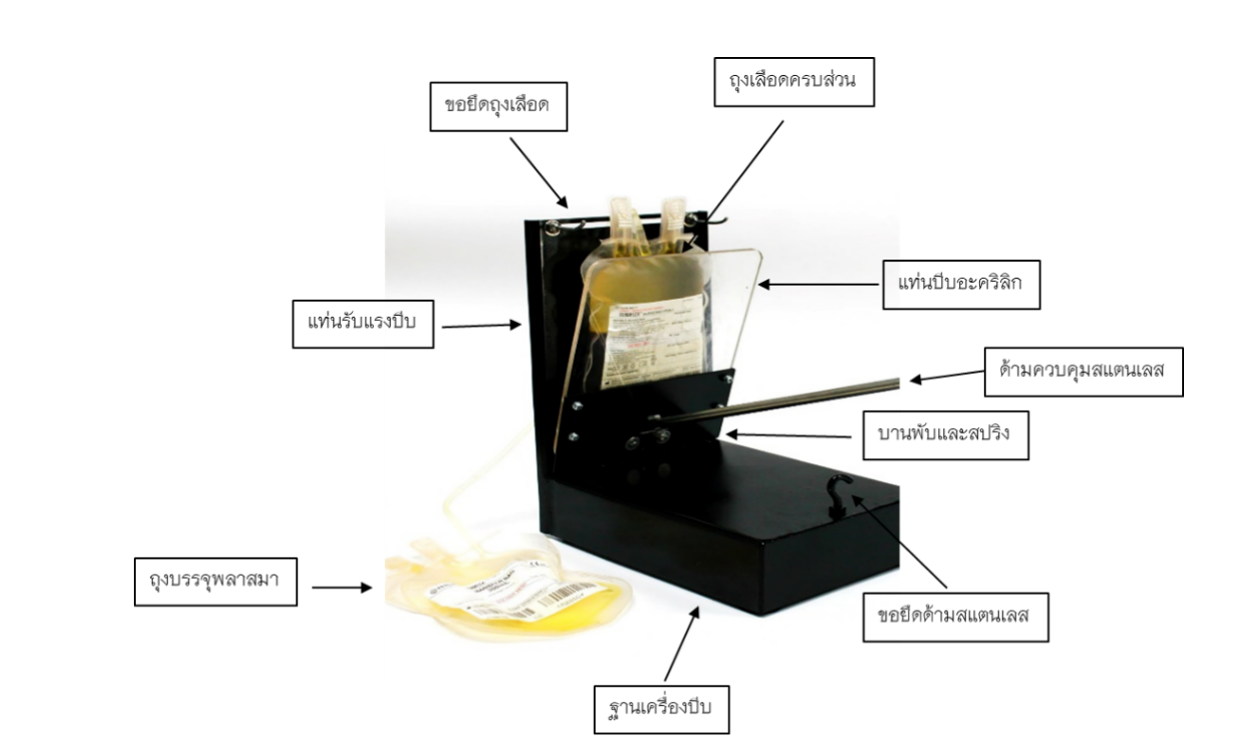
The present study aims to develop in-house simple plasma extractor for students in the department of medical technology and to evaluate effect of in-house simple plasma extractor on the supportive learning and satisfaction in a laboratory classroom of transfusion science1 of medical technology students. The participants in this study included 95 of the third year students of medical technology department, registered in the course of transfusion science1 in the first semester of academic year 2023. The research tools for data collection in this study consisted of a satisfaction assessment form regarding the development of in-house plasma extractor and a satisfaction assessment form regarding the quality of simple plasma extractor and in-house innovation for improvement of classroom learning in the students. After quality examination by the experts, the research tools were applied to collected and analyze the data. The results of this study were reported as mean and standard deviation. Moreover, the comparison of student’s satisfaction between before and after the laboratory learning was statistically analyzed by using paired sample t-test. The data exhibited that the average score in a section of simple plasma extractor quality was the high level (4.46±0.61) and the average score in a section of innovation quality to support learning was the highest level (4.64±0.54) after applying innovation of plasma extractor in the classroom. These average score also was found to more than average score of prior using plasma extractor in the classroom with significantly different level (p<0.05). Accordingly, the in-house simple plasma extractor prepared in the classroom of transfusion science1 could improve efficiently the satisfaction and learning of the students.
References
ธิดาภัทร อนุชาญ และ พิษณุ อนุชาญ. (2566). การพัฒนาแอปพลิเคชันด้วยความเป็นจริงเสริมเพื่อส่งเสริมการเรียนรู้สถานที่ท่องเที่ยวเชิงประวัติศาสตร์ตามรอยพระพุทธเจ้าหลวง (รัชกาลที่ 5) ของจังหวัดสงขลา. วารสารวิชาการพระจอมเกล้าพระนครเหนือ, 33(3), 1-15.
ภัทรณัฐสุดา จารุธีรพันธุ์. (2566). การพัฒนาแอปพลิเคชันความจริงเสริม (AR) สำหรับการนำเสนอผลิตภัณฑ์ชุมชนไทดำ บ้านนาป่าหนาด อำเภอเชียงคาน จังหวัดเลย. วารสารสารสนเทศศาสตร์, 41(1), 87-102.
วรลักษณ์ วงศ์โดยหวัง ศิริเจริญ, ธันยา นวลละออง และ ชุตินันท์ ปทีปะปานี. (2564). เทคนิคความจริงเสริมด้านสุขภาพเพื่อพัฒนาคุณภาพชีวิตผู้สูงอายุ. วารสารวิชาการนวัตกรรมสื่อสารสังคม, 9(1), 120-129.
สำนักงานโครงการอนุรักษ์พันธุกรรมพืชฯ. (2565ก). ตอบรับสมาชิก “สวนพฤกษศาสตร์โรงเรียน”. สืบค้นจาก http://rspg.or.th/botanical_school/neo_sbg/sbg_subscribe_status/north/LPN/751120001_โรงเรียนน้ำดิบวิทยาคม.pdf.
สำนักงานโครงการอนุรักษ์พันธุกรรมพืชฯ. (2565ข). เอกสารเกี่ยวข้องกับงานสวนพฤกษศาสตร์โรงเรียน. สืบค้นจาก http://www.rspg.or.th/botanical_school/scb_document.htm.
อภิวดี จิตเกษมภูรี พิศประไพ สาระศาลิน และ ชัยพร พานิชรุทติวงศ์. (2562). เทคโนโลยีความจริงเสริมเพื่อการจัดแสดงเครื่องถ้วยไทย. การประชุมวิชาการระดับชาติ มหาวิทยาลัยรังสิต ประจำปี 2562, วันที่ 26 เมษายน 2562 (น. 373-381). ปทุมธานี: สถาบันวิจัย มหาวิทยาลัยรังสิต.
เอกรัฐ วะราโภ และ อรวรรณ แท่งทอง. (2562). สื่อการเรียนรู้ดาวเคราะห์ในระบบสุริยะด้วยเทคโนโลยี Augmented Reality (AR) กรณีศึกษานักเรียน ชั้นประถมศึกษาปีที่ 4. วารสารโครงงานวิทยาการคอมพิวเตอร์และเทคโนโลยีสารสนเทศ, 5(2), 77-83.
Azuma, R.T. (1997). A survey of augmented reality. Presence: Teleoperators and Virtual Environments, 6(4), 355-385.
Best, J.W. (1977). Research in Education (3rd ed). New Jersey: Prentice-Hall, Englewood Cliffs.
Likert, R. (1967). The method of constructing and attitude scale, in attitude theory and measurement. New York: Wiley & Son.
Rovinelli, R.J. and Hambleton, R.K. (1977). On the use of content specialists in the assessment of criterion-referenced test item validity. Tijdschrift voor Onderwijsresearch, 2(2), 49-60.
Yamane, T. (1967). Statistics: An Introductory Analysis (2nd ed). New York: Harper and Row.