
Warfarin Care: Warfarin Management System for Older Adults
Article Sidebar
Main Article Content
Abstract
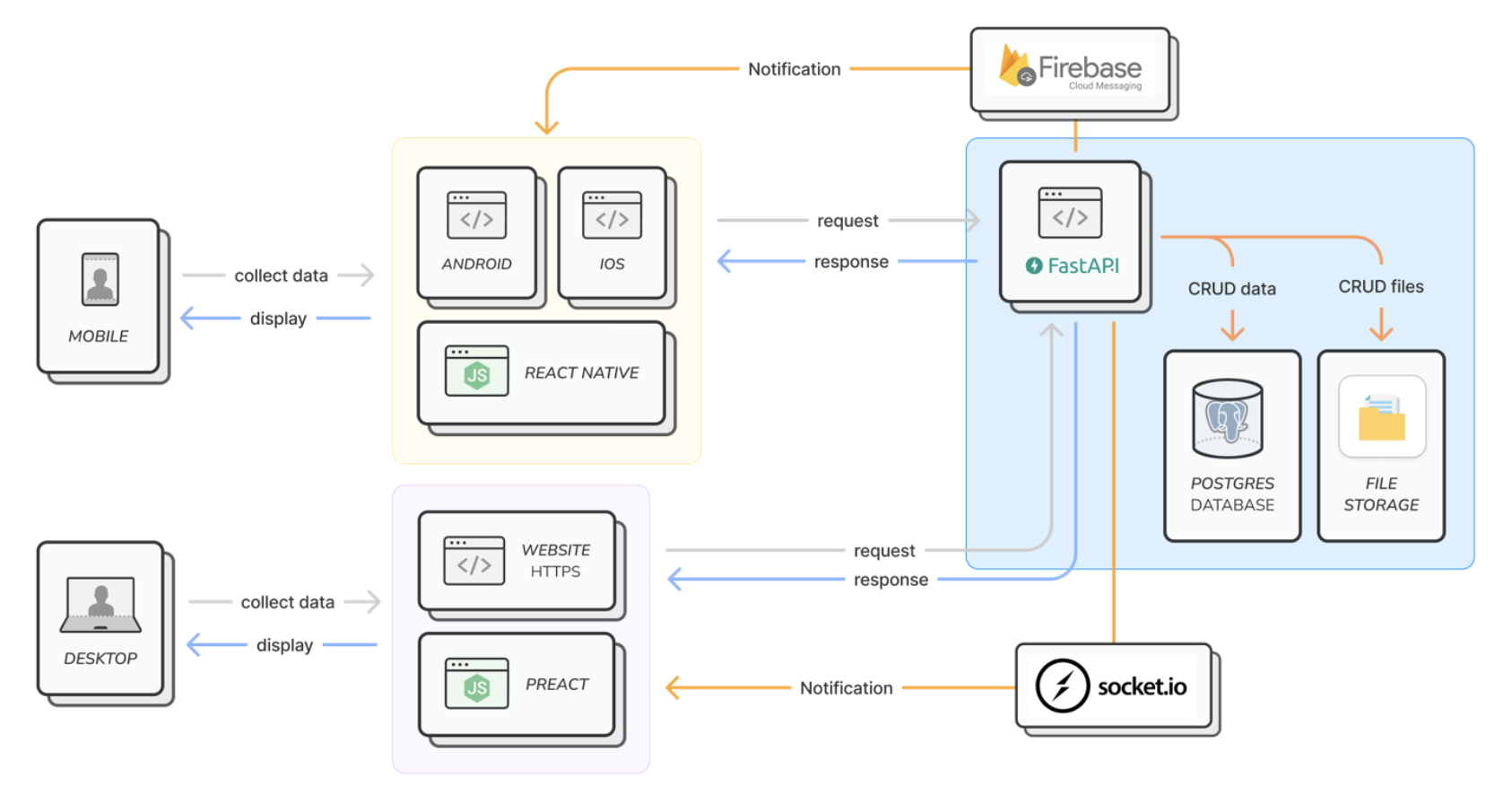
Warfarin Care emerges as a transformative solution in digital healthcare for the elderly reliant on warfarin. Addressing specific needs, Warfarin Care serves as a communication and information exchange among medical personnel, elderly patients, and family members or caregivers. With a user-friendly interface, rigorous content evaluation, and a shared database architecture, Warfarin Care endeavors to mitigate medication errors and augment overall treatment outcomes. Through the integration of risk assessment, medication history, and warfarin knowledge, medication reminders, and educational tools, the application fosters a deeper understanding of proper medication behavior. The research is based on the clinical trial, in which 60 cases of elderly patients and family members, 30 elderly patients, and 30 family members or caregivers were selected as the sample receiving treatment in the outpatient department of Sakonnakhon Hospital. The study from the clinical trial revealed that the majority of elderly participants fall within the 60–69 age group, predominantly women and married. The data reveals high satisfaction among both elderly users and caregivers, underscoring Warfarin Care's positive impact on enhancing knowledge, confidence, and support for proper medication adherence with user-friendly communication. Users agreed that the use and suitability of the Warfarin Care application had an average of 4.57 and a S.D. of 0.57 from elderly users and an average of 4.67 and a S.D. of 0.61 from caregivers or family members. The robust data analysis utilizing mean and standard deviation values underscores the application's effectiveness.
Article Details

This work is licensed under a Creative Commons Attribution-NonCommercial-NoDerivatives 4.0 International License.
All authors need to complete copyright transfer to Journal of Applied Informatics and Technology prior to publication. For more details click this link: https://ph01.tci-thaijo.org/index.php/jait/copyrightlicense




References
Choicharnchaikul, S., Malathum P., and Kanchanachai S. (2008). Warfarin use in the elderly: A case study and care. Ra-mathibodi Nursing Journal, 14(3), 366-384.
Panichsombat, T. (2017). Development of the pharmacy care system for patients using warfarin at Ban Tak Hospital [Unpublished document]. Technical Services Pharmacy Group, Ban Tak Hospital.
Warfarin Clinic, Pharmacy Department, Siriraj Hospital. (2014). Knowledge for patients treated with anticoagulant medi-cation (Warfarin: WARFARIN) [Brochure]. Faculty of Medi-cine Siriraj Hospital.
American Hospital Association. (2021). The Future of Tele-health: COVID-19 is Changing the Delivery of Virtual Care. Statement of the American Hospital Association for the Subcommittee on Health of the Committee on Energy and Commerce of the U.S. House of Representatives. https://www.aha.org/2021-03-02-aha-statement-future-telehealth-covid-19-changing-delivery-virtual-care
Koonin, L. M., Hoots, B., Tsang, C. A., et al. (2020). Trends in the Use of Telehealth During the Emergence of the COVID-19 Pandemic — United States, January–March 2020. MMWR Morb Mortal Wkly Rep, 69, 1595–1599. http://dx.doi.org/10.15585/mmwr.mm6943a3
Brown, J., Cavanagh, J., Dorricott, B., Irving, V., & LaRiviere, C. (2023). Improving The Quality and Sustainability of Home-Based Acute Care Models Using Virtual Care Technology. Asia Pacific Journal of Health Management, 18(3). https://doi.org/10.24083/apjhm.v18i3.2785
Amar, F., April, A., & Abran, A. (2024). Electronic Health Record and Semantic Issues Using Fast Healthcare Interoperability Resources: Systematic Mapping Review. Journal of Medical Internet Research, 26(e45209). https://www.jmir.org/2024/1/e45209
Leavy, M. (2019, December 18). The Use of Mobile Devices in Healthcare. Elite Learning. https://www.elitelearning.com/resource-center/health-systems-management/the-use-of-mobile-devices-in-healthcare/
World Health Organization (WHO). (2020). World health statis-tics 2020: Monitoring health for the SDGs, sustainable development goals (Global report). https://www.who.int/publications/i/item/9789240005105
World Bank. (2016). Digital Dividends: World Development Report 2016. https://documents1.worldbank.org/curated/en/896971468194972881/pdf/102725-PUB-Replacement-PUBLIC.pdf
European Commission. (2018). INFORMATION PAPER on Main eHealth activities outside of the EU. https://health.ec.europa.eu/system/files/2018-09/ev_20180515_co23_en_0.pdf
Kalra, S., Taneja, C., & Singhal, N. (2023). Participation In Online Health Communities: Decoding the antecedents and out-comes. Asia Pacific Journal of Health Management, 18(2). https://doi.org/10.24083/apjhm.v18i2.1387
Kant Pal, S., Kumar Attri, A., Roy, R., Mohan, V., Kumar, S., Kumar Badhan, A., Mohan Baral, M., & Mukherjee, S. (2023). Ana-lysing The Impact of Student Health Post COVID-19 Pandem-ic And Providing A Solution Using Digital Technologies. Asia Pacific Journal of Health Management, 18(2). https://doi.org/10.24083/apjhm.v18i2.2411
Kumar, A., Mathur, R., Shirmila, T., More, R., Kaikini, R., & Bhalerao, K. (2023). An Effective Health Care System through Health Technology Assessment and Evidence Based Pay-ment System in India. Asia Pacific Journal of Health Man-agement, 18(2). https://doi.org/10.24083/apjhm.v18i2.2403
Tanaka, J., Kuroda, H., Igawa, N., Sakurai, T., & Ohnishi, M. (2020). Perceived eHealth Literacy and Learning Experiences Among Japanese Undergraduate Nursing Students: A Cross-sectional Study. Computers, informatics, nursing: CIN, 38, 198-203. https://doi.org/10.1097/CIN.0000000000000611
Lwin, H.N.N., Punnakitikashem, P., Thananusak, T. (2023). E-Health Research in Southeast Asia: A Bibliometric Review. Sustainability, 15(3), 2559. https://doi.org/10.3390/su15032559
Sabrina, M.I., & Defi I.R. (2021). Telemedicine Guidelines in South East Asia—A Scoping Review. Front. Neurol, 11, 581649. https://doi.org/10.3389/fneur.2020.581649
Dang, T. H., Nguyen, T. A., Hoang Van, M., Santin, O., Tran OMT, & Schofield, P. (2021). Patient-Centered Care: Transforming the Health Care System in Vietnam With Support of Digital Health Technology. J Med Internet Res, 23(6), e24601. https://doi.org/10.2196/24601
Nguyen, Q. T., Naguib, R. N. G., Tawfik, H., & Phuong, N. H. (2013). Strategic challenges facing user- and patient-centred e-health in Vietnam. International Journal of Healthcare Technology and Management, 14(5/6), 378-394. https://doi.org/10.1504/IJHTM.2012.052551
Kusumasari, B., Setianto, W., & Pang, L. (2018). A Study on Digi-tal Democracy Practice: Opportunities and Challenges of e-Health Implementation in Indonesia. Jurnal Ilmu Sosial dan Ilmu Politik, 22(1), 1-10. DOI: [10.22146/jsp.28863](https://doi.org/10.22146/jsp.28863).
Ministry of Public Health. (2017). eHealth Strategy, Ministry of Public Health (2017 – 2026). https://ict.moph.go.th/upload_file/files/eHealth_Strategy_E NG_141117.pdf
Pintusirakun, W., Netphlap, R., Koson, T., & Tangwongcharoen, W. (2023). Knee Joint Muscle Measurement Application for Physical Therapy Treatment. Journal of Applied Informatics and Technology, 6(1), 98–112. https://ph01.tci-thaijo.org/index.php/jait/article/view/251883
Lin, R., Lai, P., Chin, C., & Kuo, Y. (2013). Intelligent taking medi-cine reminding system. In 2013 1st International Confer-ence on Orange Technologies (ICOT) (pp. 39–42). IEEE. https://doi.org/10.1109/ICOT.2013.6521152.
Chamnanhan, T., Phetkrachang, K. ., Sathiwantana, S., Pong-sagorn, P., & Choosong, C. (2023). Measurement of Word Similarity for Diabetes Question Answering System. Journal of Applied Informatics and Technology, 5(2), 86–99. https://doi.org/10.14456/jait.2023.7
Chang, W.-J., Chen, L.-B., Hsu, C.-H., Lin, C.-P., & Yang, T.-C. (2019) A Deep Learning-Based Intelligent Medicine Recog-nition System for Chronic Patients. IEEE Access, 7(1), 44441-44458. https://doi.org/10.1109/ACCESS.2019.2908843.
Moraes, R. M., Winkelmann, E. R., & Colet, C. d. F. (2022). Use of a mobile application for the control of anticoagulation with warfarin: a cluster randomized controlled clinical trial - Ijui/RS/Brazil. Journal of Pharmaceutical Sciences, 58. https://doi.org/10.1590/s2175-97902022e19153
Jiang, S., Lv, M., Zeng, Z., Fang, Z., Chen, M., Qian, J., Wu, T., Chen, W., & Zhang, J. (2022) Efficacy and safety of app-based re-mote warfarin management during COVID-19-related lock-down: a retrospective cohort study. J Thromb Thrombolysis, 54(1), 20-28. https://doi.org/10.1007/s11239-021-02630-0.
Tang, G., Izumi, K., Izumisawa, M., & Koyama, S. (2023). Analysis of Japanese consumers' attitudes toward the digital trans-formation of OTC medicine purchase behavior and eHealth literacy: an online survey for digital experience design. Front Digit Health, 5, 1173229. https://doi.org/10.3389/fdgth.2023.1173229
Hnoohom, N., Yuenyong, S., & Chotivatunyu, P. (2018) ME-DiDEN: Automatic Medicine Identification Using a Deep Convolutional Neural Network. In 2018 International Joint Symposium on Artificial Intelligence and Natural Language Processing (iSAI-NLP). Springer. DOI: 10.1109/iSAI-NLP.2018.8692824
Jirapanthong, W. (2016) The Use of Web-based Application to Support Medical Operations in Thailand. Journal of Infor-mation Science and Technology (JIST), 6(1), 1-7. https://doi.org/10.14456/jist.2016.1.
Olomu, I. O., Barnes, G., Kaatz, S., Haymart, B., Gu, X., Kline-Rogers, E., Alexandris-Souphis, T., Kozlowski, J., Ahsan, S., Besley, D., Leyden, T., & Froehlich, J. (2018). Technology Use Among Patients Undergoing Warfarin Therapy: A Report from the Michigan Anticoagulation Quality Improvement In-itiative (MAQI2). Circulation: Cardiovascular Quality and Outcomes, 7, A176. https://doi.org/10.1161/circoutcomes.7.suppl_1.176
Sratthaphut, L. (2015). Development of an Expert System for Recommendation on Warfarin Dosing Adjustment Guideline in Patient for Pharmacist: A Pilot Study Using CLIPS Lan-guage. International Journal of Pharmaceutical Sciences, 11(2), April-June 2015. https://doi.org/10.14456/ijps.2015.2
Rafhi, E., Stupans, I., Park, J. S., & Wang, K. (2023). The Influence of Social and Individual Factors on Medicine Use in Older Adults. Asia Pacific Journal of Health Management, 18(3). https://doi.org/10.24083/apjhm.v18i3.2691
DEPA. (2023). Digital Society Series: e-Health Open Data Platform for Aged Society. https://www.depa.or.th/th/article-view/digital-society-series-e-health-open-data-platform-aged-society
Wongkampun, S., & Panitrat, R. (2023). Factors Influencing Health Information Technology Utilization Behaviors among Older People in Bangkok Metropolitan. The Journal of Thai-land Nursing and Midwifery Council (JTNMC), 38(3). DOI: https://doi.org/10.60099/jtnmc.v38i03.263587
Tomaselli, G. F., Mahaffey, K. W., Cuker, A., Dobesh, P. P., Doherty, J. U., Eikelboom, J. W., Florido, R., Gluckman, T. J., Hucker, W. J., Mehran, R., Messé, S. R., Perino, A. C., Rodriguez, F., Sarode, R., Siegal, D. M., & Wiggins, B. S. (2020). 2020 ACC Expert Consensus Decision Pathway on Management of Bleeding in Patients on Oral Anticoagulants: A Report of the American College of Cardiology Solution Set Oversight Committee. Journal of the American College of Cardiology, 76(5), 594–622. https://doi.org/10.1016/j.jacc.2020.04.053
Vanichbuncha, K. (2007). Statistical analysis: Statistics for management and research (10th ed.). Bangkok: Chulalongkorn University Printing House.
