
Sediment transport analysis in water management system using optimized neural framework
Article Sidebar
Main Article Content
Abstract
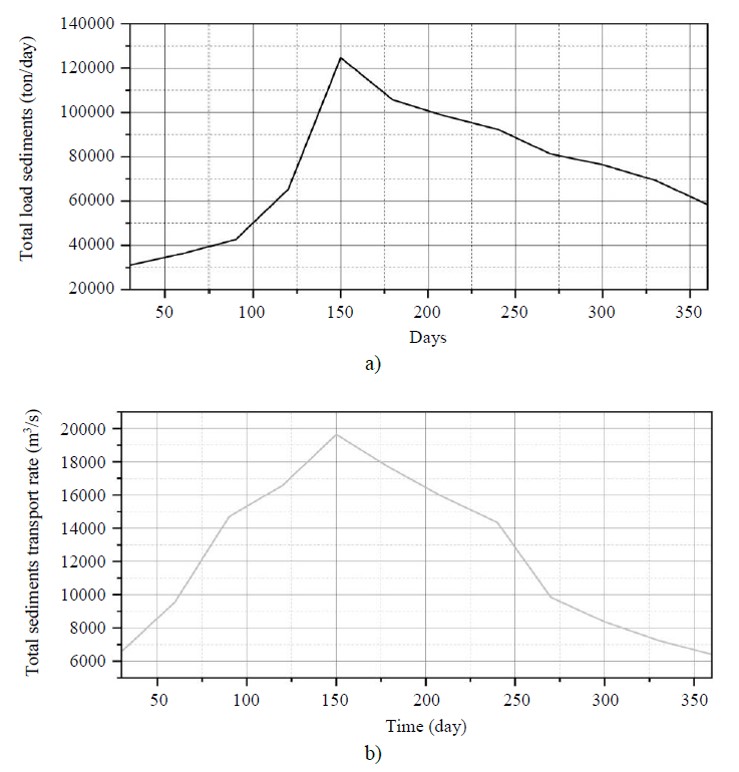
In a water management system, sediment prediction is considered a complex process. Conventional sediment prediction techniques are less precise. The sediment predictions through artificial intelligence analysis possess more prediction characteristics than the conventional approaches. One of the divisions of artificial intelligence is the deep learning technique. In this investigation, the deep learning technique is combined with the neural network approach for predicting the sediment parameters of the water management system using a novel Hyena Deep Neural Sediment Framework (HDNSF). Prime contributions are initially, the parameter of the water management system is provided as input to the approach, then the shear stress and transportation stage of the sediments are determined and the outcomes are generated. Thereafter, the mean velocity of the sediment particles, total sediment load, and the rate of total transported sediment are determined for the river system. The outcomes of the water management system are predicted to consist of transported sediment load and rate of transported sediments. Along with that, the determination coefficient of the prediction system is also evaluated. The outcomes of the prediction system and the determination coefficient of the prediction system are compared with recent studies such as Ant Colony Optimization Fuzzy Inference System (ACOFIS), Adaptive Neuro-Fuzzy Inference System (ANFIS), Least Square Support Vector Machine (LS-SVM), and Group Method of Data Handling (GMDH). A plain river water management system is analyzed, including its characteristics. At the end of fifth month, peak sediment load transport and sediment rate was recorded. The peak sediment load was 124695 tons/day and the peak sediment transport rate was 19636m3/s. The coefficient of determination of the proposed HDNSF technique is 0.982.
Article Details

This work is licensed under a Creative Commons Attribution-NonCommercial-NoDerivatives 4.0 International License.

This work is licensed under a Creative Commons Attribution-NonCommercial-NoDerivatives 4.0 International License.
References
Ostrowski P, Falkowski T, Utratna-Żukowska M. The effect of geological channel structures on floodplain morpho dynamics of lowland rivers: a case study from the Bug River, Poland. Catena. 2021;202:105209.
Chen H, Byun J. Effects of erosional resistance on bedrock channel occurrence and morphology: examination of the Seo River catchment in South Korea. Geomorphology. 2023;438:108810.
Wang J, Shi B, Zhao E, Yuan Q, Chen X. The long-term spatial and temporal variations of sediment loads and their causes of the Yellow River Basin. Catena. 2022;209:105850.
Sun F, Mu Y, Leung KMY, Su H, Wu F, Chang H. China is establishing its water quality standards for enhancing the protection of aquatic life in freshwater ecosystems. Environ Sci Policy. 2021;124:413-22.
Dingle EH, Kusack KM, Venditti JG. The gravel-sand transition and grain size gap in river bed sediments. Earth-Sci Rev. 2021;222:103838.
Chambers ML, van Rees CB, Bledsoe BP, Crane D, Ferreira S, Hall DM, et al. Nature-based solutions for leveed river corridors. Anthropocene. 2023;44:100417.
Vázquez-Tarrío D, Ruiz-Villanueva V, Garrote J, Benito G, Calle M, Lucía A, et al. Effects of sediment transport on flood hazards: lessons learned and remaining challenges. Geomorphology. 2024;446:108976.
Zhou Y, Xia J, Deng S, Han Z. Bank erosion under the impacts of hydraulic erosion, river stage change and revetment protection in the Middle Yangtze River. Geomorphology. 2024;448:109043.
Saadon A, Abdullah J, Muhammad NS, Ariffin J, Julien PY. Predictive models for the estimation of riverbank erosion rates. Catena. 2021;196:104917.
Islam MK, Rahman MM. Establishing a morpho-dynamic baseline for flow-sediment management of a tidal river in the Ganges–Brahmaputra–Meghna Delta system through field measurement. Environ Fluid Mech. 2024;24:265-86.
Giri S. Water quality prospective in Twenty-First Century: status of water quality in major river basins, contemporary strategies and impediments: a review. Environ Pollut. 2021;271:116332.
Chakraborty SK. River pollution and perturbation: perspectives and processes. In: Chakraborty SK, editor. Riverine Ecology Volume 2: Biodiversity Conservation, Conflicts and Resolution. Cham: Springer; 2021. p. 443-530.
Gupta D, Hazarika BB, Berlin M, Sharma UM, Mishra K. Artificial intelligence for suspended sediment load prediction: a review. Environ Earth Sci. 2021;80(9):346.
Kar R, Sarkar A. Assessment of the fraction of bed load concentration towards the sediment transport of a monsoon-dominated river basin of Eastern India. J Geogr Sci. 2023;33(5):1023-54.
Upadhayay HR, Zhang Y, Granger SJ, Micale M, Collins AL. Prolonged heavy rainfall and land use drive catchment sediment source dynamics: appraisal using multiple bio tracers. Water Res. 2022;216:118348.
Hamidifar H, Nones M, Rowinski PM. Flood modeling and fluvial dynamics: a scoping review on the role of sediment transport. Earth-Sci Revi. 2024;253:104775.
Dubuis R, De Cesare G. The clogging of riverbeds: a review of the physical processes. Earth-Sci Rev. 2023;239:104374.
Sulaiman SO, Al-Ansari N, Shahadha A, Ismaeel R, Mohammad S. Evaluation of sediment transport empirical equations: a case study of the Euphrates River West Iraq. Arab J Geosci. 2021;14(10):825.
Winston RJ, Witter JD, Tirpak RA. Measuring sediment loads and particle size distribution in road runoff: implications for sediment removal by storm water control measures. Sci Total Environ. 2023;902:166071.
Luo M, Jiang Y, Wang S, Liu X, Huang E. The effect of stress history on the fluctuation of bed load transport rate and bed topography in gravel-bed streams. J Hydrol. 2023;616:128732.
Arora N, Kumar A, Singal SK. Technological advancement in measurements of suspended sediment and hydraulic turbine erosion. Measurement. 2022;190:110700.
Kitheka JU, Kitheka LM, Njogu IN. Suspended sediment transport in a tropical river basin exhibiting combinations of land uses/land covers and hydro climatic conditions: a case study of upper Athi Basin, Kenya. J Hydrol Reg Stud. 2022;41:101115.
Azhikodan G, Yokoyama K. Erosion and sedimentation pattern of fine sediments and its physical characteristics in a macrotidal estuary. Sci Total Environ. 2021;753:142025.
Al-Shourbaji I, Duraibi S. IWQP4Net: an efficient convolution neural network for irrigation water quality prediction. Water. 2023;15(9):1657.
Puri DV, Kachare PH, Sangle SB, Kirner R, Jabbari A, Al-Shourbaji I, et al. Leadnet: detection of alzheimer's disease using spatiotemporal eeg analysis and low-complexity CNN. IEEE Access 2024;12:113888-97.
Kachare P, Puri D, Sangle SB, Al-Shourbaji I, Jabbari A, Kirner R, et al. LCADNet: a novel light CNN architecture for EEG-based Alzheimer disease detection. Phys Eng Sci Med. 2024;47:1037-50.
Hazarika BB, Gupta D. Mode decomposition based large margin distribution machines for sediment load prediction. Expert Syst Appl. 2023;232:120844.
Hazarika BB, Gupta D. MODWT—random vector functional link for river-suspended sediment load prediction. Arab J Geosci. 2022;15:966.
Zhao Y, Hu G, Liu L, Liu C, Wan Y, Bu Q, et al. Mechanical properties of gas hydrate-bearing sediments: research progress, challenges and perspectives. Earth-Sci Rev. 2025;262:105058.
Ren S, Zhang B, Wang WJ, Yuan Y, Guo C. Sedimentation and its response to management strategies of the Three Gorges Reservoir, Yangtze River, China. Catena. 2021;199:105096.
Meshram SG, Safari MJS, Khosravi K, Meshram C. Iterative classifier optimizer-based pace regression and random forest hybrid models for suspended sediment load prediction. Environ Sci Pollut Res. 2021;28:11637-49.
Zhao Y, Hu C, Zhang X, Lv X, Yin X, Wang Z. Response of sediment discharge to soil erosion control in the middle reaches of the Yellow River. Catena. 2021;203:105330.
Najafi S, Dragovich D, Heckmann T, Sadeghi SH. Sediment connectivity concepts and approaches. Catena. 2021;196:104880.
Fortesa J, Ricci GF, García-Comendador J, Gentile F, Estrany J, Sauquet E, et al. Analyzing hydrological and sediment transport regime in two Mediterranean intermittent rivers. Catena. 2021;196:104865.
Li S, Xie Q, Yang J. Daily suspended sediment forecast by an integrated dynamic neural network. J Hydrol. 2022;604:127258.
Ebtehaj I, Bonakdari H, Zaji AH, Gharabaghi B. Evolutionary optimization of neural network to predict sediment transport without sedimentation. Complex Intell Syst. 2021;7:401-16.
Zounemat-Kermani M, Mahdavi-Meymand A, Hinkelmann R. Nature-inspired algorithms in sanitary engineering: modelling sediment transport in sewer pipes. Soft Comput. 2021;25:6373-90.
Li Z, Sun Z, Liu J, Dong H, Xiong W, Sun L, et al. Prediction of river sediment transport based on wavelet transform and neural network model. Appl Sci. 2022;12(2):647.
Latif SD, Chong KL, Ahmed AN, Huang YF, Sherif M, El-Shafie A. Sediment load prediction in Johor river: deep learning versus machine learning models. Appl Water Sci. 2023;13(3):79.
Coleman MP, Bukshtynov V. An introduction to partial differential equations with MATLAB. 3rd ed. Boca Raton: CRC Press; 2025.
Gladkov G, Katolikov V, Belyakov P, Rzhakovskaya P, Zamyshlyaev V. Hydraulics and bed load in unsteady flow: example of the Volga River. Int J Sediment Res. 2024;39(2):209-21.
Solaimani K, Gholami N, Kavian A, Gholami V. The influence of river point bars on flood hydraulic using geometric model. Model Earth Syst Environ. 2022;8(2):1669-81.
Bayle PM, Beuzen T, Blenkinsopp CE, Baldock TE, Turner IL. A new approach for scaling beach profile evolution and sediment transport rates in distorted laboratory models. Coast Eng. 2021;163:103794.
Tajbakhshian M, Mosaedi A, Mahmudy Gharaie MH, Moussavi Harami SR. Estimation of sediment load and erosion of different geological units: a case study from a basin of north-eastern Iran. J Mt Sci. 2021;18(6):1591-608.
Babanezhad M, Behroyan I, Marjani A, Shirazian S. Artificial intelligence simulation of suspended sediment load with different membership functions of ANFIS. Neural Comput Appl. 2021;33:6819-33.
Rezaei K, Pradhan B, Vadiati M, Nadiri AA. Suspended sediment load prediction using artificial intelligence techniques: comparison between four state-of-the-art artificial neural network techniques. Arab J Geosci. 2021;14(3):215.
Wang X, Gualtieri C, Huai W. Grain shear stress and bed-load transport in open channel flow with emergent vegetation. J Hydrol. 2023;618:129204.
Ghorai A, Ghosh K. Enhanced river regulation following dam reoperation: Impacts on flow regime, sediment transport, and planform adjustment in a plateau river basin in the lower Ganga plains. Catena. 2024;237:107834.
Risal A, Parajuli PB. Evaluation of the impact of best management practices on streamflow, sediment and nutrient yield at field and watershed scales. Water Resour Manag. 2022;36(3):1093-105.
Hazarika BB, Gupta D, Berlin M. Modeling suspended sediment load in a river using extreme learning machine and twin support vector regression with wavelet conjunction. Environ Earth Sci. 2020;79(10):234.
Hazarika BB, Gupta D. Modelling and forecasting of COVID-19 spread using wavelet-coupled random vector functional link networks. Appl Soft Comput. 2020;96:106626.
Tarar ZR, Ahmad SR, Ahmad I, Majid Z. Detection of sediment trends using wavelet transforms in the upper Indus River. Water 2018;10(7):918.
Hazarika BB, Gupta D, Berlin M. A coiflet LDMR and coiflet OB-ELM for river suspended sediment load prediction. Int J Environ Sci Technol. 2021;18(9):2675-92.
