Development of an Optimal Solar PV Compensation Model Integrating Dynamic Tariff Pricing for Maximized Techno-Economic Impact
DOI:
https://doi.org/10.69650/rast.2026.265437Keywords:
Solar PV, Net-Energy-Metering, Self-Consumption, Dynamic Tariff, Economic AssessmentAbstract
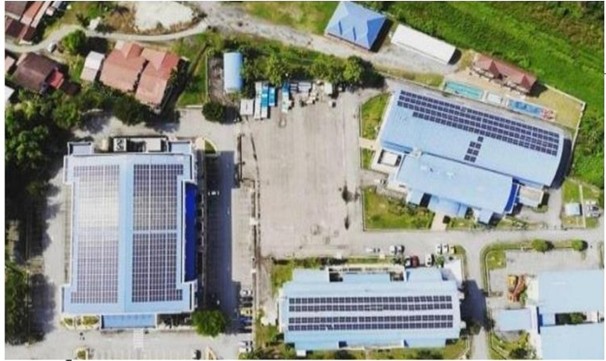
Well-structured policies and clear financial mechanisms are essential for fostering a stable and competitive renewable energy market. In Malaysia, solar PV compensation schemes have evolved since 2011 to offer competitive renewable energy rates. Due to limited financial benefits, the initial Net-Energy-Metering (NEM) scheme attracted low participation. Subsequently, NEM 2.0 and NEM 3.0 were introduced to enhance incentives and accelerate rooftop solar adoption. However, the effectiveness of NEM 3.0 in providing attractive compensation remains limited. Furthermore, quantitative evaluations of compensation schemes integrated with dynamic tariffs such as Enhanced Time-of-Use (ETOU) and System Marginal Price (SMP) are still lacking. This study formulates solar PV compensation scheme models namely Self-Consumption (SELCO), NEM 2.0, and NEM 3.0 that integrate dynamic tariff pricing to maximize prosumers’ techno-economic performance. An Institute of Higher Learning (IHL) operating under a commercial flat (C1) tariff is used as the case study. Results show minimal variation in bill savings under the flat tariff, attributed to uniform hourly energy rates and identical monthly Maximum Demand (MD) charges. Sensitivity analysis shows that NEM 2.0 with larger PV capacity delivers the best financial performance, achieving the highest Internal Rate of Return (IRR), Lowest Levelized Cost of Electricity (LCOE), and shortest payback period. Under dynamic ETOU pricing, the IHL’s existing PV system achieved cost savings of 33–39% compared to grid-only consumption. Furthermore, higher proportions of deferrable load significantly reduced MD, with a 40% deferrable load scenario yielding an average 18% reduction. These findings empower prosumers and guide policymakers on solar incentive reforms.
References
United Nation Framework Climate Change Conference (UNFCC). The Paris Agreement, <https://unfccc.int/process-and-meetings/the-paris-agreement> (2015).
Ministry of Economy Malaysia.National Energy Transition Roadmap (NETR), <https://ekonomi.gov.my/sites/default/files/2023-08/National%20Energy%20Transition%20Roadmap.pdf> (2023).
Malaysian Investment Development Authority (MIDA). Driving Malaysia’s Solar Power Adoption Through Commercial, Residential Properties, <https://www.mida.gov.my/mida-news/driving-malaysias-solar-power-adoption-through-commercial-residential-properties/> (2024).
Dusonchet, L. and Telaretti, E., Comparative economic analysis of support policies for solar PV in the most representative EU countries. Renewable and Sustainable Energy Reviews. 42 (2015) 986-998, doi: https://doi.org/10.1016/j.rser.2014.10.054.
Ember. European Electricity Review 2025, <https://ember-energy.org/latest-insights/european-electricity-review-2025/> (2025).
Solar Power Europe. EU Market Outlook for Solar Power 2024–2028, <https://api.solarpowereurope.org/uploads/Solar_Power_Europe_EMO_2024_v1_aea4b6803a.pdf> (2024)
International Energy Agency (IEA). Renewables 2023: Analysis and Forecast to 2028, <https://iea.blob.core.windows.net/assets/96d66a8b-d502-476b-ba94-54ffda84cf72/Renewables_2023.pdf> (2023).
Pyrgou, A., Kylili, A. and Fokaides, P. A., The future of the Feed-in Tariff (FiT) scheme in Europe: The case of photovoltaics. Energy Policy. 95 (2016) 94-102, doi: https://doi.org/10.1016/j.enpol.2016.04.048.
Poponi, D., Basosi, R. and Kurdgelashvili, L., Subsidisation cost analysis of renewable energy deployment: A case study on the Italian feed-in tariff programme for photovoltaics. Energy Policy. 154 (2021) 112297, doi: https://doi.org/10.1016/j.enpol.2021.112297.
Ramírez, F. J., Honrubia-Escribano, A., Gómez-Lázaro, E. and Pham, D. T., Combining feed-in tariffs and net-metering schemes to balance development in adoption of photovoltaic energy: Comparative economic assessment and policy implications for European countries. Energy Policy. 102 (2017) 440-452, doi: https://doi.org/10.1016/j.enpol.2016.12.040.
Council of European Energy Regulators (CEER). Report on Regulatory Frameworks for European Energy Networks 2020. Brussels, Belgium, (2021) 145-146.
Enescu, D., Ciocia, A., Galappaththi, U. I. K., Wickramasinghe, H., Alagna, F., Amato, A., Díaz-González, F., Spertino, F. and Cocina, V., Energy Tariff Policies for Renewable Energy Development: Comparison between Selected European Countries and Sri Lanka. Energies. 16 (2023) 1727, doi: https://doi.org/10.3390/en16041727.
Nurunnabi, M., Roy, N. K., Hossain, E. and Pota, H. R., Size Optimization and Sensitivity Analysis of Hybrid Wind/PV Micro-Grids- A Case Study for Bangladesh. IEEE Access. 7 (2019) 150120-150140, doi: https://doi.org/10.1109/ACCESS.2019.2945937.
Qudrat-Ullah, H., Kayal, A. and Mugumya, A., Cost-effective energy billing mechanisms for small and medium-scale industrial customers in Uganda. Energy. 227 (2021) 120488, doi: https://doi.org/10.1016/j.energy.2021.120488.
Duman, A. C. and Güler, Ö., Economic analysis of grid-connected residential rooftop PV systems in Turkey. Renewable Energy. 148 (2020) 697-711, doi: https://doi.org/10.1016/j.renene.2019.10.157.
Garud, S., Performance Analysis of Institutional Hybrid Energy System for Electrical Energy Tariffs. DEStech Transactions on Environment, Energy and Earth Sciences. (2019) 221-224, doi: https://doi.org/10.12783/DTEEES/ICEEE2019/31812.
Sepúlveda-Mora, S. B. and Hegedus, S., Making the case for time-of-use electric rates to boost the value of battery storage in commercial buildings with grid connected PV systems. Energy. 218 (2021) 119447, doi: https://doi.org/10.1016/j.energy.2020.119447.
Sharma, A., Zhao, F. and Sutherland, J. W., Econological scheduling of a manufacturing enterprise operating under a time-of-use electricity tariff. Journal of Cleaner Production. 108 (2015) 256-270, doi: https://doi.org/10.1016/j.jclepro.2015.06.002.
Blond, S. L., Li, R., Li, F. and Wang, Z. Cost and emission savings from the deployment of variable electricity tariffs and advanced domestic energy hub storage management. in 2014 IEEE PES General Meeting | Conference & Exposition. (2014), 1-5, doi: https://doi.org/10.1109/PESGM.2014.6939329.
Razali, A. H., Pauzi Abdullah, M., Hassan, M. Y., Said, D. M. and Hussin, F., Net energy metering scheme based on time of use pricing for residents in Malaysia. Indonesian Journal of Electrical Engineering and Computer Science. 19 (2020) 1140–1146, 2020, doi: https://doi.org/10.11591/ijeecs.v19.i3.pp1140-1146.
Comparison of New and Previous Net Energy Metering (NEM) Scheme in Malaysia. ELEKTRIKA- Journal of Electrical Engineering. 18 (2019) 36-42, doi: https://doi.org/10.11113/elektrika.v18n1.141.
Subramani, G., K. Ramachandaramurthy, V., Sanjeevikumar, P., Holm-Nielsen, J. B., Blaabjerg, F., Zbigniew, L. and Kostyla, P., Techno-Economic Optimization of Grid-Connected Photovoltaic (PV) and Battery Systems Based on Maximum Demand Reduction (MDRed) Modelling in Malaysia. Energies. 12 (2019) 3531, doi: https://doi.org/10.3390/en12183531.
Tan, R. H. G. and Chow, T. L., A Comparative Study of Feed in Tariff and Net Metering for UCSI University North Wing Campus with 100 kW Solar Photovoltaic System. Energy Procedia. 100 (2016) 86-91, doi: https://doi.org/10.1016/j.egypro.2016.10.136.
Solargis. Solar Resource Maps of Malaysia, <https://solargis.com/maps-and-gis-data/download/malaysia> (2023)
Sustainable Energy Development Authority Malaysia (SEDA Malaysia). Net Energy Metering 3.0: Net Offset Virtual Aggregation, <https://www.seda.gov.my/reportal/nem/> (2023).
Rajagopalan, N., Smeets, A., Peeters, K., De Regel, S., Rommens, T., Wang, K., Stolz, P., Frischknecht, R., Heath, G. and Ravikumar, D. Preliminary environmental and financial viability analysis of circular economy scenarios for satisfying PV system service lifetime. Report No. IEA-PVPS T12-21:2021, International Energy Agency (IEA) PVPS Task 12, (2021).
MIDF Research. Power: Sunny days, <https://www.midf.com.my/sites/corporate/files/2021-12/Power-Sunny-Days-MIDF-150321.pdf> (2021).
Bank Negara Malaysia. Monthly Highlights-November 2023, <https://www.bnm.gov.my/documents/20124/12999521/i_en.pdf > (2023).
Trexon Energy. TNB Commercial & Industrial Tariff Malaysia 2026, <https://trexon.my/guides/tnb-tariff-2026/> (2026).
Single Buyer. System Marginal Price, <https://www.singlebuyer.com.my/market/market-data/> (2020).
UL Solutions. Net present cost, <https://homerenergy.com/products/pro/docs/3.15/net_present_cost.html> (2021).
Downloads
Published
How to Cite
Issue
Section
License
Copyright (c) 2026 School of Renewable Energy and Smart Grid Technology (SGtech)

This work is licensed under a Creative Commons Attribution-NonCommercial-NoDerivatives 4.0 International License.
All copyrights of the above manuscript, including rights to publish in any media, are transferred to the SGtech.
The authors retain the following rights;
1. All proprietary rights other than copyright.
2. Re-use of all or part of the above manuscript in their work.
3. Reproduction of the above manuscript for author’s personal use or for company/institution use provided that
(a) prior permission of SGtech is obtained,
(b) the source and SGtech copyright notice are indicated, and
(c) the copies are not offered for sale.