Techno-Economic Feasibility of Pico-Hydropower in Southeast Asia: An Analysis of LCOE and Carbon Emission Reduction
DOI:
https://doi.org/10.69650/rast.2026.264028Keywords:
Pico-Hydropower, Southeast Asia, Levelized Cost of Electricity (LCOE), Carbon Emission Reduction, Rural Electrification, Renewable Energy PolicyAbstract
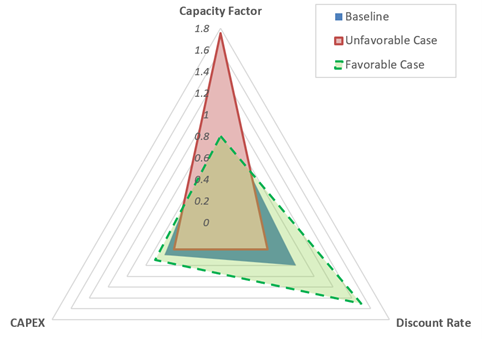
This study evaluates the techno-economic feasibility and carbon reduction potential of pico-hydropower in Southeast Asia, focusing on six representative countries: Indonesia, Malaysia, the Philippines, Vietnam, Laos, and Myanmar. Using a Levelized Cost of Electricity (LCOE) framework, the analysis demonstrates that pico-hydro systems can deliver electricity at costs between 0.04 and 0.11 USD/kWh, significantly lower than diesel-based mini-grids (0.25-0.60 USD/kWh) and comparable to solar PV. Sensitivity analysis indicates that discount rate and capacity factor are the most influential variables affecting LCOE, while capital expenditure plays a moderate role. Environmental assessment shows that a typical 5 kW pico-hydro system operating at a 60% capacity factor can displace 23-27tCO₂ annually if replacing diesel generation. At scale, deployment of 10,000 such systems across Southeast Asia could avoid more than 250,000tCO₂ annually, contributing to member states’ Nationally Determined Contributions under the Paris Agreement. Despite these advantages, barriers to widespread adoption include hydrological variability, financing constraints, inadequate policy frameworks, and limited technical capacity at the community level. Opportunities lie in hybridization with solar PV, carbon finance revenues, and integration into rural development strategies. The findings underscore pico-hydro’s role as an underutilized but highly promising option for decentralized electrification and climate mitigation in Southeast Asia. Policy support, concessional financing, and capacity-building are essential to unlock its full potential and ensure long-term sustainability. Overall, this study highlights the strategic role of pico-hydro in advancing affordable, low-carbon energy transitions for rural Southeast Asia and offers evidence for its inclusion in regional renewable energy planning.
References
IEA., Southeast Asia Energy Outlook 2022, OECD Publishing, Paris, (2022) 1-144, doi: https://doi.org/10.1787/10bc5730-en.
Setyawati, D. and Nadhila, S. ASEAN’s clean power pathways: 2024 insights. Ember Report, Ember Energy, London, (2024) 1-47, <https://ember-energy.org/latest-insights/asean-insights-2024/>
Adib, R. and Goel, S. Renewables 2024 Global Status Report Collection: A Comprehensive Annual Overview of the State of Renewable Energy. 19th edn., REN21 Secretariat, Paris, (2024) 1-400, https://www.ren21.net/gsr-2024/.
Reddy, B. O. Southeast Asia Hydropower Market - Market Share Analysis, Industry Trends & Statistics, Growth Forecasts (2025 - 2030). Report No. 5529833, Mordor Intelligence, Hyderabad, India, (2025) 1-110, <https://www.mordorintelligence.com/industry-reports/southeast-asia-hydropower-market>.
Batinić, K., Golubović, D., Simić, S. and Orašanin, G. Design of Pico Hydropower Plants for Rural Electrification. in New Technologies, Development and Application. (ed Isak Karabegović) (Springer International Publishing) 397-404, doi: https://doi.org/10.1007/978-3-319-90893-9_47.
Adhikary, P., Fuzzy Logic based user friendly Pico-Hydro Power generation for decentralized rural electrification. International Journal of Engineering Trends and Technology (IJETT) 4 (2013) 507-511, doi: https://doi.org/10.14445/22315381/IJETT-V4I4P201.
Engelke, W. R., Rakwichian, W. and Ketjoy, N., An Assessment of Pico Hydro as an Option for Off-grid Electrification in Lao PDR: case study of Thapene village. Journal of Renewable Energy and Smart Grid Technology. 1 (2014) 55-62.
Ramasubramanian, B. and Ramakrishna, S., What's next for the Sustainable Development Goals? Synergy and trade-offs in affordable and clean energy (SDG 7). Sustainable Earth Reviews. 6 (2023) 17, doi: https://doi.org/10.1186/s42055-023-00069-0.
Ayres, D. and Zamora, L. Renewable Power Generation Costs in 2023. ISBN 978-92-9260-621-3, International Renewable Energy Agency (IRENA), Abu Dhabi, United Arab Emirates, (2024) 1-211, <https://www.irena.org/Publications/2024/Sep/Renewable-Power-Generation-Costs-in-2023>.
Utama, N. A. The 7th ASEAN Energy Outlook (AEO7). Report No. 2963-539X, ASEAN Centre for Energy (ACE), Jakarta, Indonesia, (2022) 130, <https://aseanenergy.org/the-7th-asean-energy-outlook/>.
Fu, H. Access to Electricity (% of Population). Report No. EG.ELC.ACCS.ZS, World Bank Group, Washington, DC, USA, (2023) 1-5, <https://databank.worldbank.org/metadataglossary/world-development-indicators/series/EG.ELC.ACCS.ZS>.
Daravath, R. and Bali, S. K., A Metaheuristic Approach for the Optimal Allocation of Distributed Energy Resources in a Distribution System. Journal of Renewable Energy and Smart Grid Technology. 20 (2025) 70-81, doi: https://doi.org/10.69650/rast.2025.261307.
Nandigam, S. H., Nageswararao, K. and K Sharma, P., Hybrid Deep Learning Models for Energy Consumption Forecasting: A CNN-LSTM Approach for Large-Scale Datasets. Journal of Renewable Energy and Smart Grid Technology. 20 (2025) 82-91, doi: https://doi.org/10.69650/rast.2025.261326.
Basar, M. F., Norazizi, A. M., Mustaffa, I., Colin, C. T., Mirin, S. N. S. and Jano, Z., Investigation on the Performance of a Portable Power Generation System with a Low-Cost Vertical Axis Wind Turbine. Engineering, Technology & Applied Science Research. 11 (2021) 7809-7813, doi: https://doi.org/10.48084/etasr.4454.
Rais, N. A. M. and Basar, M. F. M., Pico-Hydro Generation System: Empirical Investigation on a Novel Z-Blade Low-Head Low-Flow Water Turbine. International Journal of Renewable Energy Research. 11 (2021) 190-198, doi: https://doi.org/10.20508/ijrer.v11i1.11387.
Maulana, D., Rizwan, F., Mulyana, C., Faizal, F., Panatarani, C. and Joni, I., Gravitational water vortex pico hydro power modeling for aquaculture implementation. Journal of Physics: Conference Series. 1568 (2020) 012016, doi: https://doi.org/10.1088/1742-6596/1568/1/012016.
G, V. A. K., Sriramulu Naik, M. and Kotla Siva Koti, R., Modeling and Simulation of PV System with P&O MPPT for Dynamic Load Conditions. Journal of Renewable Energy and Smart Grid Technology. 20 (2025) 61-69, doi: https://doi.org/10.69650/rast.2025.261215.
International Hydropower Association (IHA). Carbon emissions from hydropower reservoirs, <https://www.hydropower.org> (2025)
Erdiwansyah, Mamat, R., Sani, M. S. M. and Sudhakar, K., Renewable energy in Southeast Asia: Policies and recommendations. Science of The Total Environment. 670 (2019) 1095-1102, doi: https://doi.org/10.1016/j.scitotenv.2019.03.273.
International Energy Agency (IEA). Climate Impacts on South and Southeast Asian Hydropower, < https://www.iiea.com/> (2023).
La Camera, F. Renewable Capacity Statistics 2023. IRENA Publication, International Renewable Energy Agency, Abu Dhabi, United Arab Emirates, (2023) 1-84, <https://www.irena.org/-/media/Files/IRENA/Agency/Publication/2023/Mar/IRENA_RE_Capacity_Statistics_2023>.
Tardi, M., Economic appraisal of small-scale solar organic Rankine cycle operating under different electric tariffs and geographical conditions. International Journal of Energy Research. 44 (2020) 12614-12629, doi: https://doi.org/10.1002/er.5704.
Van Buskirk, R., Kachione, L., Robert, G., Kanyerere, R., Gilbert, C. and Majoni, J., How to Make Off-Grid Solar Electric Cooking Cheaper Than Wood-Based Cooking. Energies. 14 (2021) 4293, doi: https://doi.org/10.3390/en14144293.
Basar, M., Sapiee, R., Rahman, S., Hamdan, Z., Borhan, S. and Sopian, K., Cost analysis of pico hydro turbine for power production. Advances in Environmental Biology. 8 (2014) 147-151.
Musa, M., Ab. Razak, J., Tahir, M., Mohamad, I. and Othman, N., Small Scale Hydro Turbines for Sustainable Rural Electrification Program. Journal of Advanced Research in Fluid Mechanics and Thermal Sciences. 49 (2018) 138-145.
Motwani, K. H., Jain, S. V. and Patel, R. N., Cost Analysis of Pump as Turbine for Pico Hydropower Plants – A Case Study. Procedia Engineering. 51 (2013) 721-726, doi: https://doi.org/10.1016/j.proeng.2013.01.103.
Bachtiar, A. N., Pohan, A. F., Ervil, R. and Nofriadiman. Feasibility Study on the Development of a Pico-hydro Power Plant for Village Electricity Using a Centrifugal Pump as Turbine (PAT) Prime Mover. International Journal on Advanced Science, Engineering and Information Technology. 13 (2023) 1871-1879, doi: https://doi.org/10.18517/ijaseit.13.5.18221.
Kuroda, H. Republic of the Philippines: Rural Community-Based Renewable Energy Development in Mindanao. Report No. 19639, Asian Development Bank (ADB), Manila, Philippines, (2011) 1-113, <http://documents.worldbank.org/curated/en/783811468776053756>.
Nguyen, P. A., Abbott, M. and Nguyen, T. L. T., The development and cost of renewable energy resources in Vietnam. Utilities Policy. 57 (2019) 59-66, doi: https://doi.org/10.1016/j.jup.2019.01.009.
Smits, M. and Bush, S. R., A light left in the dark: The practice and politics of pico-hydropower in the Lao PDR. Energy Policy. 38 (2010) 116-127, doi: https://doi.org/10.1016/j.enpol.2009.08.058.
Thema, J., Gericke, N., Zach, M.-A. and Tar, K. Community-based energy projects in Myanmar. Study on rural renewable energy projects and the potential contribution of cooperatives to a sustainable electrification. 2020.doi: https://doi.org/10.13140/RG.2.2.16370.17605.
International Renewable Energy Agency (IRENA). Renewable Power Generation Costs in 2023, IRENA, Abu Dhabi, United Arab Emirates, (2024) < https://www.irena.org/Publications/2024/Sep/Renewable-Power-Generation-Costs-in-2023 > (2024)>.
Klein, S. J. W. and Fox, E. L. B., A review of small hydropower performance and cost. Renewable and Sustainable Energy Reviews. 169 (2022) 112898, doi: https://doi.org/10.1016/j.rser.2022.112898.
Sammartano, V., Liuzzo, L. and Freni, G., Identification of Potential Locations for Run-of-River Hydropower Plants Using a GIS-Based Procedure. Energies 12 (2019) 3446, doi: https://doi.org/10.3390/en12183446.
Basar, M. F., Ahmad, A., Hasim, N. and Sopian, K. Introduction to the pico hydro power and the status of implementation in Malaysia. in 2011 IEEE Student Conference on Research and Development. 283-288, doi: https://doi.org/10.1109/SCOReD.2011.6148751.
Shukla, P. R. and Skea, J. Climate Change 2022: Mitigation of Climate Change. Report No. IPCC AR6 WGIII, Cambridge University Press, New York, USA, (2022) 1-2042, doi: https://doi.org/10.1017/9781009157926.
Zuch, M., Rural electrification in sub-Saharan Africa: A willingness to pay analysis of electricity access in Kenya. Energy Policy. 206 (2025) 114720, doi: https://doi.org/10.1016/j.enpol.2025.114720.
Hasyim, Y. H., Asral, A. and Murdiya, F., Development of Pico-Hydro Electric Power Plant on Irrigation Canal - Case Study: Menaming Village, Indonesia. Journal of Ocean, Mechanical and Aerospace -science and engineering. 67 (2023) 47-54, doi: https://doi.org/10.36842/jomase.v67i2.342.
Marfori, I. A. I., Culaba, A. and Ubando, A., Empowering rural electrification in the Philippines: a case study. Journal of the British Academy. 11 (2024) 33-51, doi: https://doi.org/10.5871/jba/011s7.033.
Salac, A. C., Somera, J. D. C., Castro, M. T., Divinagracia-Luzadas, M. F., Danao, L. A. M. and Ocon, J. D., Off-Grid Electrification Using Renewable Energy in the Philippines: A Comprehensive Review. Smart Cities. 7 (2024) 1007-1043, doi: https://doi.org/10.3390/SMARTCITIES7030043.
Soutullo, J. The Mekong River: Geopolitics over Development, Hydropower and the Environment. Report No. EXPO_STU(2019)639313, European Parliament, Brussels, Belgium, (2019) 1-32, <https://www.europarl.europa.eu/thinktank/en/document/EXPO_STU(2019)639313>.
Basar, M. F., Rahman, A. A., Din, A., Yahaya and Mahmod, Z. Design and development of green electricity generation system using ocean surface wave. in Proceedings of the International Conference on Energy and Sustainable Development: Issues and Strategies (ESD 2010). 1-11, doi: https://doi.org/10.1109/esd.2010.5598773.
Manders, T. N., Höffken, J. I. and van der Vleuten, E. B. A., Small-scale hydropower in the Netherlands: Problems and strategies of system builders. Renewable and Sustainable Energy Reviews. 59 (2016) 1493-1503, doi: https://doi.org/10.1016/j.rser.2015.12.100.
Cabello-Vargas, E., Escobedo-Izquierdo, A. and Morales-Acevedo, A., Review on Rural Energy Access Policies. International Journal of Energy Economics and Policy. 11 (2021) 157-171, doi: https://doi.org/10.32479/ijeep.11268.
Phongsavath, A. in Energy Security White Paper: Policy Directions for Inclusive and Sustainable Development for Lao PDR and the Implications for ASEAN, ERIA (Economic Research Institute for ASEAN and East Asia), (2024) 198–230.
Safrina, R., Abdullah, A., Pradiva, A. A., Kilmi, A., Febriyanti, A., Sohirin, A. and Oktaqiara, R. ASEAN Energy Investment 2024 (AEI 2024). ACE Publication, ASEAN Centre for Energy (ACE), Jakarta, Indonesia, (2024) 1-56, <https://aseanenergy.org/publications/asean-energy-investment-2024/>.
Ocon, J. and Bertheau, P., Energy Transition from Diesel-based to Solar Photovoltaics-Battery-Diesel Hybrid System-based Island Grids in the Philippines – Techno-Economic Potential and Policy Implication on Missionary Electrification. Journal of Sustainable Development of Energy, Water and Environment Systems. 7 (2019) 139-154, doi: https://doi.org/10.13044/j.sdewes.d6.0230.
Räsänen, T. A., Koponen, J., Lauri, H. and Kummu, M., Downstream Hydrological Impacts of Hydropower Development in the Upper Mekong Basin. Water Resources Management. 26 (2012) 3495-3513, doi: https://doi.org/10.1007/s11269-012-0087-0.
Taylor, M. Renewable Energy Technologies: Cost Analysis Series - Hydropower. Report No. 1(3/5), International Renewable Energy Agency (IRENA), Bonn, Germany, (2012) 1-44, <https://www.irena.org/-/media/Files/IRENA/Agency/Publication/2012/RE_Technologies_Cost_Analysis-HYDROPOWER>.
Silinto, B. F., van der Laag Yamu, C., Zuidema, C. and Faaij, A. P. C., Hybrid renewable energy systems for rural electrification in developing countries: A review on energy system models and spatial explicit modelling tools. Renewable and Sustainable Energy Reviews. 207 (2025) 114916, doi: https://doi.org/10.1016/j.rser.2024.114916.
Peña, R. and Medina-Rios, A. in Distributed Generation: Capacity Estimation Methods Applied to Mini Hydro Plants, Ch. 17, IntechOpen, (2010) 311–326, doi: https://doi.org/10.5772/8891.
Falama, R. Z., Skarka, W. and Doka, S. Y., Optimal Design and Comparative Analysis of a PV/Mini-Hydropower and a PV/Battery Used for Electricity and Water Supply. Energies. 16 (2023) 307, doi: https://doi.org/10.3390/en16010307.
Williams, A. A. and Simpson, R., Pico hydro – Reducing technical risks for rural electrification. Renewable Energy. 34 (2009) 1986-1991, doi: https://doi.org/10.1016/j.renene.2008.12.011.
Kadier, A., Kalil, M. S., Pudukudy, M., Hasan, H. A., Mohamed, A. and Hamid, A. A., Pico hydropower (PHP) development in Malaysia: Potential, present status, barriers and future perspectives. Renewable and Sustainable Energy Reviews. 81 (2018) 2796-2805, doi: https://doi.org/10.1016/j.rser.2017.06.084.
Downloads
Published
How to Cite
Issue
Section
License
Copyright (c) 2026 School of Renewable Energy and Smart Grid Technology (SGtech)

This work is licensed under a Creative Commons Attribution-NonCommercial-NoDerivatives 4.0 International License.
All copyrights of the above manuscript, including rights to publish in any media, are transferred to the SGtech.
The authors retain the following rights;
1. All proprietary rights other than copyright.
2. Re-use of all or part of the above manuscript in their work.
3. Reproduction of the above manuscript for author’s personal use or for company/institution use provided that
(a) prior permission of SGtech is obtained,
(b) the source and SGtech copyright notice are indicated, and
(c) the copies are not offered for sale.