
Effects of Polyethylene Glycol-Induced Drought on Growth of Khao Wong Kalasin Sticky Rice
Article Sidebar
Main Article Content
Abstract
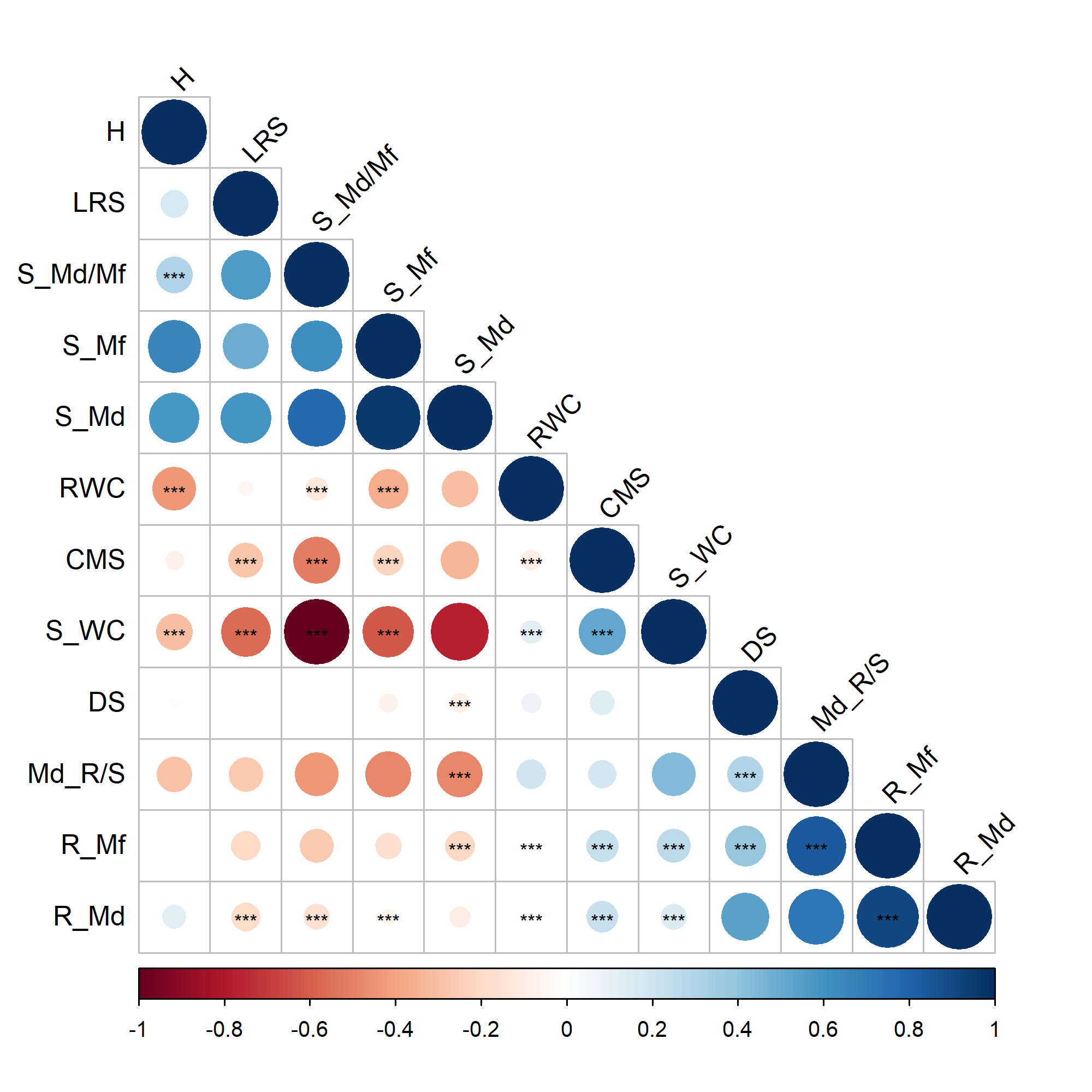
This study aimed to investigate the effects of drought stress on the growth of 8-week-old rice seedlings of two cultivars: Khao Wong Kalasin sticky rice (a local landrace, single tiller type) and RD6. The experiment was conducted using a Completely Randomized Design (CRD). Rice seedlings were grown under ambient greenhouse conditions in a nutrient solution containing 20-20-20 fertilizer and micronutrients. Plants subjected to acute drought stress simulated using 20% polyethylene glycol 6000 (PEG 6000) for 4 days were compared with plants under well-watered conditions. A total of 12 parameters were evaluated. Among these, six parameters showed significant differences between drought-treated plants and the control in both cultivars: leaf rolling score (LRS), shoot dry mass to fresh mass ratio (S_Md/Mf), shoot water content (S_WC), root fresh mass (R_Mf), root dry mass (R_Md), and root-to-shoot dry mass ratio (Md_R/S). Cell membrane stability (CMS) in the local cultivar decreased under drought conditions, indicating increased leakage of cellular solutes from leaf cells and suggesting that leaf cell membranes were affected by drought. In contrast, RD6 showed no significant difference from the control, indicating that membrane integrity was maintained. The S_Md/Mf ratio increased in both cultivars under drought stress, clearly reflecting water deficit conditions. Root fresh mass (R_Mf) and root dry mass (R_Md) significantly decreased in both cultivars, whereas shoot fresh mass (S_Mf) and shoot dry mass (S_Md) did not differ from the control. As shoot biomass tended to increase with plant age while root biomass decreased, the Md_R/S ratio declined, indicating that roots were more severely affected by drought than shoots. Although RD6 exhibited greater root biomass accumulation than the local cultivar, it was more adversely affected by drought stress. The relative water content (RWC) of leaves in both cultivars did not differ significantly between drought and well watered conditions, indicating that leaf water status remained unaffected under drought conditions.
Article Details

This work is licensed under a Creative Commons Attribution-NonCommercial-NoDerivatives 4.0 International License.
References
กรมทรัพย์สินทางปัญญา. (2552). ประกาศกรมทรัพย์สินทางปัญญา. แหล่งข้อมูล: https://www.ipthailand.go.th. ค้นเมื่อ วันที่ 2 มีนาคม 2569.
กองวิจัยและพัฒนาพันธุ์ข้าว. (2559).องค์ความรู้เรื่องข้าว. แหล่งข้อมูล: http://webold.ricethailand.go.th. ค้นเมื่อวันที่ 4 มีนาคม 2569.
กิตติชัย นารีนุช, จิรวัฒน์ สนิทชน และพัชริน ส่งศรี. (2554). การคัดเลือกข้าวไร่พื้นเมืองทนทานต่อสภาพแล้งต้นฤดูปลูก. แก่นเกษตร 39(2) (ฉบับพิเศษ): 67 - 71.
จักรกฤช ศรีละออ. (2561). การคัดเลือกสายพันธุ์ข้าวพื้นเมืองต่อการทนแล้งและให้ผลผลิตสูง. Rajabhat Journal of Sciences Humanities and Social Sciences 19(1): 161 - 166.
จรัญญา แขกสวัสดิ์, สุวัจน์ อิ่มวิชิต, ประภัสสร วิจิตรจันทร์, สัณห์ฐิศ รีวราบัณฑิต, นัฐวรรณ บุษบา, สุนันทรา บรรจบพุดซา, ธนสิน ทับทิมโต, กนกวรรณ ศรีคชา, เบญญาภา ทองศรี, พงศธร สุขสวัสดิ์, พีรดา อินทะเสน, ประพฤติ พรหมสมบูรณ์, ธีรวัฒน์ ศรุตโยภาส และไพรัตน์ พิมพ์ศิริกุล. (2565). ศักยภาพการทนแล้งและผลผลิตของข้าวไร่พันธุ์พื้นเมืองและพันธุ์แนะนำในประเทศไทย. วารสารเกษตรพระจอมเกล้า 40(2): 187 - 195.
เดชอุดม ปามุทา, ปิยะดา ธีระกุลพิศุทธิ์, วัฒนชัย ล้นทม, จิรวัฒน์ สนิทชน, จรัญจิต เพ็งรัตน์, Jonaliza L. Siangliw และ ธียุทธ ตู้จินดา. (2557). ผลของความเค็มและแล้งต่อลักษณะทางสรีรวิทยาบางประการของข้าวขาวดอกมะลิ 105 ที่ได้รับชิ้นส่วน QTL ควบคุมลักษณะทนแล้ง. วารสารพฤกษศาสตร์ไทย 6 (ฉบับพิเศษ): 199 - 204.
ปัญญา มาดี, เจนจิรา ทิพย์ทำมา, นธภร ไชยธรรม และจรัญญา กุลยะ. (2567). ผลของสภาวะขาดน้ำต่อปริมาณน้ำสัมพัทธ์ ค่าดัชนีความเขียวใบ และการเจริญเติบโต ของข้าวระยะการเจริญเติบโตทางลำต้น. วารสารวิจัยวิทยาศาสตร์ เทคโนโลยีและการเกษตร. 5(1): 37 - 48.
สำนักงานเศรษฐกิจการเกษตร. (2569). ปริมาณการผลิตข้าวนาปี ปี 2566. แหล่งข้อมูล: https://catalog.oae.go.th. ค้นเมื่อวันที่ 2 มีนาคม 2569.
สุพัตรา นราวัฒนะ, พิทวัส วิขัยดิษฐ และพัณณ์ชิตา เวชสาร. (2568). การคัดเลือกข้าวทนแล้งโดยใช้ปริมาณสาร Malondialdehyde. วารสารวิชาการข้าว 16(1): 50 - 59.
ยุธยา อยู่เย็น, ณัฐบดี วิริยาวัฒน์ และสุรชาติ สินวรณ์. (2566). การพัฒนาข้าวทนแล้งระหว่างข้าวพันธุ์ท้องถิ่นและพันธุ์เศรษฐกิจในพื้นที่จังหวัดสุพรรณบุรี. วารสารวิชาการมหาวิทยาลัยราชภัฏอุตรดิตถ์ 18(2): 13 - 24.
Asch, F., Dingkuhn, M., Sow, A. and Audebert, A. (2005). Drought-induced changes in rooting patterns and assimilate partitioning between root and shoot in upland rice. Field Crops Research 93(2-3): 223 - 236. doi: 10.1016/j.fcr.2004.10.002.
Bhandari, U., Gajurel, A., Khadka, B., Thapa, I., Chand, I., Bhatta, D., Poudel, A., Pandey, M., Shrestha, S. and Shrestha, J. (2023). Morpho-physiological and biochemical response of rice (Oryza sativa L.) to drought stress: A review. Heliyon 9(3): e13744. doi: 10.1016/j.heliyon.2023.e13744.
Blum, A. (2010). Plant breeding for water-limited environments. Springer Science & Business Media.
De Datta, S.K., Malabuyoc, J.A. and Aragon, E.L. (1988). A field screening technique for evaluating rice germplasm for drought tolerance during the vegetative stage. Field Crops Research 19: 123 - 134. doi: 10.1016/0378-4290(88)90050-0.
ElBasyoni, I., Saadalla, M., Baenziger, S., Bockelman, H. and Morsy, S. (2017). Cell membrane stability and association mapping for drought and heat tolerance in a worldwide wheat collection. Sustainability 9(9): 1606. doi: 10.3390/su9091606.
Eslami, M., Ahmadikhah, A., Azimi, M.R. and Saeidi, A. (2018). Differential response of an international rice (Oryza sativa L.) collection to drought simulated stress (PEG) at vegetative stage. Australian Journal of Crop Science 12(6): 855 - 869. doi: 10.21475/ajcs.18.12.06.PNE545.
Fatima, S., Rashid, M., Hameed, A., Fiaz, S., Rebouh, N.Y. and Zaman, Q.U. (2025). Development of rice mutants with enhanced resilience to drought and brown spot (Bipolaris oryzae) and their physiological and multivariate analysis. BMC Plant Biology 25(1): 1040. doi: 10.1186/s12870-025-07024-5.
Huanhe, W., Xiaoyu, G., Xiang, Z., Wang, Z., Xubin, Z., Yinglong, C., Zhongyang, H., Guisheng, Z., Tianyao, M. and Qigen, D. (2024). Grain yield, biomass accumulation, and leaf photosynthetic characteristics of rice under combined salinity-drought stress. Rice Science 31(1): 118 - 128. doi: 10.1016/j.rsci.2023.06.006.
Hungsaprug, K., Utkhao, W., Kositsup, B., Kasettranun, W., Siangliw, J.L., Toojinda, T. and Chadchawan, S. (2019). Photosynthetic parameters and biomass recovery of a rice chromosome segment substitution line with a 'KDML 105' genetic background under drought conditions. International Journal of Agriculture and Biology 22(5): 1197 - 1204. doi: 10.17957/IJAB/15.1187.
Jarin, A.S., Islam, M.M., Rahat, A., Ahmed, S., Ghosh, P. and Murata, Y. (2024). Drought stress tolerance in rice: physiological and biochemical insights. International Journal of Plant Biology 15(3): 692 - 718. doi: 10.3390/ijpb15030051.
Jayaweera, J.K.P.T.P., Herath, H.M.V.G., Jayatilake, D.V., Udumulla, G.S. and Wickramasinghe, H.A.M. (2016). Physiological, biochemical and proteomic responses of rice (Oryza sativa L.) varieties Godaheenati and Pokkali for drought stress at the seedling stage. Tropical Agricultural Research 27(2). doi: 10.4038/tar.v27i2.8164.
Khunsanit, P., Jitsamai, N., Thongsima, N., Chadchawan, S., Pongpanich, M., Henry, I.M., Comai, L., Suriya-Arunroj, D., Budjun, I. and Buaboocha, T. (2024). QTL-Seq identified a genomic region on chromosome 1 for soil-salinity tolerance in F2 progeny of Thai salt-tolerant rice donor line “Jao Khao”. Frontiers in plant science 15: 1424689. doi: 10.3389/fpls.2024.1424689.
Latif, A., Ying, S., Cuixia, P. and Ali, N. (2023). Rice curled its leaves either adaxially or abaxially to combat drought stress. Rice Science 30(5): 405 - 416. doi: 10.1016/j.rsci.2023.04.002.
Mickky, B.M. and Aldesuquy, H.S. (2017). Impact of osmotic stress on seedling growth observations, membrane characteristics and antioxidant defense system of different wheat genotypes. Egyptian Journal of Basic and Applied Sciences 4(1): 47 - 54. doi: 10.1016/j.ejbas.2016.10.001.
Mondal, K., Kar, R.K., Chakraborty, A. and Dey, N. (2024). Concurrent effect of drought and heat stress in rice (Oryza sativa L.): physio-biochemical and molecular approach. 3 Biotech 14(5): 132. doi: 10.1007/s13205-024-03980-1.
Panda, D., Mishra, S.S. and Behera, P.K. (2021). Drought tolerance in rice: focus on recent mechanisms and approaches. Rice science 28(2): 119 - 132. doi: 10.1016/j.rsci.2021.01.002.
Posit. (2026). RStudio Desktop. Source: https://posit.co. Retrieved date 4 March 2026.
Rotrujanon, N., Pamuta, D., Siangliw, M., Sanitchon, J., Siangliw, J.L. and Theerakulpisut, P. (2022). Evaluation of drought and salinity tolerance at seedling stage of introgression lines of ‘KDML105’ rice carrying drought tolerance QTL and SKC1 salt tolerance gene. KKU Science Journal 50(2): 146 - 161.
Tahere, A.S., Yamauchi, A., Kamoshita, A. and Wade, L.J. (2000). Genotypic variation in response of rainfed lowland rice to drought and rewatering: II. Root growth. Plant Production Science 3(2): 180 - 188. doi: 10.1626/pps.3.180.
Verslues, P.E., Agarwal, M., Katiyar-Agarwal, S., Zhu, J. and Zhu, J.K. (2006), Methods and concepts in quantifying resistance to drought, salt and freezing, abiotic stresses that affect plant water status. The Plant Journal 45: 523 - 539. doi: 10.1111/j.1365-313X.2005.02593.x.
