
การศึกษาการเจริญ การสะสม และการปลดปล่อยธาตุอาหารของแหนแดงที่เลี้ยง ด้วยนํ้าทิ้งจากฟาร์มเลี้ยงสุกร
Article Sidebar
Main Article Content
บทคัดย่อ
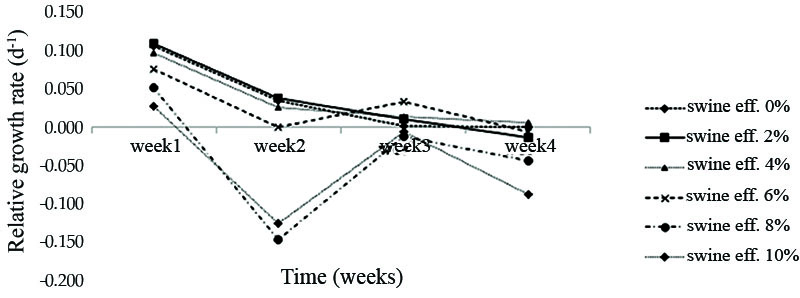
งานวิจัยนี้มีวัตถุประสงค์เพื่อศึกษาการสะสมและการปลดปล่อยธาตุอาหารของแหนแดงที่เพาะเลี้ยงในน้ำทิ้งจากฟาร์มเลี้ยงสุกร สำหรับใช้เป็นวัสดุปรับปรุงดิน การศึกษาครั้งนี้ได้ทำการเพาะเลี้ยงแหนแดงในนํ้าทิ้งจากถังย่อยไร้อากาศจากฟาร์มสุกรที่ระดับความเข้มข้นของน้ำทิ้ง 0 2 4 6 8 และ 10 % เป็นระยะเวลา 1 เดือน ผลการทดลองพบว่า ระดับความเข้มข้นของนํ้าทิ้งและระยะเวลาในการเพาะเลี้ยง มีผลต่อการเจริญของแหนแดง แหนแดงเจริญได้ดีในระดับความเข้มข้นของน้ำทิ้งต่ำ ๆ โดยพบว่า ที่ระดับความเข้มข้นของน้ำทิ้ง 2 % แหนแดงมีการเจริญสูงที่สุด มีน้ำหนักแห้ง 16.46 ± 0.8 กรัม/ตร.ม. และอัตราการเจริญเติบโตสัมพัทธ์ 0.11 ต่อวัน ระยะเวลาในการเพาะเลี้ยงแหนแดงที่เหมาะสมคือ 2 สัปดาห์แหนแดงที่เพาะเลี้ยงได้มีปริมาณไนโตรเจน ฟอสฟอรัสและโพแทสเซียมเท่ากับ 3.53 0.87 และ 7.43 % ตามลำดับ การศึกษาการปลดปล่อยธาตุอาหารของแหนแดงด้วยการบ่มดินร่วมกับแหนแดง พบว่าแหนแดงสามารถเพิ่มปริมาณอินทรียวัตถุในดินได ้ และสามารถปลดปล่อยธาตุอาหารได้ตลอด 7 สัปดาห์ของการบ่มโดยเริ่มปลดปล่อยธาตุอาหารออกมาตั้งแต่ในช่วงสองสัปดาห์แรก ๆ ของการบ่มสรุปได้ว่าแหนแดงมีความเหมาะสมอย่างยิ่งในการพัฒนาใช้เป็นวัสดุปรับปรุงดิน เนื่องจากสามารถปลดปล่อยธาตุอาหารออกมาได้เร็วและยาวนาน
Article Details
เอกสารอ้างอิง
[2] Bocchi, S. and Malgioglio, A. (2010). Azolla-anabaena as a Biofertilizer for Rice Paddy Fields in the Po Valley, a Temperate Rice Area in Northern Italy. International Journal of Agronomy. Vol. 2010, pp. 1-5. DOI: 10.1155/2010/152158
[3] Watanabe, I. and Ramirez, C. (1990). Phosphorus and Nitrogen Contents of Azolla Grown in the Philippines. Soil Science and Plant Nutrition. Vol. 36, Issue 2, pp. 319-331. DOI: 10.1080/00380768.1990.10414998
[4] Wongbung, W. (1994). Azolla and Utilization in Rice Field. Natural Agriculture Journal. Vol. 11, No. 3, pp. 44-50
[5] Klomje, P., Homhaul, W., Suwannasri, D., and Phonrit, N. (2015). Swine Wastewater Treatment Using Water fern (Azolla microphylla) in Floating Aquatic Plant Wastewater Treatment System. KKU Science Journal. Vol. 43, No. 4, pp. 698-714
[6] Tokhun, N., Boonthai Iwai, C., and Ta-oun, M. (2011). Wastewater Treatment from Piggery farm by Using Azolla microphylla. In Proceedings of the 12th Graduate Research Conference Khon Koen University. pp. 779-783
[7] APHA, AWWA and WEF. (1998). Standard Methods for the Examination of Water and Wastewaters. (20th ed). Washington, D.C.: American Public Health Publisher Inc.
[8] AOAC. (2000). Official Methods of Analysis of AOAC International. (17th ed). Maryland: Association of Analytical Communities.
[9] Soil and Plant Analysis Council. (2000). Chapter 7: Major Cation (Potassium, Calcium, Magnesium, and Sodium). In Soil Analysis Handbook of Reference Methods. pp. 109-110. New York : CRS Press.
[10] Land Development Department. (2010). Handbook of Soil Chemical Analysis Processes. Bangkok. Document No. OSD-03
[11] Pollution Control Department. (2005). Water Quality Standard. Access (6 August 2018). Available (https://www.pcd.go.th/info_serv/reg_std_water.html)
[12] Tylova-Munzarova, E., Lorenzen, B., Brix, H., and Votrubova, O. (2005). The Effects of NH4+ and NO3- on Growth, Resource Allocation and Nitrogen Uptake Kinetics of Phragmites australis and Glyceria maxima. Aquatic Botany. Vol. 81, pp. 326-342. DOI:10.1016/j.aquabot.2005.01.006
[13] Jampeetong, A., Sripakdee, T., Khamphaya, T., and Chairuangsri, S. (2016). The Effects of Nitrogen as NO3- and NH4+ on the Growth and Symbiont (Anabaena azollae) of Azolla pinnata R. Brown. Chiang Mai University Journal of Natural Sciences. Vol. 15, No. 1, pp. 11-20. DOI: 10.12982/CMUJNS.2016.0002
[14] Singh, P. K., Sing, D. P., and Sing, R. P. (1992). Growth, Acetylene Reduction Activity, Nitrate Uptake and Nitrate Reductase Activity of Azolla caroliniana and Azolla pinnata at Varying Nitrate Levels. Biochemie and Physiologie der Pflanzen. Vol. 188, Issue 2, pp. 121-127. DOI: 10.1016/S0015-3796(11)80019-3
[15] Forni, C., Chen, J., Tancioni, L., and Caiola, M. G. (2001). Evaluation of the Fern azolla for Growth, Nitrogen and Phosphorus Removal from Wastewater. Water Research. Vol. 35, No. 6, pp. 1592-1598
[16] Costa, M. L., Santos, M. C., and Carrapiç, F. (1999). Biomass Characterization of Azolla filiculoides Grown in Natural Ecosystems and Wastewater. Hydrobiologia. Vol. 415, pp. 323-327. DOI: 10.1023/A:1003824426183
[17] Prakobmee, A., Isarangkool, Na Ayutthaya S., and Techawongstien, S. (2014). Effect of Leaves Age and Leaves Position on Macronutrients in Leaves of Rubber Tree Clone RRIM 600. Khon Kaen Agriculture Journal. Vol. 42, Supp l, pp. 180-185
[18] Maejima, K., Kitoh, S., Uheda, E., and Shiom, N. (2001). Response of 19 Azolla Strains to a High Concentration of Ammonium Ions. Plant and Soil. Vol. 234, Issue 2, pp. 247-252. DOI: 10.1023/A:1017912613526
[19] Department of Agriculture announced in the organic fertilizer criteria B. E. 2557. (2014, 12, February). Government Gazette. Suppl. 29, Vol. 131, pp.4
[20] Treeamnuk, T. (2014). A Study on Appropriate Approaches for Integrated Management of Organic Fertilizer Production. Research Report. Nakhorn Ratchasima: Suranaree University of Technology
