Applying of Software for Automatic Seed Counting from Photographic Images
Keywords:
Seed, Contours, Grayscale, ImageAbstract
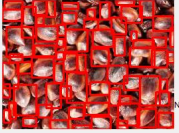
The objective of this research is to develop software for automatically counting seeds from photographic images. The system's performance was evaluated using image processing with the newly developed software on five sample image groups, each containing 100 seeds, totaling 500 seeds. The images used were in a standard resolution of 640x480 pixels. The accuracy of the system for each group was as follows: Group 1: 85% accuracy (average) Group 2: 95% accuracy (average) Group 3: 95% accuracy (average) Group 4: 95% accuracy (average) Group 5: 95% accuracy (average) Overall average accuracy: 93% To use the system, a camera must be connected to a computer to capture images directly, or pre-captured images from a standard camera can also be processed by the software.
Overall, the developed system is considered highly efficient. The accuracy of the software in counting seeds from images is relatively high, making it suitable for practical applications in automatic seed counting from photographic images.
References
Bishop, C. M. (2006). Pattern Recognition and Machine Learning. Springer.
Bradski, G. (2000). The OpenCV library. Dr. Dobb's Journal: Software Tools for the Professional Programmer, 25(11), 120–125.
Gonzalez, R. C., & Woods, R. E. (2018). Digital Image Processing (4th ed.). Pearson Education.
Goodfellow, I., Bengio, Y., & Courville, A. (2016). Deep Learning. MIT Press.
LeCun, Y., Bengio, Y., & Hinton, G. (2015). Deep learning. Nature, 521(7553), 436–444.
Munklang . Y (2012). Image Retrieval using Feature Vec tors of Color Cluster. King Mongkuts UniverSity of Technology Thonburi.Bangkok (Thailand). Graduate School. (in Thai)
Pathare, P.B., U.L. Oparaand and F.A. Al-Said. (2013). Colour measurement and analysis in fresh and processed foods: A review. Food and Bioprocess Technology, 6, 36–60
.
Santiago Hernández, Vivian Zhong & Jennifer A. N. Brophy. (2025). SeedSeg: image-based transgenic seed counting for segregation analysis of T-DNA loci. journal of Crop Science and Biotechnology.
Smith, J., et al. (2019). Comparison of Edge Detection Techniques for Medical Imaging. Journal of Image Processing, 35(2), 101-115.
Smith, J., et al. (2020). Automatic Seed Counting Using Deep Learning. Journal of Agricultural Engineering ,45(3), 120-130.
Thaweepol.N. (2012). Accuracy and Precission. Form http://www.foodnetwork solution.com /wiki/ word/4290/precision. (in Thai)
Trinderup, C.H. and Y.H.B. Kim. (2015). Fresh meat color evaluation using a structured light imaging system. Food Research International, 71, 100– 107.
Unterkalmsteiner, M., Gorschek, T., Islam, A. K. M. M., Cheng, C. K., Permadi, R. B., & Feldt, R. (2023). Evaluation and measurement of software process improvement A systematic literature review. arXiv.
Wang, L., et al. (2021). Canny vs Laplacian: An Evaluation for Satellite Image Processing. In Proceedings of the International Conference on Computer Vision in Agriculture (pp. 78–85).
Wang, L., et al. (2021). Image Processing Techniques for Seed Counting. In Proceedings of the International Conference on Image Analysis (pp. 87–95).
Zhang, Y., Wu, L., & He, D. (2020). Application of deep learning in agriculture: A review. Computers and Electronics in Agriculture, 173, Article 105387.