
Measuring Neck Abnormalities for Preliminary Assessment of Neck Pain Disease using Virtual Reality
Article Sidebar
Main Article Content
Abstract
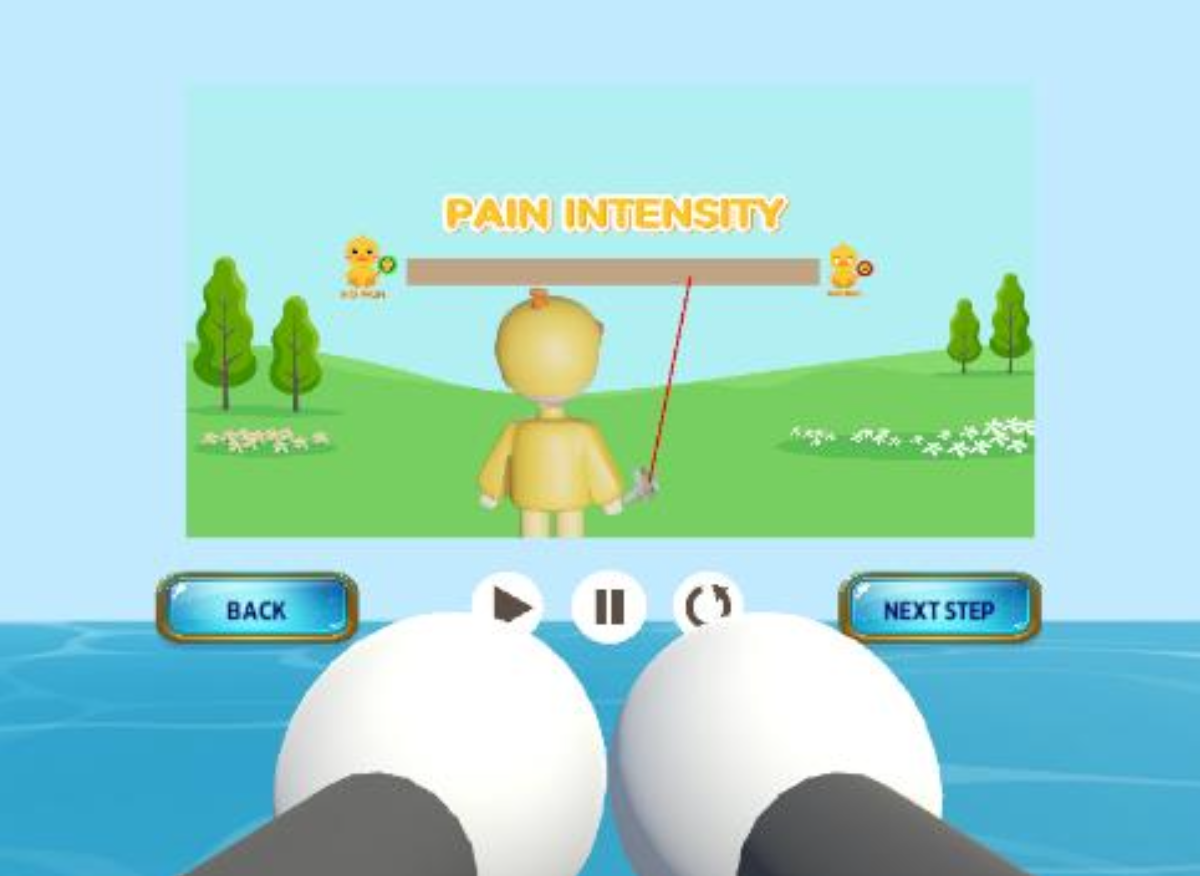
Neck pain is an increasingly prevalent issue in the general population, leading to a growing incidence of chronic cases and potential future health risks. The economic impact is significant, as individuals with neck pain often cease working due to discomfort. Traditional assessments of treatment effectiveness involve the measurement of neck deformity and movement, typically requiring expensive and limited Cervical Range of Motion (CROM) equipment found primarily in large hospitals. The challenges posed by the COVID-19 outbreak further hinder access to such evaluations. This study proposes the development of a Virtual Reality (VR) application designed to measure neck movement range, enabling users to self-administer assessments under the guidance of the VR application. The VR application development process commences with storyboard creation, all components were designed and creates models object using Blender. The development of VR applications for angle measurement follows the storyboard, was executed using the Unity program. Prioritizing user satisfaction, the application capitalizes on the proven accuracy and reliability of VR devices. Usability experimental focused on user independence, with participants autonomously following instructional videos. Noteworthy user satisfaction, reflected in an average score of 4.36 ± 0.52, underscores the potential of the VR application in addressing neck pain symptoms. The study emphasizes meticulous design considerations, including character and scene elements, aiming to enhance user engagement and immersion in the virtual environment. Users demonstrated focused attention during the measurement process, unaffected by external factors.
Article Details

This work is licensed under a Creative Commons Attribution-NonCommercial-NoDerivatives 4.0 International License.
All authors need to complete copyright transfer to Journal of Applied Informatics and Technology prior to publication. For more details click this link: https://ph01.tci-thaijo.org/index.php/jait/copyrightlicense




References
Ahmadmusa, A. (2020). Prevalence and related factors of neck shoulder and back pain among dental professional officers in government healthcare unit, Yala Province. Thai Dental Nurse Journal, 31(2), 16–26.
Alshagga, M. A., Nimer, A. R., Yan, L. P., Ibrahim, I. A. A., Al-Ghamdi, S. S., & Al-Dubai, S. A. R. (2013). Prevalence and factors associated with neck, shoulder and low back pains among medical students in a Malaysian Medical College. BMC Research Notes 6, 244. https://doi.org/10.1186/1756-0500-6-244
Chang, K. V., Wu, W. T., Chen, M. C., Chiu, Y. C., Han, D. S., & Chen, C. C. (2019). Smartphone application with virtual reality goggles for the reliable and valid measurement of active craniocervical range of motion. Diagnostics (Basel, Switzerland), 9(3), 71.
https://doi.org/10.3390/diagnostics9030071
Collado-Mateo, D., Lavín-Pérez, A. M., Fuentes García, J. P., García-Gordillo, M. Á., & Villafaina, S. (2020). Effects of equine-assisted therapies or horse-riding simulators on chronic pain: A systematic review and meta-analysis. Medicina (Kaunas, Lithuania), 56(9), 444. https://doi.org/10.3390/medicina56090444
Freeman, D. et al. (2017). Virtual reality in the assessment, understanding, and treatment of mental health disorders. Psychological Medicine, 47(14), 2393–2400. https://doi.org/10.1017/S003329171700040X
Guo, Q. et al. (2023). Virtual reality intervention for patients with neck pain: Systematic review and meta-analysis of randomized controlled trials. Journal of Medical Internet Research, 25, e38256. https://doi.org/10.2196/38256
Heizenrader. (2023). The 3 Types of Virtual Reality. Retrieved 15 September 2023. Retrieved from https://heizenrader.com/the-3-types-of-virtual-reality/
Kanchanomai, S., Janwantanakul, P., Pensri, P., & Jiamjarasrangsi, W. (2011). Risk factors for the onset and persistence of neck pain in undergraduate students: 1-year prospective cohort study. BMC Public Health, 11, 566. https://doi.org/10.1186/1471-2458-11-566
Kazeminasab, S. et al. (2022). Neck pain: Global epidemiology, trends and risk factors. BMC Musculoskeletal Disorders, 23, 26. https://doi.org/10.1186/s12891-021-04957-4
Lertsinthai, P., Nontakoot, J., Toudkavinkul, N., Weerachai, A., & Weeraphan, O. (2020). The prevalence of neck pain and the relationship between neck pain and computer vision syndrome in Faculty of Allied Health Sciences students at Naresuan University. Thai Journal of Physical Therapy, 42(2), 101–117. [In Thai]
Nainate, A. (2020). Factors influencing neck and shoulder pain syndrome in computer users in Charoenkrung Pracharak Hospital. Journal of Charoenkrung Pracharak Hospital, 16(2), 61-74. [In Thai]
Parasate, K., Suwannakoot, N., Meenakate, P., & Nakrukamphonphatn, S. (2022). Community management for caring people with COVID-19 infections. Regional Health Promotion Center 9 Journal. 16(3), 908-923. [In Thai]
Park, J. H., Lee, S. H., & Ko, D. S. (2013). The effects of the Nintendo Wii exercise program on chronic work-related low back pain in industrial workers. Journal of Physical Therapy Science, 25(8), 985–988. https://doi.org/10.1589/jpts.25.985
PICO. (2023). Pico 4. Retrieved 15 September 2023. Retrieved from https://www.picoxr.com/th/products/pico4.
Punwaree, J., Klaphajone, J., & Kovindha, A. (2009). Neck pain in computer users: A study of ergonomic factors. ASEAN Journal of Rehabilitation Medicine, 19(1), 30-35. [In Thai]
Santos-Paz, J. A., Sánchez-Picot, Á., Rojo, A., Martín-Pintado-Zugasti, A., Otero, A., & Garcia-Carmona, R. (2022). A novel virtual reality application for autonomous assessment of cervical range of motion: Development and reliability study. PeerJ, 10, e14031.
https://doi.org/10.7717/peerj.14031
Sarig Bahat, H., Croft, K., Carter, C., Hoddinott, A., Sprecher, E., & Treleaven, J. (2018). Remote kinematic training for patients with chronic neck pain: A randomised controlled trial. European Spine Journal: Official Publication of the European Spine Society, the European Spinal Deformity Society, and the European Section of the Cervical Spine Research Society, 27(6), 1309-1323.
https://doi.org/10.1007/s00586-017-5323-0
Strategy and Planning Division. Ministry of Public Health. (2019). Summary of illness reports 2019. Retrieved 15 September 2023. Retrieved from https://spd.moph.go.th/wp-content/uploads/2023/04/ill_2562_full_20200921.pdf. [In Thai]
Tao, G., Garrett, B., Taverner, T., Cordingley, E., & Sun, C. (2021). Immersive virtual reality health games: A narrative review of game design. Journal of NeuroEngineering and Rehabilitation, 18, 31. https://doi.org/10.1186/s12984-020-00801-3
Terwee, C. et al. (2018). COSMIN methodology for evaluating the content validity of patient-reported outcome measures: A Delphi study. Quality of Life Research: An International Journal of Quality of Life Aspects of Treatment, Care and Rehabilitation, 27(5), 1159–1170. https://doi.org/10.1007/s11136-018-1829-0
Trinidad-Fernández, M., Bossavit, B., Salgado-Fernández, J., Abbate-Chica, S., Fernández-Leiva, A. J., & Cuesta-Vargas, A. I. (2023). Head-mounted display for clinical evaluation of neck movement validation with Meta Quest 2. Sensors (Basel, Switzerland), 23(6), 3077. https://doi.org/10.3390/s23063077
Xu, X., Chen, K. B., Lin, J.-H., & Radwin, R. G. (2015). The accuracy of the Oculus Rift virtual reality head-mounted display during cervical spine mobility measurement. Journal of Biomechanics, 48(4), 721–724. https://doi.org/10.1016/j.jbiomech.2015.01.005
Yan, C., Wang, H., Wu, T., Gong, X., Jin, Y., Liu, H., & Wang, B. (2021). The validity and reliability of immersive VR device in measuring craniocervical range of motion. Research Square. https://doi.org/10.21203/rs.3.rs-958939/v1
