
Deep learning–based multispectral seed classification for detecting adulteration in KDML-105 rice
Article Sidebar
Main Article Content
Abstract
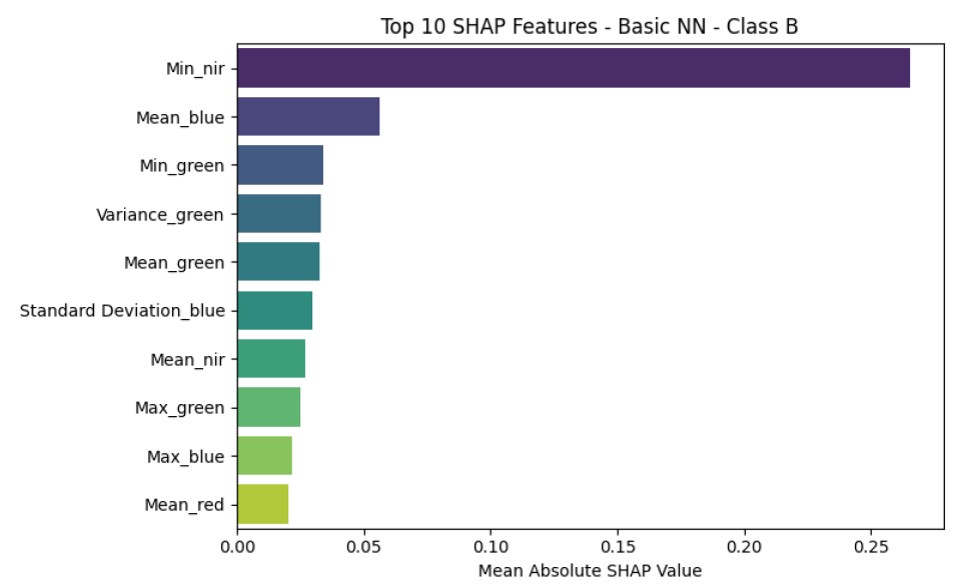
This study aimed to develop and evaluate Deep Learning models for detecting varietal contamination in KDML-105 jasmine rice seeds using multispectral imaging and seed morphological features. Four rice varieties—KDML-105 and three Non–KDML-105 varieties (Chainat-1, RD-15, and RD-6)—were used, with 1,000 seeds collected per variety (4,000 seeds in total). All samples were subjected to imaging, object segmentation, and statistical feature extraction across multiple spectral bands to create inputs for three Deep Learning models: a Bayesian Neural Network (BNN), a Convolutional Neural Network (CNN), and a Recurrent Neural Network (RNN). Experimental results showed that the BNN achieved the highest accuracy on multispectral datasets, reaching 0.99 for both the Physical Reflectance and Multi-Reflectance datasets. The CNN produced slightly lower accuracy, while the RNN consistently performed the poorest across all datasets, indicating that feed-forward architectures are better suited for non-sequential reflectance data. SHAP-based feature analysis identified Min_nir as the most influential variable for classifying both KDML-105 and Non–KDML-105 seeds, followed by Mean_blue and several statistical descriptors from the green and blue spectral bands. These findings highlight the strong discriminative capability of NIR reflectance for separating rice varieties with subtle morphological differences, supported by additional surface-related cues captured in the blue band. Overall, the results demonstrate that Deep Learning combined with multispectral imaging is a viable approach for detecting seed contamination. The identification of key spectral bands suggests the potential for designing a lower-cost inspection system using only NIR and blue channels, enabling the development of automated or real-time sorting solutions suitable for practical implementation in Thailand’s rice industry.
Article Details

This work is licensed under a Creative Commons Attribution-NonCommercial-NoDerivatives 4.0 International License.

This work is licensed under a Creative Commons Attribution-NonCommercial-NoDerivatives 4.0 International License.
References
Vanavichit A, Kamolsukyeunyong W, Siangliw M, Siangliw JL, Traprab S, Ruengphayak S, et al. Thai Hom Mali rice: origin and breeding for subsistence rainfed lowland rice system. Rice. 2018;11(1):20. DOI: https://doi.org/10.1186/s12284-018-0212-7
Kongpun A, Pusadee T, Jaksomsak P, Chinachanta K, Tuiwong P, Chan-In P, et al. Abiotic and biotic factors controlling grain aroma along value chain of fragrant rice: a review. Rice Sci. 2024;31(2):142-58. DOI: https://doi.org/10.1016/j.rsci.2023.11.004
Onmankhong J, Ma T, Inagaki T, Sirisomboon P, Tsuchikawa S. Cognitive spectroscopy for the classification of rice varieties: a comparison of machine learning and deep learning approaches in analysing long-wave near-infrared hyperspectral images of brown and milled samples. Infrared Phys Technol. 2022;123:104100. DOI: https://doi.org/10.1016/j.infrared.2022.104100
Chen M, Song J, He H, Yu Y, Wang R, Huang Y, et al. Quantitative analysis of high-price rice adulteration based on near-infrared spectroscopy combined with chemometrics. Foods. 2024;13(20):3241. DOI: https://doi.org/10.3390/foods13203241
Pechdin W, Naruepatr J. Toward rice export competitiveness, community development, and farmer well-being: evidence from Thailand. Multidiscip Sci J. 2025;7(9):e2025443. DOI: https://doi.org/10.31893/multiscience.2025443
Pitiphunpong S, Champangern S, Suwannaporn P. The Jasmine rice (KDML 105 variety) adulteration detection using physico-chemical properties. Chiang Mai J Sci. 2011;38(1):105-15.
Bist DR, Chapagaee P, Rawal R, Bist G, Bohara R. Multivariate analysis of yield and phenotypic diversity in rainfed rice (Oryza sativa L.) landraces from Gokuleshwor, Baitadi, Nepal. Discov Agric. 2025;3:167. DOI: https://doi.org/10.1007/s44279-025-00288-3
Aznan A, Gonzalez Viejo C, Pang A, Fuentes S. Computer vision and machine learning analysis of commercial rice grains: a potential digital approach for consumer perception studies. Sensors. 2021;21(19):6354. DOI: https://doi.org/10.3390/s21196354
Van Hoai DP, Surinwarangkoon T, Hoang VT, Duong HT, Meethongjan K. A comparative study of rice variety classification based on deep learning and hand-crafted features. ECTI-CIT Trans. 2020;14(1):1-10. DOI: https://doi.org/10.37936/ecti-cit.2020141.204170
Melesse MB, Maredia MK, Wossen T, Odeny D, Spielman DJ, Michelson H, et al. The role of genotyping in measuring improved variety adoption and impact: advances, challenges, and policy directions. Food Policy. 2025;137:102984. DOI: https://doi.org/10.1016/j.foodpol.2025.102984
Rahajaharilaza K, Muller B, Violle C, Brocke K, Ramavovololona, Morel JB, et al. Upland rice varietal mixtures in Madagascar: evaluating the effects of varietal interaction on crop performance. Front Plant Sci. 2023;14:1266704. DOI: https://doi.org/10.3389/fpls.2023.1266704
Jin B, Zhang C, Jia L, Tang Q, Gao L, Zhao G, et al. Identification of rice seed varieties based on near-infrared hyperspectral imaging technology combined with deep learning. ACS Omega. 2022;7(6):4735-49. DOI: https://doi.org/10.1021/acsomega.1c04102
Liu W, Zeng S, Wu G, Li H, Chen F. Rice seed purity identification technology using hyperspectral image with LASSO logistic regression model. Sensors. 2021;21(13):4384. DOI: https://doi.org/10.3390/s21134384
Phan TTH, Vo QT, Nguyen HD. A novel method for identifying rice seed purity using hybrid machine learning algorithms. Heliyon. 2024;10(14):e33941. DOI: https://doi.org/10.1016/j.heliyon.2024.e33941
Saha D, Manickavasagan A. Machine learning techniques for analysis of hyperspectral images to determine quality of food products: a review. Curr Res Food Sci. 2021;4:28-44. DOI: https://doi.org/10.1016/j.crfs.2021.01.002
Ghaffari A. Precision seed certification through machine learning. Technol Agron. 2024;4:e019. DOI: https://doi.org/10.48130/tia-0024-0013
Ruslan R, Khairunniza-Bejo S, Jahari M, Ibrahim MF. Weedy rice classification using image processing and a machine learning approach. Agriculture. 2022;12(5):645. DOI: https://doi.org/10.3390/agriculture12050645
He Y, Fan B, Sun L, Fan X, Zhang J, Li Y, et al. Rapid appearance quality of rice based on machine vision and convolutional neural network research on automatic detection system. Front Plant Sci. 2023;14:1190591. DOI: https://doi.org/10.3389/fpls.2023.1190591
Mittal S, Dutta MK, Issac A. Non-destructive image processing based system for assessment of rice quality and defects for classification according to inferred commercial value. Measurement. 2019;148:106969. DOI: https://doi.org/10.1016/j.measurement.2019.106969
Singh SK, Jha R, Pandey S, Mohan C, Chetna, Ghosh S, et al. Artificial intelligence-based tools for next-generation seed quality analysis. Crop Des. 2025;4(1):100094. DOI: https://doi.org/10.1016/j.cropd.2024.100094
Brutas MJB, Fajardo AL, Quilloy EP, Manuel LJR, Borja AA. Enhancing seed germination test classification for pole sitao (Vigna unguiculata (L.) Walp.) using SSD MobileNet and faster R-CNN models. Appl Sci. 2024;14(13):5572. DOI: https://doi.org/10.3390/app14135572
Feng Q, Wu X, He Y, Zhang L. Hyperspectral imaging combined with deep transfer learning for rice disease detection. Front Plant Sci. 2021;12:693521. DOI: https://doi.org/10.3389/fpls.2021.693521
Weng S, Tang P, Yuan H, Guo B, Yu S, Huang L, et al. Hyperspectral imaging for accurate determination of rice variety using a deep learning network with multi-feature fusion. Spectrochim Acta A Mol Biomol Spectrosc. 2020;234:118237. DOI: https://doi.org/10.1016/j.saa.2020.118237
Wang S, Xu D, Liang H, Bai Y, Li X, Zhou J, et al. Advances in deep learning applications for plant disease and pest detection: a review. Remote Sens. 2025;17(4):698. DOI: https://doi.org/10.3390/rs17040698
Upadhyay A, Chandel NS, Singh KP, Chakraborty SK, Nandede BM, Kumar M, et al. Deep learning and computer vision in plant disease detection: a comprehensive review of techniques, models, and trends in precision agriculture. Artif Intell Rev. 2025;58(3):92. DOI: https://doi.org/10.1007/s10462-024-11100-x
Das PK, Rupa SS, Pumrin S, Das UC, Hossen MK. Deep learning for plant disease detection and classification: a systematic analysis and review. Curr Appl Sci Technol. 2024;24(4):e0259016. DOI: https://doi.org/10.55003/cast.2024.259016
Jin C, Zhou L, Pu Y, Zhang C, Qi H, Zhao Y. Application of deep learning for high-throughput phenotyping of seed: a review. Artif Intell Rev. 2025;58:76. DOI: https://doi.org/10.1007/s10462-024-11079-5
Díaz-Martínez V, Orozco-Sandoval J, Manian V, Dhatt BK, Walia H. A deep learning framework for processing and classification of hyperspectral rice seed images grown under high day and night temperatures. Sensors. 2023;23(9):4370. DOI: https://doi.org/10.3390/s23094370
Phan TTH, Nguyen LHB. Enhancing rice seed purity recognition accuracy based on optimal feature selection. Ecol Inform. 2025;86:103044. DOI: https://doi.org/10.1016/j.ecoinf.2025.103044
Islam MM, Himel GMS, Moazzam MG, Uddin MS. Artificial intelligence-based rice variety classification: a state-of-the-art review and future directions. Smart Agric Technol. 2025;10:100788. DOI: https://doi.org/10.1016/j.atech.2025.100788
Tang Z, Ma S, Qi H, Zhang X, Zhang C. Nondestructive detection of rice milling quality using hyperspectral imaging with machine and deep learning regression. Foods. 2025;14(11):1977. DOI: https://doi.org/10.3390/foods14111977
Zhao Y, Xie Q. Review of deep learning applications for detecting special components in agricultural products. Computers. 2025;14(8):309. DOI: https://doi.org/10.3390/computers14080309
Izquierdo M, Lastra-Mejías M, González-Flores E, Pradana-López S, Cancilla JC, Torrecilla JS. Visible imaging to convolutionally discern and authenticate varieties of rice and their derived flours. Food Control. 2020;110:106971. DOI: https://doi.org/10.1016/j.foodcont.2019.106971
Śliwińska-Bartel M, Burns DT, Elliott C. Rice fraud a global problem: a review of analytical tools to detect species, country of origin and adulterations. Trends Food Sci Technol. 2021;116:36-46. DOI: https://doi.org/10.1016/j.tifs.2021.06.042
Srinuttrakul W, Mihailova A, Islam MD, Liebisch B, Maxwell F, Kelly SD, et al. Geographical differentiation of Hom Mali rice cultivated in different regions of Thailand using FTIR-ATR and NIR spectroscopy. Foods. 2021;10(8):1951. DOI: https://doi.org/10.3390/foods10081951
Ahmed MT, Monjur O, Khaliduzzaman A, Kamruzzaman M. A comprehensive review of deep learning-based hyperspectral image reconstruction for agri-food quality appraisal. Artif Intell Rev. 2025;58:96. DOI: https://doi.org/10.1007/s10462-024-11090-w
Fabiyi SD, Vu H, Tachtatzis C, Murray P, Harle D, Dao TK, et al. Varietal classification of rice seeds using RGB and hyperspectral images. IEEE Access. 2020;8:22493-505. DOI: https://doi.org/10.1109/ACCESS.2020.2969847
Qi H, Huang Z, Sun Z, Tang Q, Zhao G, Zhu X, et al. Rice seed vigor detection based on near-infrared hyperspectral imaging and deep transfer learning. Front Plant Sci. 2023;14:1283921. DOI: https://doi.org/10.3389/fpls.2023.1283921
Sun H, Zhang L, Rao Z, Ji H. Determination of moisture content in barley seeds based on hyperspectral imaging technology. Spectrosc Lett. 2020;53(10):751-62. DOI: https://doi.org/10.1080/00387010.2020.1832531
Saha D, Senthilkumar T, Sharma S, Singh CB, Manickavasagan A. Application of near-infrared hyperspectral imaging coupled with chemometrics for rapid and non-destructive prediction of protein content in single chickpea seed. J Food Compos Anal. 2023;115:104938. DOI: https://doi.org/10.1016/j.jfca.2022.104938
Reddy P, Guthridge KM, Panozzo J, Ludlow EJ, Spangenberg GC, Rochfort SJ. Near-infrared hyperspectral imaging pipelines for pasture seed quality evaluation: An overview. Sensors. 2022;22(5):1981. DOI: https://doi.org/10.3390/s22051981
Zhang X, Liu J, Meng L, Qin C, An Z, Wang Y, et al. Enhanced blue band vegetation index (The re-modified anthocyanin reflectance index (RMARI)) for accurate farmland shelterbelt extraction. Remote Sens. 2024;16(19):3680. DOI: https://doi.org/10.3390/rs16193680
Kior A, Sukhov V, Sukhova E. Application of reflectance indices for remote sensing of plants and revealing actions of stressors. Photonics. 2021;8(12):582. DOI: https://doi.org/10.3390/photonics8120582
Hennessy A, Clarke K, Lewis M. Hyperspectral classification of plants: a review of waveband selection generalisability. Remote Sens. 2020;12(1):113. DOI: https://doi.org/10.3390/rs12010113
Falcioni R, Antunes WC, Demattê JAM, Nanni MR. Reflectance spectroscopy for the classification and prediction of pigments in agronomic crops. Plants. 2023;12(12):2347. DOI: https://doi.org/10.3390/plants12122347
Bhargava A, Sachdeva A, Sharma K, Alsharif MH, Uthansakul P, Uthansakul M. Hyperspectral imaging and its applications: a review. Heliyon. 2024;10(12):e33208. DOI: https://doi.org/10.1016/j.heliyon.2024.e33208
Jeong SW, Lyu JI, Jeong HW, Baek J, Moon JK, Lee C, et al. SUnSeT: Spectral unmixing of hyperspectral images for phenotyping soybean seed traits. Plant Cell Rep. 2024;43:164. DOI: https://doi.org/10.1007/s00299-024-03249-0
Kaushik M, Nidamanuri RR, Aparna B. Hyperspectral discrimination of vegetable crops grown under organic and conventional cultivation practices: a machine learning approach. Sci Rep. 2025;15:7897. DOI: https://doi.org/10.1038/s41598-024-78714-7
Yan YJ, Wong WK, Chen CJ, Huang CC, Chien JT, Ou-Yang M. Hyperspectral signature-band extraction and learning: an example of sugar content prediction of Syzygium samarangense. Sci Rep. 2023;13:15100. DOI: https://doi.org/10.1038/s41598-023-41603-6
Tan Y, Gu J, Lu L, Zhang L, Huang J, Pan L, et al. Hyperspectral band selection for crop identification and mapping of agriculture. Remote Sens. 2025;17(4):663. DOI: https://doi.org/10.3390/rs17040663
Lazar A, Meir I, Lati RN, Bechar A. Weed detection: innovative hyperspectral image analysis for classification and band selection of site-specific and selective weeding robot. Agronomy. 2025;15(11):2576. DOI: https://doi.org/10.3390/agronomy15112576
Salhi A, Alshamrani R, Althbiti A, Ismail A, Abd-ElRahman M, Hassan BM. Optimizing high dimensional data classification with a hybrid AI driven feature selection framework and machine learning schema. Sci Rep. 2025;15(1):35038. DOI: https://doi.org/10.1038/s41598-025-08699-4
