Comparative adsorption study of Pb(II), Fe(II), and Zn(II) using non-chemically activated rubber seed shell biochar and commercial activated carbon
Article Sidebar
Main Article Content
Abstract
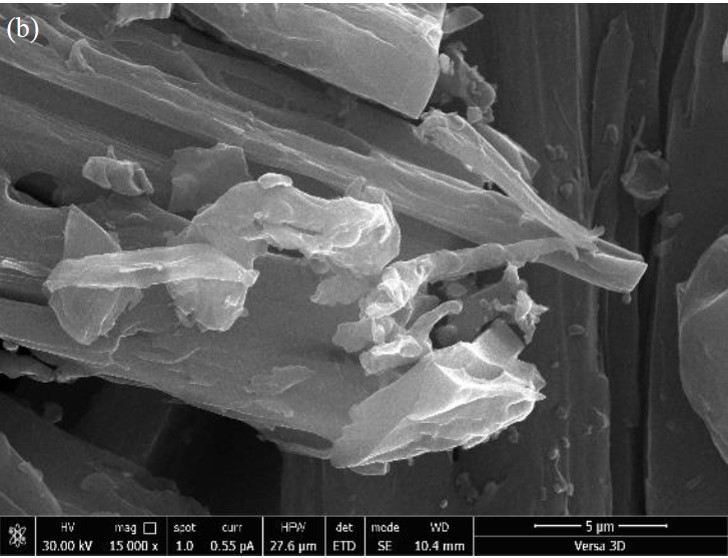
The widespread contamination of water sources by heavy metals such as Pb(II), Fe(II), and Zn(II) poses serious environmental and health risks. This study investigated the use of non-chemically activated biochar derived from rubber seed shells, an agricultural waste material, as a sustainable adsorbent for heavy metal removal. Biochars were produced by a two-step carbonisation process at temperatures of 850, 900, and 950 °C, and the physicochemical properties were systematically assessed. The sample carbonised at 850 °C (PRC850) exhibited the most favourable properties, including a high BET surface area (795 m²/g), mesoporous structure, and suitable surface functional groups, as confirmed by SEM, BET, XRD, and FTIR analyses. Initial screening was conducted for Pb(II), Fe(II), and Zn(II) adsorption, and PRC850 demonstrated superior performance, removing up to 98.64% of Pb(II), which was significantly higher than the 85.52% removal rate achieved by commercial-grade activated (CGA) carbon. The adsorption behaviour of Pb(II) was best described by the Langmuir isotherm model, and the pseudo-second-order kinetic model fitted the experimental data well, indicating chemisorption. These findings indicated that rubber seed shell biochar had the potential to serve as a cost-effective and ecologically friendly adsorbent, particularly for Pb(II) removal, while also performing effectively for Fe(II) and Zn(II).
Article Details

This work is licensed under a Creative Commons Attribution-NonCommercial-NoDerivatives 4.0 International License.

This work is licensed under a Creative Commons Attribution-NonCommercial-NoDerivatives 4.0 International License.
References
Ahmed J, Thakur A, Goyal A. Chapter 1: Industrial wastewater and its toxic effects. In: Shah MP, editor. Biological Treatment of Industrial Wastewater. Cambridge: The Royal Society of Chemistry; 2021. p. 1-14. DOI: https://doi.org/10.1039/9781839165399-00001
Chiamsathit C, Charin P, Thammarakcharoen S. Heavy metal pollution index for assessment of seasonal groundwater supply quality in rural area, Kalasin, Thailand. NU Int J Sci. 2020;17(1):45-60. DOI: https://doi.org/10.1007/s13201-020-01230-2
Chiamsathit C, Auttamana S, Thammarakcharoen S. Heavy metal pollution index for assessment of seasonal groundwater supply quality in hillside area, Kalasin, Thailand. Appl Water Sci. 2020;10:142. DOI: https://doi.org/10.1007/s13201-020-01230-2
Hung NV, Nguyet BTM, Nghi NH, Thanh NM, Quyen NDV, Nguyen VT, et al. Highly effective adsorption of organic dyes from aqueous solutions on longan seed-derived activated carbon. Environ Eng Res. 2023;28(3):220116. DOI: https://doi.org/10.4491/eer.2022.116
Amanze C, Zheng X, Man M, Yu Z, Ai C, Wu X, et al. Recovery of heavy metals from industrial wastewater using bioelectrochemical system inoculated with novel Castellaniella species. Environ Res. 2022;205:112467. DOI: https://doi.org/10.1016/j.envres.2021.112467
Dutta D, Arya S, Kumar S. Industrial wastewater treatment: current trends, bottlenecks, and best practices. Chemosphere. 2021;285:131245. DOI: https://doi.org/10.1016/j.chemosphere.2021.131245
Department of Groundwater Resources. Groundwater quality survey and monitoring report. Bangkok: Ministry of Natural Resources and Environment; 2019. (In Thai)
Mingkhwan R, Worakhunpiset S. Heavy metal contamination near industrial estate areas in Phra Nakhon Si Ayutthaya Province, Thailand and human health risk assessment. Int J Environ Res Public Health. 2018;15(9):1890. DOI: https://doi.org/10.3390/ijerph15091890
Fu F, Wang Q. Removal of heavy metal ions from wastewaters: a review. J Environ Manag. 2011;92(3):407-18. DOI: https://doi.org/10.1016/j.jenvman.2010.11.011
Jaishankar M, Tseten T, Anbalagan N, Mathew BB, Beeregowda KN. Toxicity, mechanism and health effects of some heavy metals. Interdiscip Toxicol. 2014;7(2):60-72. DOI: https://doi.org/10.2478/intox-2014-0009
Pollution Control Department (PCD). Thailand state of pollution report 2021. Bangkok: Ministry of Natural Resources and Environment; 2022. (In Thai)
Kongsricharoen N, Champa J, Kanjanasiranont N, Prueksasit T. Heavy metal contamination of surface water and groundwater from the waste electrical and electronic equipment (WEEE) recycling area in Buriram, Thailand. In: Jeon HY, editor. Sustainable Development of Water and Environment. ICSDWE 2020. Cham: Springer; 2020. p. 91-101. DOI: https://doi.org/10.1007/978-3-030-45263-6_9
Chiamsathit C, Netkrut K. Assessment of heavy metal concentration in wastewater of silk dyeing in Kalasin, Thailand. Sci Eng Health Stud. 2021;15:1-7.
Agency for Toxic Substances and Disease Registry (ATSDR). Toxicological profile for lead [Internet]. Atlanta: U.S. Department of Health and Human Services; 2007 [cited 2023 Sep 10]. Available from: Available from: https://www.atsdr.cdc.gov/toxprofiles/tp13.pdf.
Muthuraman RM, Murugappan A, Soundharajan B. A sustainable material for removal of heavy metals from water: adsorption of Cd(II), Pb(II), and Cu(II) using kinetic mechanism. Desalin Water Treat. 2021;220:192-8. DOI: https://doi.org/10.5004/dwt.2021.27002
Borhan A, Hamidi MNR. Modification of rubber-seed shell activated carbon using chitosan for removal of Cu²⁺ and Pb²⁺ from aqueous solution. AIP Conf Proc. 2019;2157:020024. DOI: https://doi.org/10.1063/1.5126559
Abdel-Raouf MS, Abdul-Raheim ARM. Removal of heavy metals from industrial wastewater by biomass-based materials: a review. J Pollution Eff Cont. 2017;5(1):1-13.
Saleh TA, Mustaqeem M, Khaled M. Water treatment technologies in removing heavy metal ions from wastewater: a review. Environ Nanotechnol Monit Manag. 2022;17:100617. DOI: https://doi.org/10.1016/j.enmm.2021.100617
Renu, Agarwal M, Singh K. Heavy metal removal from wastewater using various adsorbents: a review. J Water Reuse Desalin. 2017;7(4):387-419. DOI: https://doi.org/10.2166/wrd.2016.104
Michaelis E, Nie R, Austin D, Yue Y. High surface area biocarbon monoliths for methane storage. Green Energy Environ. 2023;8(5):1308-24. DOI: https://doi.org/10.1016/j.gee.2022.07.005
Tong M, Lan Y, Yang Q, Zhong C. High-throughput computational screening and design of nanoporous materials for methane storage and carbon dioxide capture. Green Energy Environ. 2018;3(2):107-19. DOI: https://doi.org/10.1016/j.gee.2017.09.004
Zulkania A, Hanum GF, Rezki AS. The potential of activated carbon derived from bio-char waste of bio-oil pyrolysis as adsorbent. MATEC Web Conf. 2018;154:01029. DOI: https://doi.org/10.1051/matecconf/201815401029
Ademiluyi FT, Nze JC. Multiple adsorption of heavy metal ions in aqueous solution using activated carbon from Nigerian bamboo. Int J Res Eng Technol. 2016;5(1):164-9. DOI: https://doi.org/10.15623/ijret.2016.0501033
Taha MF, Shuib AS, Shaharun MS, Borhan A. Removal of Ni(II), Zn(II) and Pb(II) ions from single metal aqueous solution using rice husk-based activated carbon. AIP Conf Proc. 2014;1621:210-7. DOI: https://doi.org/10.1063/1.4898468
Wanprakhon S, Sukcharoen P, Krongchai S. A comparative study of one-step and two-step activated carbon from longan seeds by dry chemical activation with NaOH. J Mater Sci Appl Energy. 2022;11(1):9-15. DOI: https://doi.org/10.55674/jmsae.v11i1.244048
Mokti N, Borhan A, Zaine SNA, Zaid HFM. Development of rubber seed shell-activated carbon using impregnated pyridinium-based ionic liquid for enhanced CO2 adsorption. Processes. 2021;9(7):1161. DOI: https://doi.org/10.3390/pr9071161
Tenev MD, Farías A, Torre C, Fontana G, Caracciolo N, Boeykens SP. Cotton industry waste as adsorbent for methylene blue. J Sustain Dev Energy Water Environ Syst. 2019;7(4):667-77. DOI: https://doi.org/10.13044/j.sdewes.d7.0269
Mondal MK, Mishra G, Kumar P. Adsorption of cadmium (II) and chromium (VI) from aqueous solution by waste marigold flowers. J Sustain Dev Energy Water Environ Syst. 2015;3(4):405-15. DOI: https://doi.org/10.13044/j.sdewes.2015.03.0030
Gaur N, Kukreja A, Yadav M, Tiwari A. Adsorptive removal of lead and arsenic from aqueous solution using soyabean as a novel biosorbent: equilibrium isotherm and thermal stability studies. Appl Water Sci. 2018;8:98. DOI: https://doi.org/10.1007/s13201-018-0743-5
Boeykens SP, Saralegui A, Caracciolo N, Piol MN. Agroindustrial waste for lead and chromium biosorption. J Sustain Dev Energy Water Environ Syst. 2018;6(2):341-50. DOI: https://doi.org/10.13044/j.sdewes.d5.0184
Yi H, Nakabayashi K, Yoon SH, Miyawaki J. Pressurized physical activation: a simple production method for activated carbon with a highly developed pore structure. Carbon. 2021;183:735-42. DOI: https://doi.org/10.1016/j.carbon.2021.07.061
Yu M, Han Y, Li J, Wang L. CO2-activated porous carbon derived from cattail biomass for removal of malachite green dye and application as supercapacitors. Chem Eng J. 2017;317:493-502. DOI: https://doi.org/10.1016/j.cej.2017.02.105
Ma C, Gong J, Zhao S, Liu X, Mu X, Wang Y, et al. One-pot green mass production of hierarchically porous carbon via a recyclable salt-templating strategy. Green Energy Environ. 2022;7(4):818-28. DOI: https://doi.org/10.1016/j.gee.2020.12.004
Dula T, Siraj K, Kitte SA. Adsorption of hexavalent chromium from aqueous solution using chemically activated carbon prepared from locally available waste of bamboo (Oxytenanthera abyssinica). ISRN Environ Chem. 2014;2014:438245. DOI: https://doi.org/10.1155/2014/438245
Gorbounov M, Petrovic B, Ozmen S, Clough P, Soltani SM. Activated carbon derived from biomass combustion bottom ash as solid sorbent for CO2 adsorption. Chem Eng Res Des. 2023;194:325-43. DOI: https://doi.org/10.1016/j.cherd.2023.04.057
The Nation. Thailand becomes world’s top rubber exporter, China biggest buyer [Internet]. 2022 [cited 2022 Oct 11]. Available from: https://www.nationthailand.com/business/econ/40018839.
Laskar MA, Ali SK, Siddiqui S. A potential bio-sorbent for heavy metals in the remediation of waste water. J Sustain Dev Energy Water Environ Syst. 2016;4(4):320-32. DOI: https://doi.org/10.13044/j.sdewes.2016.04.0025
Thai Industrial Standard Institute. Thai industrial standard: activated carbon (TIS 900-2547). Bangkok: Thai Industrial Standard Institute; 2004. (In Thai)
ASTM. ASTM D2867-23: Standard test methods for moisture in activated carbon. West Conshohocken: ASTM International; 2023.
ASTM. ASTM D2866-11: Standard test methods for total ash content of activated carbon. West Conshohocken: ASTM International; 2018.
Onyeji LI, Aboje AA. Removal of heavy metals from dye effluent using activated carbon produced from coconut shell. Int J Eng Sci Technol. 2011;3(12):8238-46.
Wirtu YD, Melak F, Yitbarek M, Astatkie H. Aluminum coated natural zeolite for water defluoridation: a mechanistic insight. Groundw Sustain Dev. 2021;12:100525. DOI: https://doi.org/10.1016/j.gsd.2020.100525
ASTM. ASTM D4607-14: Standard test methods for determination of iodine number of activated carbon. West Conshohocken: ASTM International; 2021.
Leng L, Huang H, Li H, Li J, Zhou W. Biochar stability assessment methods: a review. Sci Total Environ. 2019;647:210-22. DOI: https://doi.org/10.1016/j.scitotenv.2018.07.402
Ekebafe LO, Imanah JE, Okieimen FE. Physico-mechanical properties of rubber seed shell carbon: filled natural rubber compounds. Chem Ind Chem Eng Q. 2010;16(2):149-56. DOI: https://doi.org/10.2298/CICEQ091115022E
Altıkat A, Alma MH, Altıkat A, Bilgili ME, Altıkat S. A comprehensive study of biochar yield and quality concerning pyrolysis conditions: a multifaceted approach. Sustainability. 2024;16(2):937. DOI: https://doi.org/10.3390/su16020937
Lillo-Ródenas MA, Cazorla-Amorós D, Linares-Solano A. Understanding chemical reactions between carbons and NaOH and KOH. Carbon. 2003;41(2):267-75. DOI: https://doi.org/10.1016/S0008-6223(02)00279-8
Pinto PS, Silva RCF, de Freitas Filho RL, Santos LO, Pereira SD, Teixeira APC. Mesoporous carbon-based materials obtained from biomass and their application in the adsorption of contaminants: a review. J Braz Chem Soc. 2025;36(7):e-20250068.
Kebede A, Kedir K, Melak F, Asere TG. Removal of Cr(VI) from aqueous solutions using biowastes: Tella residue and pea (Pisum sativum) seed shell. Sci World J. 2022;2022:7554133. DOI: https://doi.org/10.1155/2022/7554133
Zhang C, Zhang Z, Zhang L, Li Q, Li C, Chen G, et al. Evolution of the functionalities and structures of biochar in pyrolysis of poplar in a wide temperature range. Bioresour Technol. 2020;304:123002. DOI: https://doi.org/10.1016/j.biortech.2020.123002
French AD, Cintrón MS. Cellulose polymorphy, crystallite size, and the Segal Crystallinity Index. Cellulose. 2013;20(1):583-8. DOI: https://doi.org/10.1007/s10570-012-9833-y
Park S, Baker JO, Himmel ME, Parilla PA, Johnson DK. Cellulose crystallinity index: measurement techniques and their impact on interpreting cellulase performance. Biotechnol Biofuels. 2010;3:10. DOI: https://doi.org/10.1186/1754-6834-3-10
Yang H, Yan R, Chen H, Lee DH, Zheng C. Characteristics of hemicellulose, cellulose and lignin pyrolysis. Fuel. 2007;86(12-13):1781-8. DOI: https://doi.org/10.1016/j.fuel.2006.12.013
Hosoya T, Kawamoto H, Saka S. Cellulose–hemicellulose and cellulose–lignin interactions in wood pyrolysis at gasification temperature. J Anal Appl Pyrolysis. 2007;80(1):118-25. DOI: https://doi.org/10.1016/j.jaap.2007.01.006
Boateng AA, Mullen CA, Goldberg N, Hicks KB, Jung HJG, Lamb JFS. Production of bio-oil from alfalfa stems by fluidized-bed fast pyrolysis. Ind Eng Chem Res. 2008;47(12):4115-22. DOI: https://doi.org/10.1021/ie800096g
Marcus Y. Ion Properties. New York: Marcel Dekker; 1997.
Stumm W, Morgan JJ. Aquatic chemistry: chemical equilibria and rates in natural waters. 3rd ed. New York: Wiley; 1996.
Shannon RD. Revised effective ionic radii and systematic studies of interatomic distances in halides and chalcogenides. Acta Crystallogr A. 1976;32(5):751-67. DOI: https://doi.org/10.1107/S0567739476001551
Chen H, Yang X, Liu Y, Lin X, Wang J, Zhang Z, et al. KOH modification effectively enhances the Cd and Pb adsorption performance of N-enriched biochar derived from waste chicken feathers. Waste Manag. 2021;130:82-92. DOI: https://doi.org/10.1016/j.wasman.2021.05.015
Wu Y, Li C, Wang Z, Li F, Li J, Xue W, et al. Enhanced adsorption of aqueous Pb(II) by acidic group-modified biochar derived from peanut shells. Water. 2024;16(13):1871. DOI: https://doi.org/10.3390/w16131871
Fan D, Peng Y, He X, Ouyang J, Fu L, Yang H. Recent progress on the adsorption of heavy metal ions Pb(II) and Cu(II) from wastewater. Nanomaterials. 2024;14(12):1037. DOI: https://doi.org/10.3390/nano14121037
Wang A, Zheng Z, Li R, Hu D, Lu Y, Luo H, et al. Biomass-derived porous carbon highly efficient for removal of Pb(II) and Cd(II). Green Energy Environ. 2019;4(4):414-23. DOI: https://doi.org/10.1016/j.gee.2019.05.002
Zubair SA, Gaya UI. Adsorption of aqueous using granular adsorbents from Accanthospermum hispendum DC. J Sci Technol. 2021;13(1):18-29. DOI: https://doi.org/10.30880/jst.2021.13.01.003
ASTM. ASTM D2854-09: Standard test methods for apparent density of activated carbon. West Conshohocken: ASTM International; 2019.
Barakat MA. New trends in removing heavy metals from industrial wastewater. Arab J Chem. 2011;4(4):361-77. DOI: https://doi.org/10.1016/j.arabjc.2010.07.019
Mekonnen E, Yitbarek M, Soreta TR. Kinetic and thermodynamic studies of the adsorption of Cr(VI) onto some selected local adsorbents. S Afr J Chem. 2015;68:45-52. DOI: https://doi.org/10.17159/0379-4350/2015/v68a7
Adane T, Haile D, Dessie A, Abebe Y, Dagne H. Response surface methodology as a statistical tool for optimization of removal of chromium (VI) from aqueous solution by Teff (Eragrostis teff) husk activated carbon. Appl Water Sci. 2020;10:37. DOI: https://doi.org/10.1007/s13201-019-1120-8
Danish M, Hashim R, Rafatullah M, Sulaiman O, Ahmad A, Govind. Adsorption of Pb(II) ions from aqueous solutions by date bead carbon activated with ZnCl2. Clean Soil Air Water. 2011;39(4):392-9. DOI: https://doi.org/10.1002/clen.201000185
Karthikeyan T, Rajgopal S, Miranda LR. Chromium(VI) adsorption from aqueous solution by Hevea brasiliensis sawdust activated carbon. J Hazard Mater. 2005;124(1-3):192-9. DOI: https://doi.org/10.1016/j.jhazmat.2005.05.003
