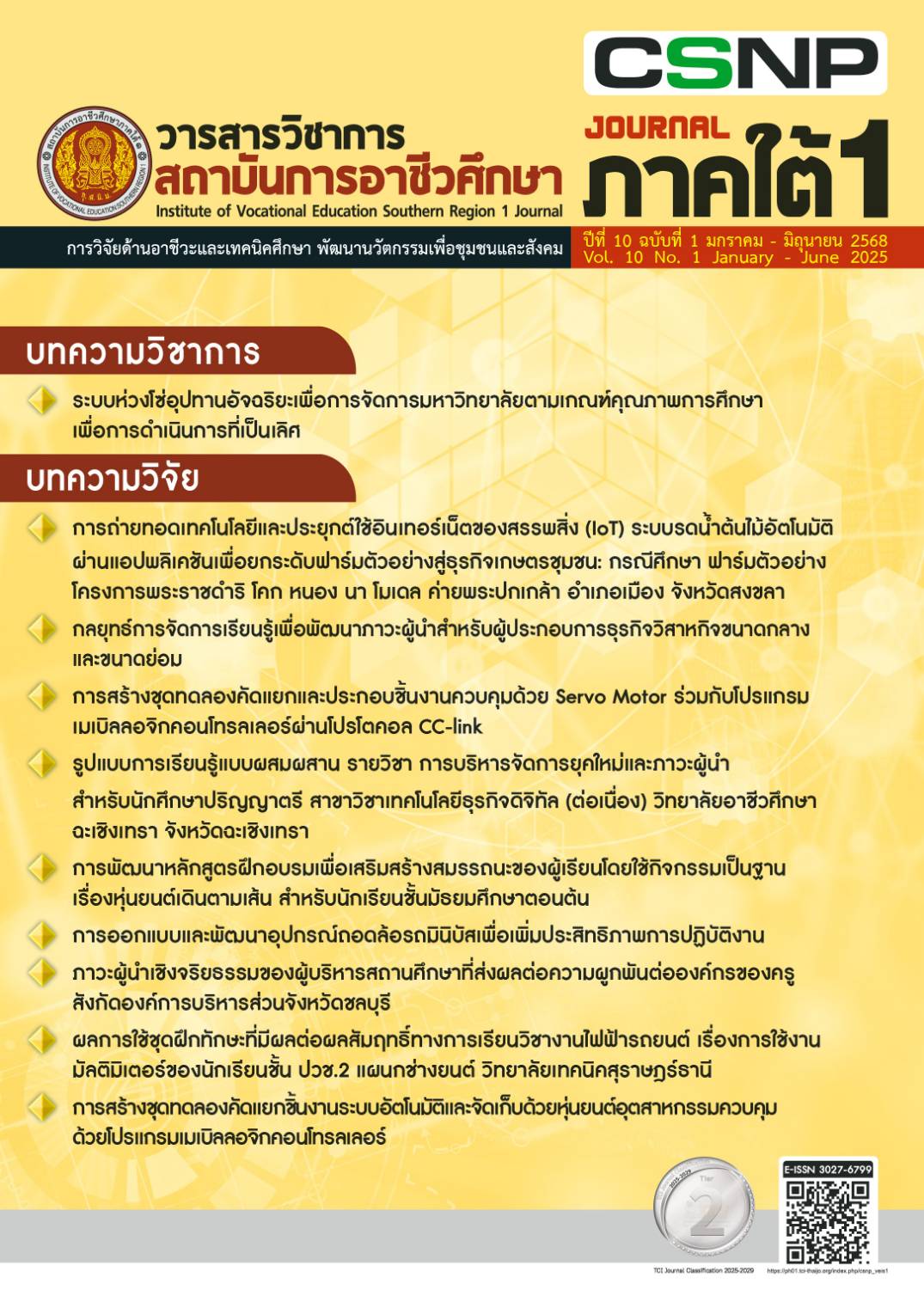
การพัฒนาหลักสูตรฝึกอบรมเพื่อเสริมสร้างสมรรถนะของผู้เรียน โดยใช้กิจกรรมเป็นฐาน เรื่อง หุ่นยนต์เดินตามเส้น สำหรับนักเรียนชั้นมัธยมศึกษาตอนต้น
Article Sidebar
Main Article Content
บทคัดย่อ
การวิจัยครั้งนี้มีวัตถุประสงค์เพื่อ 1) พัฒนาหลักสูตรฝึกอบรมเพื่อเสริมสร้างสมรรถนะของผู้เรียน โดยใช้กิจกรรมเป็นฐานเรื่อง หุ่นยนต์เดินตามเส้นสำหรับนักเรียนชั้นมัธยมศึกษาตอนต้น 2) ศึกษาผลการทดลองใช้หลักสูตรฝึกอบรมเพื่อเสริมสร้างสมรรถนะของผู้เรียน โดยใช้กิจกรรมเป็นฐานเรื่อง หุ่นยนต์เดินตามเส้นสำหรับนักเรียนชั้นมัธยมศึกษาตอนต้น กลุ่มตัวอย่างได้แก่ ผู้บริหาร ครู และนักเรียนระดับมัธยมศึกษาตอนต้น โรงเรียนนวมินทราชูทิศ ทักษิณสงขลา ได้มาด้วยการเลือกแบบเจาะจง (Purposive Sampling) เครื่องมือที่ใช้ในการวิจัยประกอบด้วย 1) หลักสูตรฝึกอบรมเพื่อเสริมสร้างสมรรถนะของผู้เรียน เรื่องหุ่นยนต์เดินตามเส้นสำหรับนักเรียนชั้นมัธยมศึกษาตอนต้น 2) แบบทดสอบวัดผลสัมฤทธิ์ทางการเรียน 3) แบบประเมินสมรรถนะของผู้เรียน เรื่องหุ่นยนต์เดินตามเส้นสำหรับนักเรียนชั้นมัธยมศึกษาตอนต้นมีค่าความเชื่อมั่น เท่ากับ 0.94 4) แบบสอบถามความพึงพอใจของผู้เรียนที่มีต่อหลักสูตรฝึกอบรมเพื่อเสริมสร้างสมรรถนะของผู้เรียน วิเคราะห์ข้อมูลโดยใช้สถิติค่าเฉลี่ย ส่วนเบี่ยงเบนมาตรฐาน และการทดสอบที
ผลการวิจัยพบว่า 1) หลักสูตรฝึกอบรมเพื่อเสริมสร้างสมรรถนะของผู้เรียน โดยใช้กิจกรรมเป็นฐาน เรื่องหุ่นยนต์เดินตามเส้นสำหรับนักเรียนชั้นมัธยมศึกษาตอนต้น ประกอบด้วย ชื่อหลักสูตร หลักการ จุดมุ่งหมายของหลักสูตร เนื้อหา กิจกรรม สื่อ การประเมินผล ระยะเวลาการจัดการเรียนรู้ แผนการจัดการเรียนรู้ เอกสารประกอบหลักสูตร ซึ่งผู้เชี่ยวชาญประเมินองค์ประกอบหลักสูตร พบว่ามีความสอดคล้องและเหมาะสม 2) ผลการทดลองใช้หลักสูตรฝึกอบรมเพื่อเสริมสร้างสมรรถนะของผู้เรียน พบว่า (1) นักเรียนมีความรู้หลังการจัดการเรียนรู้สูงกว่าก่อนการจัดการเรียนรู้อย่างมีนัยสำคัญทางสถิติที่ระดับ .01 (2) นักเรียนมีสมรรถนะเรื่องหุ่นยนต์เดินตามเส้น เฉลี่ยระดับมาก และ (3) นักเรียนมีความพึงพอใจต่อหลักสูตรฝึกอบรมเพื่อเสริมสร้างสมรรถนะของผู้เรียนระดับมาก
Article Details

อนุญาตภายใต้เงื่อนไข Creative Commons Attribution-NonCommercial-NoDerivatives 4.0 International License.
เอกสารอ้างอิง
มโนฤทธิ์ จันทรฉายะ. (2563). [ออนไลน์]. 5G กับการปฏิวัติเทคโนโลยีในประเทศไทย. [สืบค้นเมื่อวันที่ 23 กุมภาพันธ์ 2567]. จาก https://www.depa.or.th/th/article-view/article8-2563.
อพัชชา ช้างขวัญยืน, รุจโรจน์ แก้วอุไร, วินัย วงษ์ไทย และเอื้อมพร หลินเจริญ. (2564). การจัดการเรียนเชิงรุกเพื่อส่งเสริมความเป็นพลเมืองดิจิทัล. วารสารศึกษาศาสตร์ มหาวิทยาลัยนเรศวร, 23(3), 452-465.
นพดล ชอบใหญ่, ทิพวัลย์ คำคง, และนารีรัตน์ สุวรรณวารี. (2561). การพัฒนาหลักสูตรฝึกอบรม เรื่อง การเขียนโปรแกรมควบคุมหุ่นยนต์ สำหรับนักเรียนชั้นมัธยมศึกษาตอนต้น. วารสารลวะศรี มหาวิทยาลัยราชภัฏเทพสตรี, 2(1), 11-25.
สุวัทนา สงวนรัตน์, และชวน ภารังกูล. (2564). หลักสูตรและการเรียนการสอนฐานสมรรถนะในสถานศึกษา. วารสารสิรินธรปริทรรศน์, 22(2), 351-364.
Oliva, P. F. (1992). Developing the Curriculum (3rd ed.) New York: Harper Collins Publisher.
Taba, H. (1962). Curriculum Development Theory and Practice. New York: Harcourt, Brace and World.
Tyler, R. W. (1950). Basic Principles of Curriculum and Instruction. Chicago: The University of Chicago Press.
ศริทธิ์ พร้อมเทพ, รุจโรจน์ แก้วอุไร, สิตานันท์ จันทร์สมบูรณ์, ภาสกร เรืองรอง, และสกนธ์ชัย ชะนูนันท์. (2566). การพัฒนารูปแบบการจัดการเรียนรู้โดยใช้โครงงานหุ่นยนต์เพื่อส่งเสริมทักษะ การคิดเชิงคำนวณสำหรับนักเรียนชั้นมัธยมศึกษาตอนปลาย. วารสาร มรภ.กพ. วิทยาศาสตร์ คณิตศาสตร์ และเทคโนโลยี, 2(2), 161-174.
ธานินทร์ อินทรวิเศษ, ธนวัตน์ พูลเขตนคร, ธนวัตน์ เจริญษา, นิตยา นาคอินทร์, Augustine, A., และภาสกร เรืองรอง. (2562). เทคโนโลยีและนวัตกรรมกับการจัดการเรียนการสอนในยุคดิจิทัล. วารสาร Veridian E Journal ฯ สาขามนุษยศาสตร์ สังคมศาสตร์ และศิลปะ, 12(6), 478-494.
ทวีสิน อำนวยพันธ์วิไล, พิชญาภา ยวงสร้อย, รุจโรจน์ แก้วอุไร, และกิตติพงษ์ พุ่มพวง. (2565). การพัฒนารูปแบบการจัดการเรียนรู้บนระบบคลาวด์ด้วยการเรียนรู้แบบร่วมมือรวมพลังร่วมกับการคิดเชิงวิพากษ์เพื่อส่งเสริมทักษะการรู้เท่าทันสื่อดิจิทัลของนักเรียนระดับมัธยมศึกษา. สักทอง: วารสารมนุษยศาสตร์และสังคมศาสตร์, 28(3), 81-94.
ศศิธร ชูแก้ว. (2560). การพัฒนารูปแบบการสอนแบบบูรณาการโดยใช้หุ่นยนต์เป็นฐานในการพัฒนาทักษะ การคิดเชิงประมวลผลของผู้เรียนภายใต้แนวทางการจัดการศึกษาแบบ STEM. กรุงเทพมหานคร: มหาวิทยาลัยเทคโนโลยีพระจอมเกล้าพระนครเหนือ.
