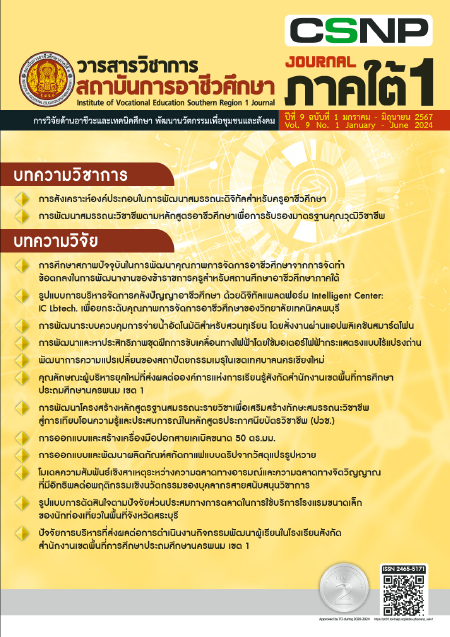
การพัฒนาโครงสร้างหลักสูตรฐานสมรรถนะรายวิชาเพื่อเสริมสร้างทักษะสมรรถนะวิชาชีพ สู่การเทียบโอนความรู้และประสบการณ์ในหลักสูตรประกาศนียบัตรวิชาชีพ (ปวช.)
Article Sidebar
Main Article Content
บทคัดย่อ
การวิจัยนี้มีวัตถุประสงค์เพื่อ 1) ศึกษากรอบโครงสร้างหลักสูตรฐานสมรรถนะรายวิชา 2) พัฒนาโครงสร้างหลักสูตรฐานสมรรถนะรายวิชา 3) ประเมินโครงสร้างหลักสูตรฐานสมรรถนะรายวิชา กลุ่มผู้ให้ข้อมูลและผู้ทรงคุณวุฒิ จำนวน 50 คน ได้มาโดยวิธีการเลือกแบบเจาะจง จากกลุ่มภาคีเครือข่ายพื้นที่นวัตกรรมการศึกษา จังหวัดสงขลา ประกอบด้วย 1) ตัวแทนจากภาคมหาวิทยาลัย และ2) ตัวแทนจากภาคการศึกษา เครื่องมือที่ใช้ในการวิจัย ได้แก่ แบบบันทึกการศึกษาเอกสาร แบบสัมภาษณ์ แบบเมินความเหมาะสมของโครงสร้างหลักสูตรฐานสมรรถนะรายวิชา และแบบประเมินคุณภาพโครงสร้างหลักสูตรฐานสมรรถนะรายวิชา สถิติที่ใช้ในการวิจัย ได้แก่ ค่าเฉลี่ย ส่วนเบี่ยงเบนมาตรฐาน และการวิเคราะห์เนื้อหา
ผลการวิจัยพบว่า 1) กรอบโครงสร้างของหลักสูตรฐานสมรรถนะรายวิชา ประกอบด้วย (1) สมรรถนะรายวิชาของหลักสูตรฐานสมรรถนะรายวิชาสำหรับการจัดสอนอาชีพ ตรงหรือสอดคล้องกับสมรรถนะรายวิชาในหลักสูตรประกาศนียบัตรวิชาชีพ (ปวช.) ไม่ต่ำกว่าร้อยละ 60 (2) จำนวนชั่วโมงเรียนไม่น้อยกว่าจำนวนชั่วโมงเรียนของรายวิชาในหลักสูตรประกาศนียบัตรวิชาชีพ (ปวช.) 2) โครงสร้างหลักสูตรฐานสมรรถนะรายวิชา มีองค์ประกอบของหลักสูตรฐานสมรรถนะรายวิชา 9 องค์ประกอบ คือ องค์ประกอบที่ 1 ชื่อหลักสูตรรายวิชา องค์ประกอบที่ 2 จำนวนชั่วโมงเรียน องค์ประกอบที่ 3 สมรรถนะรายวิชา องค์ประกอบที่ 4 คำอธิบายรายวิชา องค์ประกอบที่ 5 เนื้อหาสาระ องค์ประกอบที่ 6 การวัดและประเมินผล องค์ประกอบที่ 7 เครื่องมือ/วัสดุ/อุปกรณ์ องค์ประกอบที่ 8 เอกสารประกอบและแหล่งเรียนรู้ องค์ประกอบที่ 9 พื้นความรู้หรือคุณสมบัติของผู้เรียน ซึ่งมีจำนวนทั้งหมด 24 วิชา และผลการประเมินความเหมาะสมของโครงสร้างหลักสูตรฐานสมรรถนะรายวิชาเพื่อเสริมสร้างทักษะสมรรถนะวิชาชีพสู่การเทียบโอนความรู้และประสบการณ์ในหลักสูตรประกาศนียบัตรวิชาชีพ (ปวช.) โดยภาพรวมมีความเหมาะสมอยู่ในระดับมากที่สุด 3) ผลการประเมินคุณภาพโครงสร้างหลักสูตรฐานสมรรถนะรายวิชาเพื่อเสริมสร้างทักษะสมรรถนะวิชาชีพสู่การเทียบโอนความรู้และประสบการณ์ในหลักสูตรประกาศนียบัตรวิชาชีพ (ปวช.) เฉลี่ยโดยรวมอยู่ในระดับมากที่สุด
Article Details

อนุญาตภายใต้เงื่อนไข Creative Commons Attribution-NonCommercial-NoDerivatives 4.0 International License.
เอกสารอ้างอิง
กระทรวงศึกษาธิการ. (2562). แนวทางการการพัฒนาสมรรถนะผู้เรียนระดับการศึกษาขั้นพื้นฐาน. กรุงเทพมหานคร: สำนักงานเลขาธิการสภาการศึกษา.
สำนักงานศึกษาธิการจังหวัดสงขลา. (2562). แผนพัฒนาการศึกษา (พ.ศ.2562-2565) จังหวัดสงขลา. สงขลา: สำนักงานศึกษาธิการจังหวัดสงขลา.
สำนักงานศึกษาธิการจังหวัดสงขลา. (2563). แผนพัฒนาการศึกษา (พ.ศ.2563-2565) จังหวัดสงขลา ฉบับทบทวนปีงบประมาณ พ.ศ.2565. สงขลา: สำนักงานศึกษาธิการจังหวัดสงขลา.
กระทรวงศึกษาธิการ. (2562). หลักสูตรประกาศนียบัตรวิชาชีพ พุทธศักราช 2562 (ปรับปรุง พ.ศ. 2565). กรุงเทพมหานคร: สำนักมาตรฐานการอาชีวศึกษาและวิชาชีพ สำนักงานคณะกรรมการการอาชีวศึกษา.
Rovinelli, R. J., & Hambleton, R. K. (1997). On the Use of Content Specialists in the Assessment of Criterion-referenced Test Item Validity. Dutch Journal of Educational, 2, 49-60.
กระทรวงศึกษาธิการ. (2562). หลักเกณฑ์และแนวปฏิบัติการจัดการอาชีวศึกษาระดับประกาศนียบัตรวิชาชีพ และระดับประกาศนียบัตรวิชาชีพชั้นสูง เรื่องที่ 9 การเทียบโอนผลการเรียนรู้. กรุงเทพมหานคร: สำนักงานคณะกรรมการการอาชีวศึกษา.
กระทรวงศึกษาธิการ. (2562). แนวทางการจัดการศึกษารูปแบบการศึกษานอกระบบ แบบมีชั้นเรียน (ฉบับปรับปรุง). กรุงเทพมหานคร: สำนักงานคณะกรรมการการอาชีวศึกษา.
