An Integrated Coagulation-Sedimentation, O3-AOP, and Membrane Bioreactor (MBR) Hybrid System for The Degradation of Recalcitrant Organic Pollutants in Simulated Pharmaceutical and Resin Synthesis Wastewater
Article Sidebar
Main Article Content
Abstract
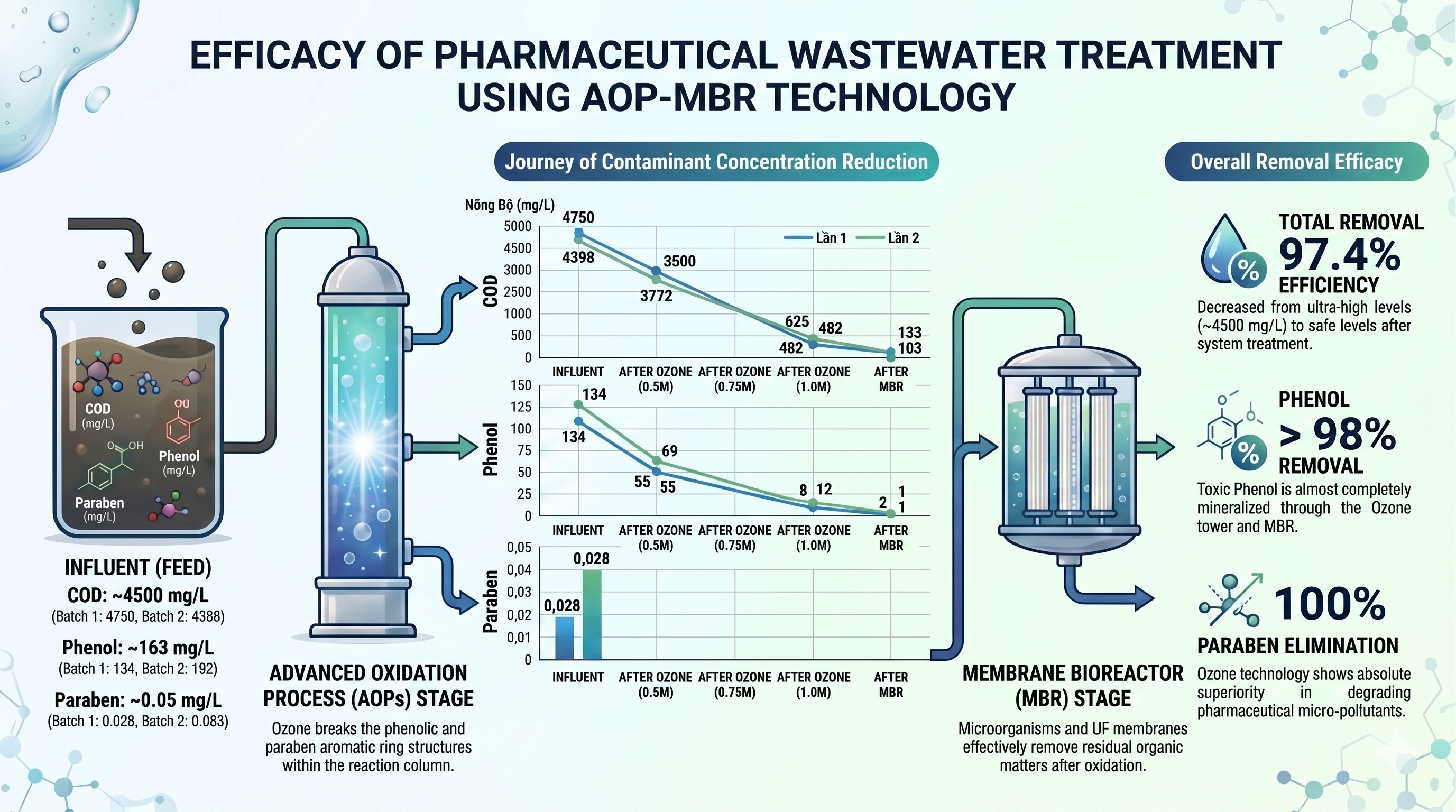
The treatment of high-strength wastewater from pharmaceutical and resin synthesis processes, which contain recalcitrant organic pollutants and emerging contaminants, remains a major environmental challenge because of their high chemical oxygen demand (COD), low biodegradability, and toxicity. In this study, the performance of a laboratory-scale hybrid system integrating coagulation–sedimentation, ozone-based advanced oxidation (O3-AOPs), and a membrane bioreactor (MBR) for the removal of COD, phenol, and paraben from three simulated wastewater scenarios was evaluated. The system achieved overall COD removal efficiencies exceeding 95% across all the scenarios, with the highest removal (97.4%) observed in high-strength pharmaceutical wastewater (influent COD concentration of 4,398–4,750 mg L-1). Phenol removal exceeded 98% in all the cases, while target parabens were reduced to below the analytical detection limit and were subsequently reported as nondetectable. Spatial attenuation profiling along the ozone contact column suggested a dual-mechanism behavior. The rapid pollutant attenuation observed in the lower section was consistent with radical-driven oxidation, whereas the enhanced removal in the upper section may indicate the contribution of additional processes, including possible physical stripping of volatile intermediates. The O3-AOP stage served as an effective protective barrier, reducing phenol concentrations to below the biological inhibition threshold before the wastewater entered the MBR. The findings demonstrate that the triple-integrated hybrid system provides an effective multiple-barrier treatment approach for complex industrial wastewater, offering high pollutant removal efficiency and substantially reducing the concentration of target cytotoxic and potentially endocrine-disrupting compounds.
Article Details

This work is licensed under a Creative Commons Attribution-NonCommercial 4.0 International License.
Published articles are under the copyright of the Applied Environmental Research effective when the article is accepted for publication thus granting Applied Environmental Research all rights for the work so that both parties may be protected from the consequences of unauthorized use. Partially or totally publication of an article elsewhere is possible only after the consent from the editors.
