Effects of Herbicides on 2,4-D-Resistant Soil Microorganisms in Maize Cultivation in Lopburi Province, Thailand
Article Sidebar
Main Article Content
Abstract
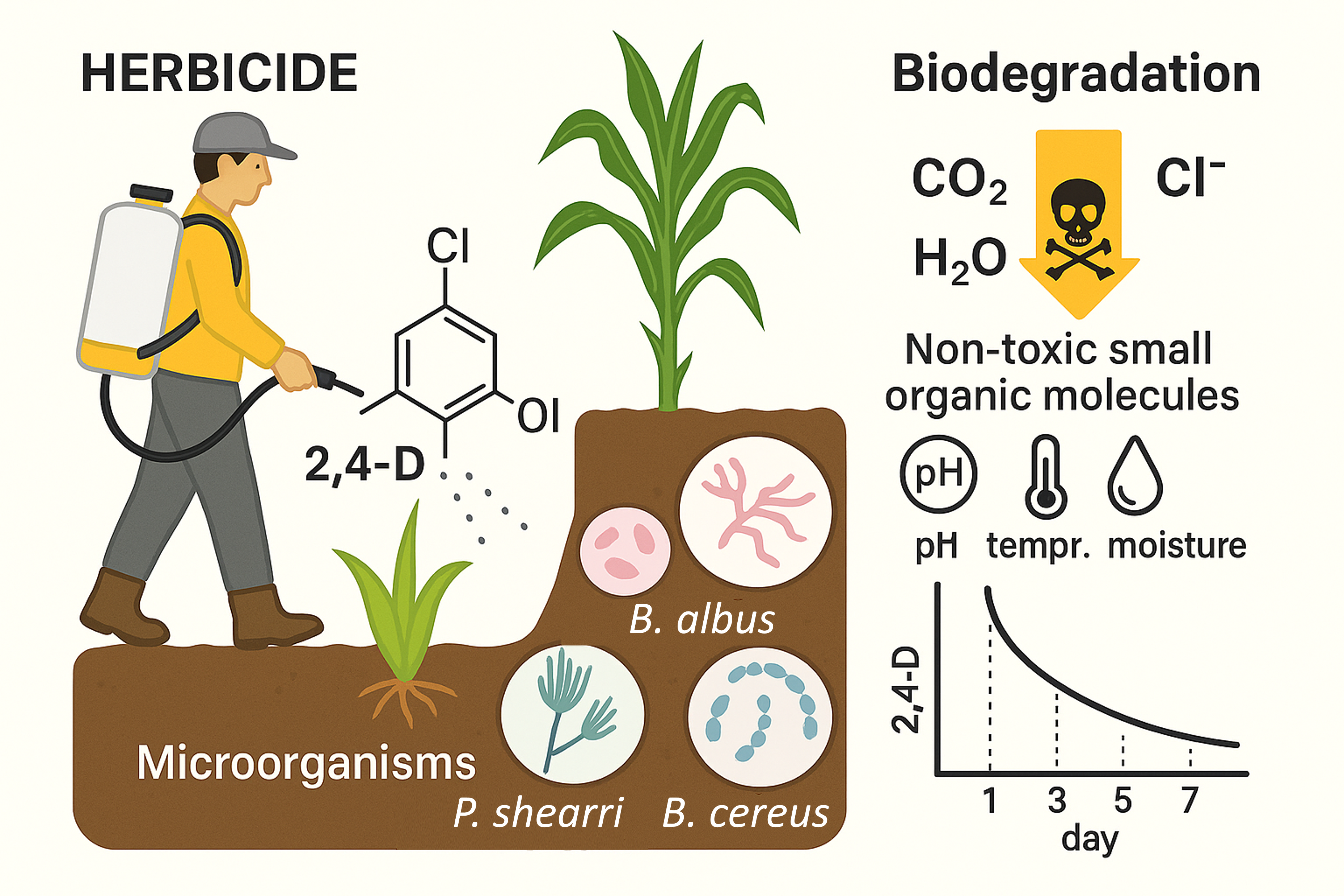
This study aimed to assess the impact of herbicide application on soil micro-organism density and to identify microorganisms resistant to 2,4-D-dimethyl-ammonium (2,4-D) for potential biodegradation. Research was conducted in maize plots in Lopburi Province, where 2,4-D was applied at a rate of 120 g of active ingredient per 160 m2. The soil samples were collected at various intervals: before application; 2 and 4 hours postapplication; and 1, 3, and 7 days after application. The analyses included soil property and microorganism population analyses. The results indicated that 2,4-D applications significantly increased bacteria and fungi in the treated plots compared with those in the control plots, likely due to the ability of certain microorganisms to use 2,4-D as a carbon and nitrogen source. 2,4-D residues are associated with microorganism density and are also correlated with soil organic matter, clay content, and cation exchange capacity. The study confirmed that all three bacterial isolates could degrade 2,4-D, with Bacillus albus achieving the highest degradation rate of 23.84%, followed by Nocardioides aromaticivorans and Bacillus cereus. Among the fungi, Penicillium shearii had the highest degradation rate at 50.42%, followed by Penicillium pimiteousiense. This research reveals the adaptive capabilities of specific microorganisms in herbicide-impacted environments and their potential for bioremediation.
Article Details

This work is licensed under a Creative Commons Attribution-NonCommercial 4.0 International License.
Published articles are under the copyright of the Applied Environmental Research effective when the article is accepted for publication thus granting Applied Environmental Research all rights for the work so that both parties may be protected from the consequences of unauthorized use. Partially or totally publication of an article elsewhere is possible only after the consent from the editors.
