Investigating Spatial and Temporal Changes in Vegetation via Remote Sensing Indicators and Revealing Their Trends in The Central Desert of Iran
Article Sidebar
Main Article Content
Abstract
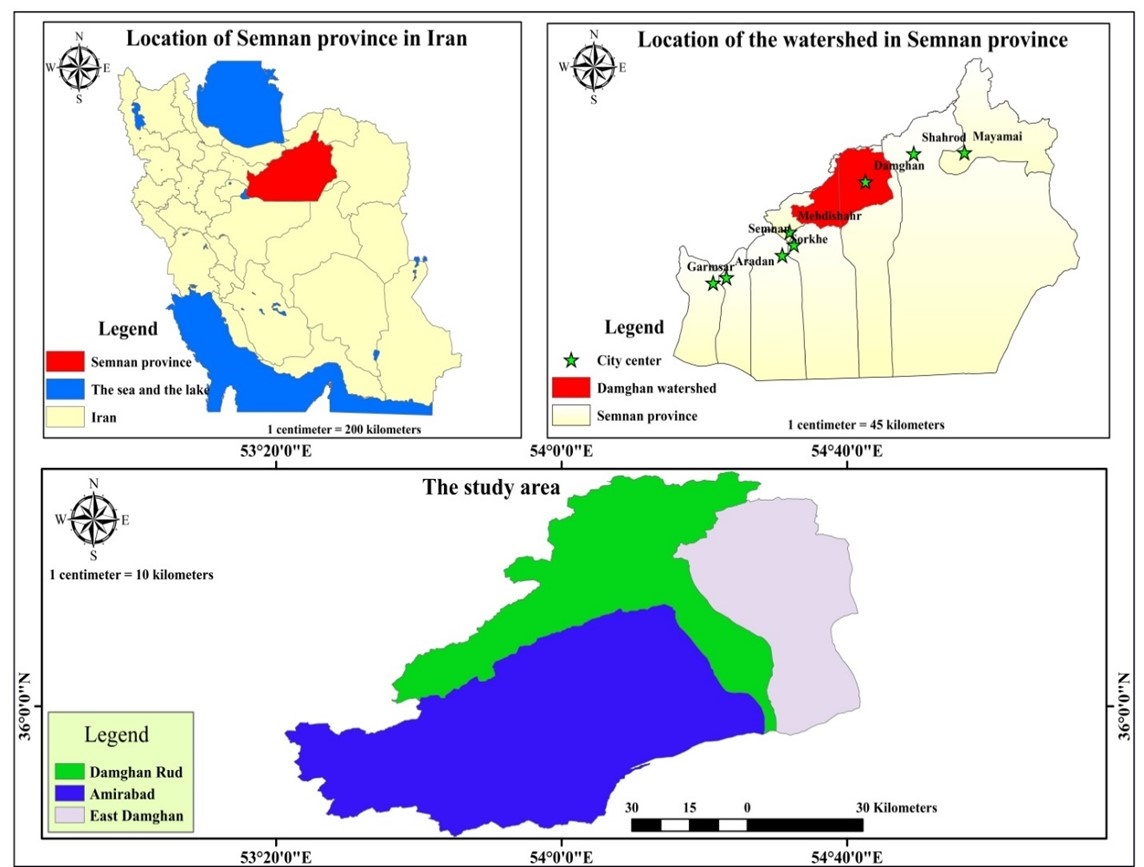
Vegetation changes can significantly affect the conditions and productivity of ecosystems. Consequently, studying vegetation dynamics across various temporal and spatial scales has emerged as a critical environmental concern. The aim of this study was to investigate changes in vegetation cover via vegetation indices, including the normalized difference vegetation index (NDVI), ratio vegetation index (RVI), soil adjusted vegetation index (SAVI), and difference vegetation index (DVI), derived from multitemporal Landsat 5, 7, and 8 satellite images processed via the Google Earth Engine. The study area is located in the Damghan arid and desert watershed, which represents the central desert of Iran. Furthermore, the Mann–Kendall test was employed to investigate vegetation trends from 1995–2020. The temporal analysis of the vegetation indices via the Mann–Kendall test revealed de-creasing trends in the NDVI, SAVI, RVI, and DVI values, with slopes of -0.0014, -0.0013, -0.02, and -0.002, respectively. The vegetation changes assessed via the SAVI demonstrated the greatest consistency with the on-ground conditions, with a coefficient of determination of 0.81. In terms of this index, vegetation cover decreased in 33.21% of the watershed area, remained unchanged in 50.58%, and increased in 16.21% of the watershed area. The reduction in vegetation cover in one-third of the Damghan watershed underscores the need to incorporate these changes into environmental planning, land management, and sustainable development strategies for the region.
Article Details

This work is licensed under a Creative Commons Attribution-NonCommercial 4.0 International License.
Published articles are under the copyright of the Applied Environmental Research effective when the article is accepted for publication thus granting Applied Environmental Research all rights for the work so that both parties may be protected from the consequences of unauthorized use. Partially or totally publication of an article elsewhere is possible only after the consent from the editors.
