Influence of Crabgrass Root Exudates on the Hydrocarbons Degrading Microorganisms in Crude Oil Contaminated Soil
Article Sidebar
Main Article Content
Abstract
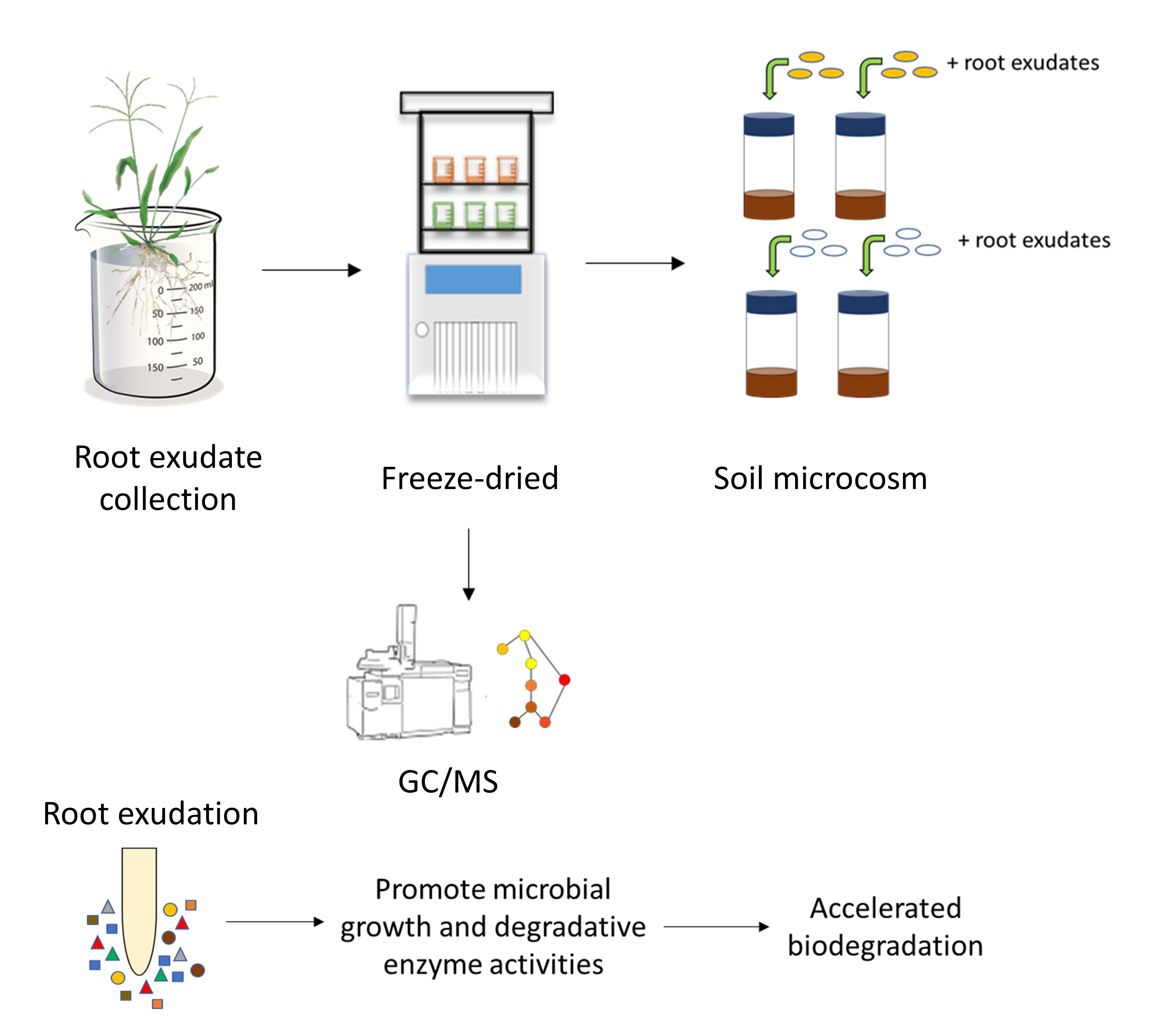
Understanding plant‒microbial interactions in petroleum-contaminated soil is critical for enhancing phytoremediation technology. In this study, the root exudate of crabgrass (Digitaria ciliaris) was collected hydroponically, and its dominant composition was identified via GC‒MS. A soil microcosm study was subsequently conducted to evaluate the influence of crabgrass root exudates on microbial growth, dehydrogenase activity, and biodegradation of total petroleum hydrocarbons by the petroleum-degrading bacteria Micrococcus luteus WN01 and Acinetobacter lwoffii A07. The amendment of crabgrass root exudates significantly promoted microbial degradation in both A. lwoffii A07 (47.98%) and M. luteus WN01 (62.78%), which were 8.47% and 15.78% greater than those in the nonamended treatments, respectively. The dehydrogenase activity and microbial population were highest in the presence of root exudates. The crabgrass root exudates were predomi-nantly composed of organic acids, phenolic compounds, and fatty acids, namely, 2-ketoisovaleric acid, acetylmethylcarbinol, ribitol, cinnamic acid, palmitic acids, and stearic acids, respectively. These chemical compounds in crabgrass root exudates can stimulate microbial dehydrogenase activity and total petroleum hydrocarbon (TPH) degradation in crude oil-contaminated soil. Further studies on how these individual chemicals may promote the degradation activity of hydrocarbon-degrading bacteria could provide a better understanding of the phytostimulatory effect of crabgrass during the phytoremediation of petroleum-contaminated soil.
Article Details

This work is licensed under a Creative Commons Attribution-NonCommercial 4.0 International License.
Published articles are under the copyright of the Applied Environmental Research effective when the article is accepted for publication thus granting Applied Environmental Research all rights for the work so that both parties may be protected from the consequences of unauthorized use. Partially or totally publication of an article elsewhere is possible only after the consent from the editors.
