AI-Generated Customer Personas (AGCP) for Enhancing Business Model Canvas Learning in Pharmacy Students
Article Sidebar
Main Article Content
Abstract
The Business Model Canvas (BMC) is an essential tool for developing entrepreneurial skills in pharmacy students. However, understanding realistic customers remains a significant limitation in learning. This study aims to test the effects of using AI-Generated Customer Personas (AGCP) in enhancing
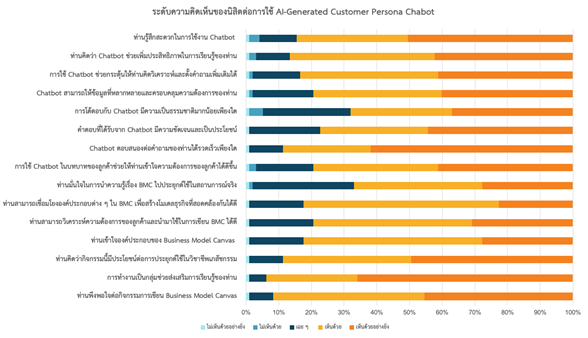
students' BMC writing skills. This study compared pharmacy students from two academic years. The first group used instructor-provided customer personas, while the other group engaged in interactive interviews with ChatGPT-generated models. Data collection included exam scores (maximum score = 10) and a satisfaction survey of the ChatGPT group. The Mann-Whitney U test was used to analyze differences in exam scores, and descriptive statistics were applied to analyze the satisfaction survey results. The first group (n = 87) showed a median exam score of 8.00 (IQR = 1.00), while the second group's (n = 97) median score was 8.50 (IQR = 0.50), with a statistically significant difference (p < 0.001). The satisfaction survey results indicated that 91.75 percent of students evaluated their experience positively, citing ChatGPT's quick responses, natural interaction, and detailed answers. However, 71 percent of students expressed concerns about the limitations of the free version of ChatGPT, including the limited number of questions and occasional lack of clarity in responses. In conclusion, AI-Generated Customer Personas can enhance skills and promote student engagement. However, improving limitations, such as response accuracy and question limits, could further increase its effectiveness. This method has the potential for application to other topics involving simulated practice, helping to prepare pharmacy students for various future roles.
Article Details

This work is licensed under a Creative Commons Attribution-NonCommercial-NoDerivatives 4.0 International License.
References
Brown, T. (2009). Change by design: How design thinking creates new alternatives for business and society. Harper Business.
Hamilton, A. (2024). Artificial Intelligence and Healthcare Simulation: The Shifting Landscape of Medical Education. Cureus 16(5): e59747. doi: 10.7759/cureus.59747.
Holmes, W., Bialik, M. and Fadel, C. (2019). Artificial Intelligence in Education: Promises and Implications for Teaching and Learning. Boston: The Center for Curriculum Redesign.
Kolb, D.A. (1984). Experiential learning: Experience as the source of learning and development. Englewood Cliffs, New Jersey: Prentice Hall.
Osterwalder, A. and Pigneur, Y. (2010). Business Model Generation: A handbook for visionaries, game changers, and challengers. Hoboken, New Jersey: Wiley.
