
Enhanced Case-Based Reasoning Framework with Weighted Jaccard Similarity for Malnutrition Diagnosis in Toddlers
Article Sidebar
Main Article Content
Abstract
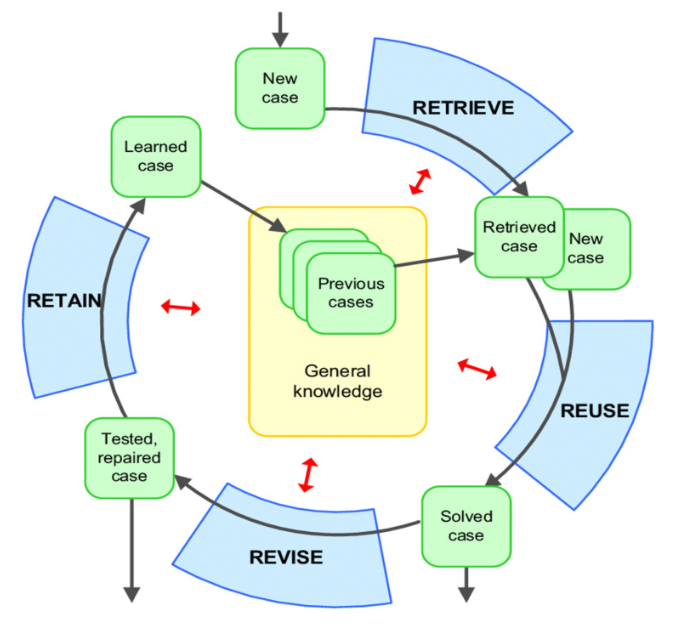
Malnutrition is a serious condition caused by nutrient deficiency that poses a high risk to toddler growth and development, potentially leading to long-term health problems or even death if left untreated. Early detection of malnutrition symptoms is crucial to enable prompt and appropriate medical interventions. This study aims to develop an expert system capable of diagnosing malnutrition diseases quickly, accurately, and efficiently, particularly as a knowledge-based decision support tool in toddler healthcare. The method used is Case Based Reasoning (CBR), which applies experiences from previous cases to solve new ones. The system processes data consisting of 22 symptoms and 8 types of malnutrition diseases, supported by a database of 22 real cases. Each symptom is associated with the likelihood of a disease based on its similarity to previous cases. Performance evaluation results show an accuracy of 80% and a sensitivity of 85.7%, indicating that the system is fairly reliable in recognizing positive cases (REUSE) and providing appropriate diagnoses. In conclusion, the CBR- based expert system can serve as an effective diagnostic aid for medical personnel in quickly identifying malnutrition in toddlers, thereby supporting more efficient and targeted decision-making.
Article Details

This work is licensed under a Creative Commons Attribution-NonCommercial-NoDerivatives 4.0 International License.
References
M. A. E. de van der Schueren et al., “Global Leadership Initiative on Malnutrition (GLIM): Guidance on validation of the operational criteria for the diagnosis of protein-energy malnutrition in adults,” Clin. Nutr., vol. 39, no. 9, pp. 2872–2880, 2020.
R. Hegazi, A. Miller and A. Sauer, “Evolution of the diagnosis of malnutrition in adults: a primer for clinicians,” Frontiers in Nutrition, vol. 11, p. fnut.2024.1169538, 2024.
A. M. Efendi, T. K. Ahsyar, M. Afdal, F. N. Salisah and S. Syaifullah, “Sistem Pakar Diagnosa Gizi Buruk Pada Balita Berbasis Mobile Menggunakan Metode Certainty Factor,” Jurnal Sistem Komputer dan Informatika, vol. 4, no. 4, p. 6307, 2023.
F. S. Siahaan, L. Tanti and K. Ummi, “Expert System for Detecting Malnutrition in Toddlers Using the WEB-Based Certainty Factor Method,” International Journal of Mechanical Computational and Manufacturing, vol. 11, no. 4, pp. 155–159, 2023.
R. Noviani and S. Sulindawaty, “Sistem Pakar Mendiagnosa Gizi Buruk Pada Balita Menggunakan Teorema Bayes,” Jurnal Nasional Komputasi dan Teknologi Informasi (JNKTI), vol. 3, no. 2, pp. 163–169, 2020.
F. Ardhy, A. Abdullah and F. Thoriq, “Implementation Model Forward Chaining For Detection Early Toddler Malnutrition Age 0-59 Month,” Jurnal Aisyah: Jurnal Ilmu Kesehatan, vol. 9, no. 2, 2024.
D. U. Utami, B. Nugroho and A. M. Rizki, “Sistem Pakar Diagnosis Penyakit Gizi Pada Balita Menggunakan Metode Dempster Shafer,” Modem: Jurnal Informatika Dan Sains Teknologi, vol. 2, no. 3, pp. 124–133, 2024.
S. Aanjankumar et al., “Prediction of malnutrition in kids by integrating ResNet-50-based deep learning technique using facial images,” Scientific Reports, vol. 15, no. 1, p. 7871, 2025.
M. K. I. Al-juboori and M. Ilyas, “Expert System for Classification of Nutrition in Young Children,” 2022 International Symposium on Multidisciplinary Studies and Innovative Technologies (ISMSIT), Ankara, Turkey, pp. 396-401, 2022.
D. Kartika, R. L. Gema and M. Pratiwi, “Identifying Severe Malnutrition in Children with an Expert System,” Journal of Computer Scine and Information Technology, vol. 7, no. 2, pp. 15–20, 2021.
U. Nurhataman and D. Setiyadi, “Metode Certainty Factor Untuk Mengidentifikasi Gizi Buruk Pada Balita,” JUPITER Journal of Computer & Information Technology, vol. 5, no. 1, pp. 31–46, 2024.
J. T. Soman and R. J. Patil, “Two-dimensional loading in vehicle routing problem with release and due dates,” Expert Systems with Applications, vol. 232, p. 120862, 2023.
J. Chen, X. Sun, X. Jin and R. Sutcliffe, “Extracting drug–drug interactions from no-blinding texts using key semantic sentences and GHM loss,” Journal of Biomedical Informatics, vol. 135, p. 104192, 2022.
H. M. Fenta, T. Zewotir, and E. K. Muluneh, “A machine learning classifier approach for identifying the determinants of under-five child undernutrition in Ethiopian administrative zones,” BMC Medical Informatics and Decision Making, vol. 21, no. 1, p. 291, 2021.
P. Liang, W. Zhang, J. Wang and Y. Guo, “Neighbor self-knowledge distillation,” Information Sciences, vol. 654, p. 119859, 2024.
Y. Liu, Y. Lin, Z. Jia, Y. Ma and J. Wang, “Representation based on ordinal patterns for seizure detection in EEG signals,” Computers in Biology and Medicine, vol. 126, p. 104033, 2020.
K. Hatalis, R. Smith and D. Patel, “Case-based reasoning for large language model agents: Integrating retrieval and self-reflection,” KnowledgeBased Systems, vol. 293, p. 111632, 2025.
X. Guo, M. Zhang and L. Chen, “Optimizing case-based reasoning systems for functional test script generation using large language models,” Expert Systems with Applications, vol. 242, p. 122896, 2025.
Y. Duan, L. Luo, and J. Li, “A review of the development and future challenges of case-based reasoning,” Applied Artificial Intelligence, vol. 36, no. 1, p. 2025417, 2022.
B. Costa and J. Smith, Further Generalizations of the Jaccard Index, 2021.
S. H. Park and K. Kim, “Collaborative filtering recommendation system based on improved Jaccard similarity,” Journal of Ambient Intelligence and Humanized Computing, vol. 14, pp. 11319–11336, 2023.
X. Li and P. Li, “Rejection Sampling for Weighted Jaccard Similarity Revisited,” AAAI Technical Track on Data Mining and Knowledge Management, vol. 35, no. 5, pp. 4197–4205, 2021.
A. Tharwat, “Classification assessment methods,” Applied Computing and Informatics, vol. 17, no. 1, pp. 168–192, 2021.
M. Sokolova and G. Lapalme, “A systematic analysis of performance measures for classification tasks,” Information Processing & Management, vol. 45, no. 4, pp. 427-437, 2009.
G. R. Santos, A. P. Santos, P. Protopapas and T. A. E. Ferreira, “Gravitational wave signal recognition and ring-down time estimation via Artificial Neural Networks,” Expert Systems with Applications, vol. 207, p. 117931, 2022.
N. Pellegrino, P. W. Fieguth and P. Haji Reza, “K-Means for noise-insensitive multidimensional feature learning,” Pattern Recognition Letters, vol. 170, pp. 113–120, 2023.
L. Zhang and S. Chen, “Evaluating recall as the primary metric in medical classification tasks,” IEEE Journal of Biomedical and Health Informatics, vol. 25, no. 3, pp. 305–312, 2021.
F. Garc´ıa and J. Wang, “The high cost of false negatives: prioritizing sensitivity in disease screening applications,” BMC Medical Informatics and Decision Making, vol. 22, no. 1, p. 144, 2022.
R. Patel, A. Kumar and P. Singh, “Balancing sensitivity and specificity in cancer detection models,” Medical Image Analysis, vol. 77, p. 102010, 2023.
M. S. Hossain, F. Ahmed and M. M. Rahman, “An intelligent case-based reasoning system for disease diagnosis,” IEEE Access, vol. 11, pp. 45910–45922, 2023.
Q. Wang and B. Zhang, “Research and implementation of the customer-oriented modern hotel management system using fuzzy analytic hierarchical process (FAHP),” Journal of Intelligent & Fuzzy Systems: Applications in Engineering and Technology, vol. 40, no. 4, pp. 8277–8285, 2021.
L. Portinale, “Integrating kNN Retrieval with Inference on Graphical Models in Case-Based Reasoning,” Case-Based Reasoning Research and Development (ICCBR 2024), Springer Nature Switzerland, pp. 1–16, 2024.
M. Alkahtani, T. H. H. Aldhyani, H. Alrasheed and N. S. Alghamdi, “Case-based reasoning system for diagnosis of chronic diseases,” Computers, Materials & Continua, vol. 68, no. 2, pp. 2423–2441, 2021.
A. H. Hussein, M. Abu-Alhaija, and K. Nairoukh, “New RTP Packet Payload Shrinking Method to Enhance Bandwidth Exploitation Over RTP Protocol,” International Journal of Advanced Computer Science and Applications (IJACSA), vol. 11, no. 8, pp. 135–142, 2020.
A. Arnarson, “8 signs and symptoms of protein deficiency,” 2024.
A. Kirolos et al., “Neurodevelopmental, cognitive, behavioural and mental health impairments following childhood malnutrition: a systematic review,” BMJ Glob. Health, vol. 7, no. 7, p. e009330, 2022.
M. Kantilafti, A. Hadjikou and S. Chrysostomou, “The association between malnutrition, depression and cognitive decline in free-living elderly people in Cyprus,” BMC Public Health, vol. 24, no. 1, p. 3556, 2024.
FAO, The State of Food Security and Nutrition in the World 2022. Rome, Italy: Food and 115 Agriculture Organization of the United Nations, 2022.
S. Bunker and J. Pandey, “Educational Case: Understanding Kwashiorkor and Marasmus: Disease Mechanisms and Pathologic Consequences,” Academic Pathology, vol. 8, p. 23742895211037028, 2021.
K. D. Wiley and M. Gupta, “Vitamin B1 (thiamine) deficiency,” StatPearls [Internet]. Treasure Island, FL, USA: StatPearls Publishing, 2023.
H. M. Fouad et al., “Prevalence of malnutrition & anemia in preschool children; a single center study,” Italian Journal of Pediatrics, vol. 49, no. 1, p. 75, 2023.
K. Murphy et al., “Characteristics of Pediatric Scurvy Hospitalizations: 2006–2021,” Pediatrics, vol. 154, no. 4, p. e2024065782, 2024.
D. Castro and S. Sharma, Hypokalemia, StatPearls Publishing, 2025.
A. Hatch-McChesney and H. R. Lieberman, “Iodine and Iodine Deficiency: A Comprehensive Review of a Re-Emerging Issue,” Nutrients, vol. 14, no. 17, p. 3474, 2022.
