
AI-Based Smart Identification of Medicinal Plants Using Vision Transformer and CatBoost for Biodiversity and Healthcare
Article Sidebar
Main Article Content
Abstract
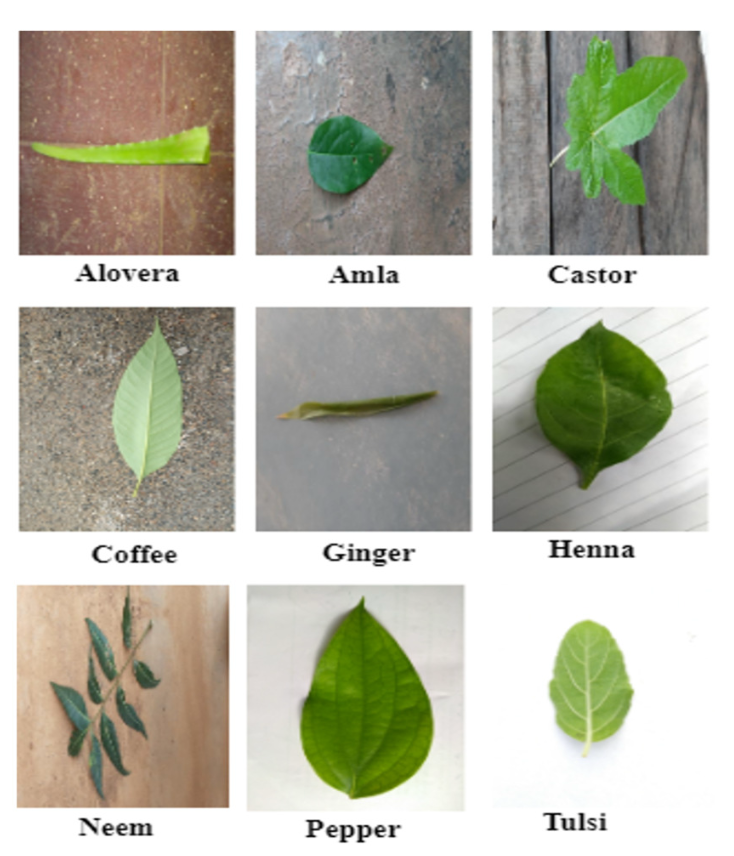
In most countries, medicinal plants are crucial remedies for disease treatment. Even though the majority are edible, ingesting the incorrect herbal plant can have fatal consequences. It is essential to accurately identify these plants not only for safe usage by individuals but also for various real-time applications like aiding biodiversity conservation, supporting farmers in recognizing local herbs, and also preserving indigenous systems. Numerous automatic methods for identifying medicinal plants have been developed; however, most of them are severely limited, either by the relatively small number of plant species they support or by the fact that they rely on manual visual segmentation of plant leaf surfaces. This means that instead of being easily recognized in their natural environments, which frequently include complicated and chaotic backgrounds, they are snapped against a plain background. Deep learning-based techniques have advanced significantly in recent years. Still, they are trained on data that isn't always fully reflective of the intra-class and inter-class variances among the plant species in consideration. The paper approaches this issue by integrating the hybrid model of a pre-trained vision transformer with a CatBoost classifier tuned with Optuna. The vision transformer model is trained with the Indian medicinal plant dataset with the five most commonly used species. The hybrid model is compared with the deep learning models regarding precision, recall, F1-score, accuracy, and execution time on the same dataset. Our proposed model achieves a training phase accuracy of 93%, which shows the improvement for automating the identification of medicinal plants. In conclusion, our proposed hybrid model reveals enhanced accuracy, improved reliability, and reduced false positives in automating the identification of medicinal plants, contributing effectively to healthcare applications and biodiversity.
Article Details

This work is licensed under a Creative Commons Attribution-NonCommercial-NoDerivatives 4.0 International License.
References
L. Shahmiri, P. Wong and L. S. Dooley, “Accurate Medicinal Plant Identification in Natural Environments by Embedding Mutual Information in a Convolution Neural Network Model,” 2022 IEEE 5th International Conference on Image Processing Applications and Systems (IPAS), Genova, Italy, pp. 1-6, 2022.
O. A. Malik, N. Ismail, B. R. Hussein and U. Yahya, “Automated Real-Time Identification of Medicinal Plant Species in Natural Environments Using Deep Learning Models—A Case Study from the Borneo Region,” Plants, vol. 11, no. 15, p.1952, 2022.
R. Azadnia, M. M. Al-Amidi, H. Mohammadi,M. A. Cifci, A. Daryab and E. Cavallo, “An AIbased approach for medicinal plant identification using deep CNN based on global average pooling,” Agronomy, vol. 12, no. 11, p.2723, 2022.
B. Bhattacharjee, K. Sandhanam, S. Ghose, D. Barman and R. K. Sahu, “Market overview of herbal medicines for lifestyle diseases,” Role of Herbal Medicines, pp. 597-614, 2024.
R. Gowthami, N. Sharma, R. Pandey and A. Agrawal, “Status and consolidated list of threatened medicinal plants of India,” Genetic Resources and Crop Evolution, vol. 68, no. 6, pp. 2235-2263, 2021.
P. Mehta, K. Bisht, K. C. Sekar and A. Tewari, “Mapping biodiversity conservation priorities for threatened plants of the Indian Himalayan Region,” Biodiversity and Conservation, vol. 32, no. 7, pp. 2263-2299, 2023.
C. G. Yedjou, J. Grigsby, A. Mbemi, D. Nelson, B. Mildort, L. Latinwo and P. B. Tchounwou, “The management of diabetes mellitus using medicinal plants and vitamins,” International Journal of Molecular Sciences, vol. 24, no. 10, p. 9085, 2023.
M. A. Kiflie, D. P. Sharma and A. H. Mesfin, “Deep learning for medicinal plant species classification and recognition: a systematic review,” Frontiers in Plant Science, vol. 14, p. 1286088, 2024.
J. Yue, W. Li and Y.-Z. Wang, “Superiority verification of deep learning in the identification of medicinal plants: Taking Paris polyphylla var. varyunnanensis as an example,” Frontiers in Plant Science, vol. 12, p.752863, 2021.
P. Singla, V. Kalavakonda and R. Senthil, “Detection of plant leaf diseases using deep convolutional neural network models,” Multimedia Tools and Applications, vol. 83, pp 64533-64549, 2024.
S. Chulif, S. H. Lee, Y. L. Chang and K. C. Chai, “A machine learning approach for cross-domain plant identification using herbarium specimens,” Neural Computing and Applications, vol. 35, no. 8, pp. 5963–5985, 2023.
H. K. Diwedi, A. Misra and A. K. Tiwari, “CNN-based medicinal plant identification and classification using optimized SVM,” Multimedia Tools and Applications, vol. 83, no. 11, pp. 33823–33853, 2024.
K. Pankaja and V. Suma , “Plant leaf recognition and classification based on the whale optimization algorithm (WOA) and random forest (RF),” Journal of the Institution of Engineers (India): Series B, vol. 101, no. 5, pp. 597–607, 2020.
M. Sharma, N. Kumar, S. Sharma, S. Kumar, S. Singh and S. Mehandia, “Medicinal plant recognition using heterogeneous leaf features: an intelligent approach,” Multimedia Tools and Applications, vol. 83, pp. 51513-51540, 2023.
S. Kavitha, T. S. Kumar, E. Naresh, V. H. Kalmani, K. D. Bamane and P. K. Pareek, “Medicinal plant identification in real-time using a deep learning model,” SN Computer Science, vol. 5, p. 73, 2023.
D. T. N. Nhut, T. D Tan, T. N. Quoc and V. T. Hoang, “Medicinal plant recognition based on vision transformer and BEiT,” Procedia Computer Science, vol. 234, pp. 188–195, 2024.
I. Pacal, “Enhancing crop productivity and sustainability through disease identification in maize leaves: Exploiting a large dataset with an advanced vision transformer model,” Expert Systems with Applications, vol. 238, p. 122099, 2024.
R. K. Rachman, D. R. I. M. Setiadi, A. Susanto, K. Nugroho and H. M. M. Islam, “Enhanced vision transformer and transfer learning approach to improve rice disease recognition,” Journal of Computing Theories and Applications, vol. 1, no. 4, pp. 446–460, 2024.
M. Tan and Q. V. Le, “EfficientNet: Rethinking model scaling for convolutional neural networks,” in Proceedings of the 36th International Conference on Machine Learning, Long Beach, California, PMLR 97, pp. 6105-6114, 2019.
S. P. Mohanty, D. P. Hughes, and Marcel Salath´e, “Using deep learning for image-based plant disease detection,” Frontiers in Plant Science, vol. 7, p. 01419, 2016.
L. Prokhorenkova, G. Gusev, A. Vorobev, A. V. Dorogush and A. Gulin, “CatBoost: unbiased boosting with categorical features,” in Proceedings of the 32nd International Conference on Neural Information Processing Systems (NIPS’18), pp. 6639-6649, 2018.
P. B. R and N. S. Rani, “DIMPSAR: Dataset for Indian medicinal plant species analysis and recognition,” Data in Brief, vol. 49, p. 109388, 2023.
A. Kaya, A. S. Keceli, C Catal, H. Y. Yalic, H. Temucin and B. Tekinerdogan, “Analysis of transfer learning for deep neural network-based plant classification models,” Computers and Electronics in Agriculture, vol. 158, pp. 20–29, 2019.
A. Krizhevsky, I. Sutskever and G. E. Hinton, “Imagenet classification with deep convolutional neural networks,” Advances in neural information processing systems, vol. 25, 2012.
D. Gupta and R. Rani, “A study of big data evolution and research challenges,” Journal of Information Science, vol. 45, no. 3, pp. 322–340, 2019.
F. Firdous, S. Bashir, S. Z. Rufai and S. Kumar, “OpenAI ChatGPT as a Logical Interpreter of code,” 2023 2nd International Conference on Edge Computing and Applications (ICECAA), Namakkal, India, pp. 1192-1197, 2023.
A. Dosovitskiy et al., “An image is worth 16×16 words: Transformers for image recognition at scale,” arXiv preprint arXiv:2010.11929, 2020.
