Development of Ideal Gas Kit using Pressure and Temperature Sensors via Arduino
Keywords:
Ideal gas, Arduino, Pressure, Temperature sensorsAbstract
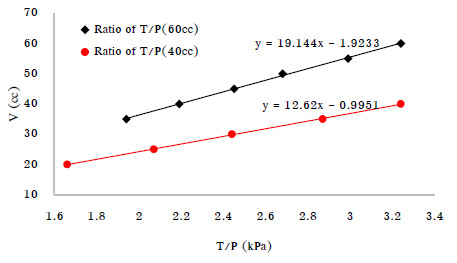
This study presents the development of a low-cost experimental kit to investigate the ideal gas law using a K-type MAX6675 thermocouple and MPX5700AP pressure sensor interfaced with an Arduino microcontroller. The kit enables real-time measurements and LCD display of pressure and temperature data, making it suitable for classroom demonstration and inquiry-based learning. Experiments based on Boyle’s law and the combined gas law were conducted, and the data showed a high correlation with theoretical predictions. The calculated error in the gas constant was only 0.08%, and the estimated system volume was 2.03 cc, and also the number of moles of gas was -32.30 × 10moles. Compared with existing commercial kits, the proposed design is more cost-effective, portable, and educationally versatile. The findings support the pedagogical value of using microcontroller-based sensors in physics education.
References
Chandan, G., & Cascella, M. (2022). Gas laws and clinical application. Istituto Nazionale Tumori - IRCCS - Fondazione Pascale.
Colclough, A. R. (1979). Low frequency acoustic thermometry in the range 4.2–20 K with implications for the value of the gas constant. Proceedings of the Royal Society of London. A. Mathematical and Physical Sciences, 365(1722), 349-370.
Haider, S. K., & Zafar, H. (2013). Investigation of Ideal Gas Laws by Using the Pressure Sensor and Thermistor Sensors. Journal of natural sciences, 8-14.
Ivanov, D. T. (2007). Experimental verification of Boyle’s law and the ideal gas law. Physics Education, 42(2), 193. https://doi.org/10.1088/ 0031-9120/42/2/011
Jureschi, C. M., Linares, J., Boulmaali, A., Dahoo, P. R., Rotaru, A., & Garcia, Y. (2016). Pressure and temperature sensors using two spin crossover materials. Sensors, 16(2), 187.
Limpanuparb, T., Kanithasevi, S., & Lojanarungsiri, M. (2019). Teaching Boyle’s Law and Charles’ Law through experiments that use novel, inexpensive equipment yielding accurate results. Journal of Chemical Education, 96(1), 169-174.
McGregor, D., Sweeney, W. V., & Mills, P. (2012). A Simple Mercury-Free Laboratory Apparatus To Study the Relationship between Pressure, Volume, and Temperature in a Gas. Journal of Chemical Education, 89(4), 509-512.
Metzger, K., Hettich, G., & Dorfler, R. (1989). Sensor for measuring the pressure and temperature of tyres.
Onose, Y., Watanabe, A., Kuryu, S., Nakamura, K., Aoyagi, T., & Tsuchiya, T. (2000). Capacitance-type pressure sensor.
Parks, T. R., & Cao, C. (2008). Suspended membrane pressure sensing array. U.S. Patent No. Washington, DC: U.S. Patent and Trademark Office.
Rozhnov, M. S., Kuzmenko, Yu. V., Melnyk, D. M., Levbarg, O., et al. (2020). State Primary Standard of Gas Volume and Flow Rate Units for the Pressure Range of 1 MPa to 5 MPa (PVTt-15). Measurement Techniques, 63(2), 203-214.
Zidny, R., Fadhilah, G. A., Melda, G. E., Sholihah, I. I., Widiastuti, N. L., Haerunnisa, N., & El Islami, R. A. Z. (2019). Simple and low-cost chemical experiment kits to observe the concept of gas laws. Jurnal Penelitian Dan Pembelajaran IPA, 5(1), 16-25.
Downloads
Published
Issue
Section
Categories
License
Copyright (c) 2025 Journal of Applied Science and Emerging Technology

This work is licensed under a Creative Commons Attribution-NonCommercial-NoDerivatives 4.0 International License.


